
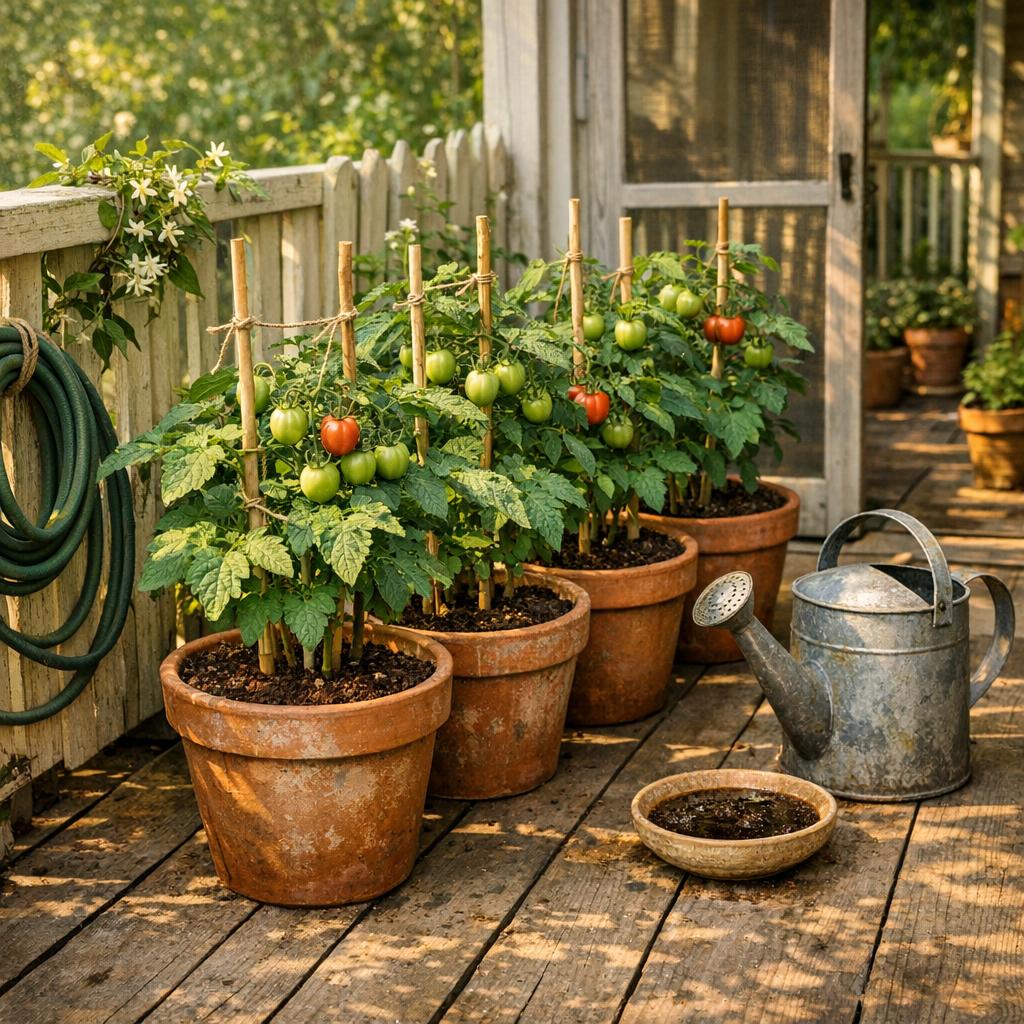
Why I Choose Container Tomatoes
I have grown tomatoes in the ground for years but container growing earns a permanent place in my garden. It gives me control. I control the soil quality water levels and even the sun exposure by moving pots when needed. For home gardeners with patios balconies or limited space container tomatoes are not a compromise. They are a smart way to grow better plants with fewer headaches.
Another reason I favor containers is disease management. Soil borne problems are easier to avoid when you start with clean potting mix. When a plant struggles I can isolate it without affecting the rest of the garden. That peace of mind alone is worth the effort.
Choosing the Right Tomato Varieties
Not all tomatoes behave the same in containers. I look for growth habits that match the pot size I can provide. Determinate and compact varieties are the easiest place to start. They grow to a set height and focus energy on fruit rather than endless vines.
Indeterminate tomatoes can still work well if you are willing to give them large containers and strong support. I grow a few every year because the flavor payoff is hard to ignore. If you are unsure start with cherry or patio types. They forgive mistakes and produce generously.
My Go To Container Types
I reach for cherry tomatoes plum types and a few smaller slicing varieties. I avoid very large beefsteak plants unless I have a pot that can truly support them. Crowded roots lead to stress and disappointing harvests.
Selecting Containers That Support Growth
Size matters more than material. I aim for containers that hold at least five gallons for smaller plants and ten gallons or more for vigorous growers. Wider pots stay more stable and keep roots cooler in summer heat.
Drainage is non negotiable. Every container needs several holes so excess water can escape. Waterlogged roots cause more problems than dry soil. I elevate pots slightly so they never sit in standing water after a heavy rain.
Material Considerations
Plastic pots hold moisture well and are lightweight. Fabric pots breathe and encourage healthy root systems. Clay looks great but dries quickly. I use all three and adjust my watering habits accordingly.
Soil and Planting Depth
Regular garden soil is too heavy for containers. I use a high quality potting mix with compost blended in. The goal is a balance of moisture retention and airflow. Roots need oxygen as much as they need water.
When planting tomatoes I bury part of the stem. Tomatoes form roots along buried stems which gives the plant a stronger foundation. I remove lower leaves and plant deep without hesitation.
Watering Without Guesswork
Consistent watering is the heart of container success. Pots dry out faster than garden beds especially in warm weather. I check moisture daily by pressing a finger into the soil. If the top inch feels dry it is time to water.
I water slowly until I see excess draining from the bottom. Quick shallow watering creates weak roots. Morning watering is my preference because leaves dry quickly and plants handle heat better.
Preventing Common Water Problems
Uneven watering causes issues like blossom end rot and fruit cracking. Mulching the soil surface with straw or shredded leaves helps maintain even moisture and keeps roots cooler.
Feeding Container Tomatoes
Tomatoes are heavy feeders and containers limit available nutrients. I start with compost rich soil and then feed regularly. A balanced liquid fertilizer every one to two weeks keeps plants productive.
Once flowering begins I favor feeds slightly higher in potassium to support fruit development. Overfeeding nitrogen leads to beautiful leaves and very few tomatoes. I keep that balance in mind all season.
Supporting Plants as They Grow
Even compact tomatoes need support. I place a stake cage or trellis at planting time to avoid disturbing roots later. As plants grow I tie stems loosely with soft material.
Good support improves air circulation and keeps fruit off the soil. It also makes harvesting easier and reduces pest problems.
Pests and Disease Awareness
Container tomatoes face fewer pests but they are not immune. I check leaves weekly for aphids mites and caterpillars. Early detection makes control simple with hand removal or gentle sprays.
Good airflow clean tools and healthy soil do most of the work. I remove yellowing leaves promptly and avoid wetting foliage whenever possible.
Harvesting for Best Flavor
I harvest tomatoes when they are fully colored and slightly soft to the touch. Vine ripened fruit tastes better than anything from a store. Regular harvesting encourages continued production.
If cold weather threatens I pick mature green tomatoes and let them ripen indoors. The season does not have to end abruptly.
FAQ
How many tomato plants should I put in one container
One plant per container is the rule I follow. Crowding leads to competition for water and nutrients and reduces airflow.
Can I reuse potting soil next year
Yes with preparation. I refresh old mix with compost and a slow release fertilizer. If a plant had disease I replace the soil entirely.
Do container tomatoes need full sun
They perform best with six to eight hours of direct sun. In very hot climates some afternoon shade can prevent stress.
Why are my plants growing but not producing fruit
Excess nitrogen heat stress and inconsistent watering are common causes. I review feeding habits and watch water levels closely.
Final Thoughts
Growing tomatoes in containers is both practical and rewarding. With the right variety proper pot size reliable watering and steady feeding you can harvest baskets of fruit from a small space. I return to this method every year because it works and because the flavor speaks for itself.


