
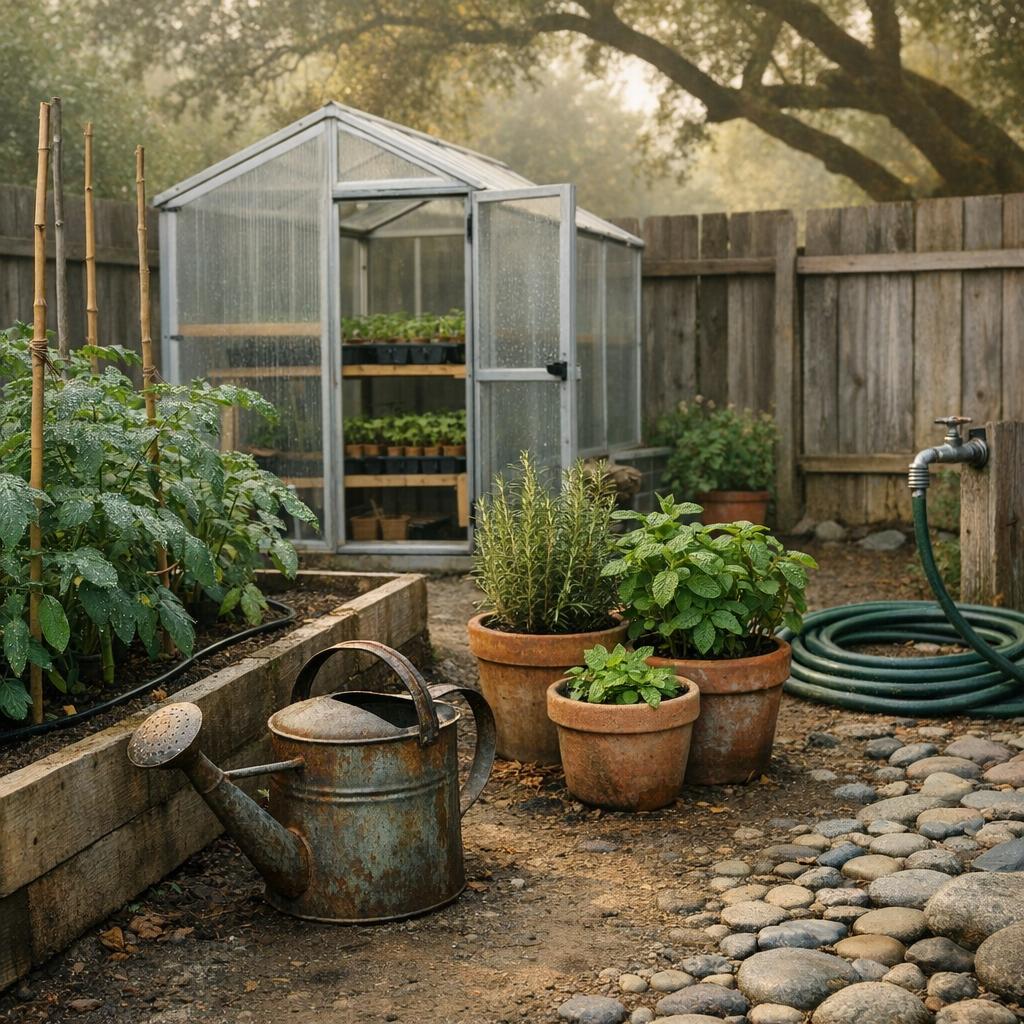
Why watering matters more than most advice admits
I have learned that watering is not a background task. It shapes root growth plant health and even pest pressure. Many gardeners chase fertilizers and gadgets while ignoring the simple question of how water moves through their soil. When watering is careless plants become shallow rooted and dependent. When watering is thoughtful gardens become resilient.
My goal has never been to use the least water possible. It is to use the right amount at the right time in a way that supports long term growth. That framing changes every decision I make.
Understanding your soil before touching the hose
Soil texture decides everything. Sandy soil drains quickly and begs for deeper slower watering. Clay soil holds water and punishes over watering. Loam sits in the middle and rewards patience. I always recommend a simple test. Dig a small hole water it fully and return the next day. If it is soggy you need less frequent watering. If it is bone dry you need longer sessions.
Organic matter improves all soil types. Compost acts like a sponge in sand and a breaker bar in clay. Before adjusting schedules I focus on soil first because water follows soil behavior.
When I water and why timing wins
I water early in the morning. This is not old superstition. Morning watering reduces evaporation and gives leaves time to dry. Evening watering can work in dry climates but it invites disease in humid ones. Midday watering wastes water through evaporation and shocks plants.
Consistency matters more than frequency. I would rather water deeply twice a week than lightly every day. Deep watering teaches roots to travel downward where moisture lasts longer and temperature stays stable.
How deep watering actually works
Deep watering means soaking the root zone not flooding the surface. I use a slow flow for a long period. Drip lines and soaker hoses excel here. If using a hose I keep the pressure low and stay put until the soil is moist several inches down.
A quick check keeps me honest. I push a screwdriver into the soil. If it slides in easily the moisture is adequate. If it stops short the water never reached the roots.
Mulch is not optional in my garden
Mulch is the quiet hero of water savings. It shields soil from sun wind and pounding rain. I use shredded leaves straw or wood chips depending on the bed. A thick layer keeps moisture where plants can use it.
Without mulch even perfect watering evaporates away. With mulch I can water less often and see stronger growth. It also improves soil over time which compounds the benefit.
Reading plant signals instead of calendars
I do not water by date. I water by observation. Wilted leaves in the afternoon do not always mean thirst. If leaves recover by evening the plant is coping. Persistent droop dull color and slow growth tell a clearer story.
Each plant has its own preferences. Tomatoes enjoy deep infrequent watering. Lettuce prefers consistent moisture. Trees want wide slow soakings. Grouping plants by water needs simplifies everything.
Saving water without stressing plants
Water conservation does not mean deprivation. It means reducing loss. Fix leaks aim water at soil not leaves and avoid runoff. I often build small soil berms around plants to hold water in place.
Collecting rainwater can help but it is not required. The biggest gains come from timing depth and mulch. Those three elements cut waste more than any product.
Common mistakes I still see
Over watering remains the top problem. Yellow leaves and weak growth often come from roots sitting in wet soil. Another mistake is shallow daily watering that encourages surface roots and stress.
Ignoring weather is also costly. Rain changes everything. I skip watering after a good soak and adjust after heat waves. Flexibility keeps plants healthy.
FAQ
How do I know if I am over watering
Look for yellowing leaves slow growth and soil that stays wet days after watering. Roots need air as much as water.
Is drip irrigation better than sprinklers
Drip systems are better for targeted deep watering and reduced evaporation. Sprinklers can work for lawns and large areas if used early in the day.
How often should I water vegetables
Most vegetables prefer deep watering one to three times a week depending on soil weather and growth stage.
Can I water during hot weather
Yes but do it early in the morning. Avoid midday watering unless plants are in immediate distress.
Does mulch attract pests
Healthy mulch does not cause pest problems. Poor sanitation and weak plants do. Keep mulch a few inches from stems if concerned.


