
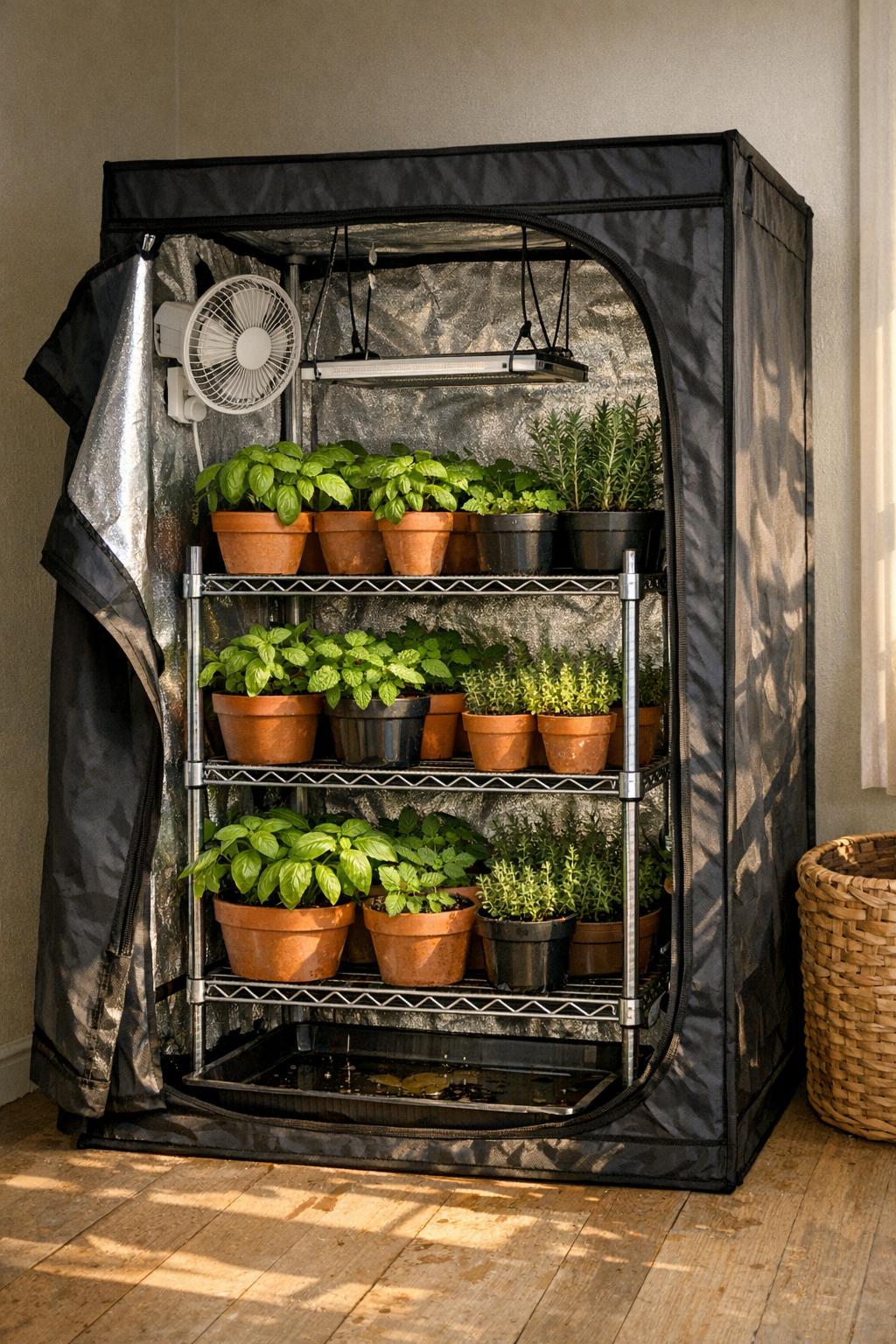
As the author of OwnGardening.com, I spend a lot of my time helping people grow food in small controlled spaces. One of the most reliable setups I recommend is growing herbs inside a grow tent. A grow tent gives me total environmental control, which is exactly what herbs need to stay compact flavorful and productive indoors.
When I grow herbs in grow tents, I am not trying to imitate a garden bed. I am building a stable indoor ecosystem. Light airflow temperature and moisture all behave differently inside a grow tent, and once you learn to work with that environment, herbs become one of the easiest and most rewarding crops to grow.
Why I Use a Grow Tent for Herbs
A grow tent allows me to separate my herbs from the rest of the house. This matters more than most beginners realize. Herbs want consistent conditions, and a grow tent protects them from household temperature swings dry air from heating systems and accidental overwatering.
Inside a grow tent, reflective walls make efficient use of grow lights. This means I can grow basil cilantro parsley and mint in a relatively small footprint without stretching or weak stems. I can also manage smells humidity and pests far better than if the plants were sitting openly on a shelf.
Choosing the Right Herbs for Grow Tents
Not every herb performs equally well inside a grow tent. I stick to varieties that respond well to artificial light and container growing. Basil thyme oregano chives cilantro and dill all do exceptionally well in grow tents when given proper airflow.
Woody herbs like rosemary and sage also work inside a grow tent, but they require stronger lighting and more attention to watering. I always group herbs with similar needs together inside the tent so the environment supports all of them evenly.
Setting Up the Grow Tent Environment
Before I plant anything, I finish setting up the grow tent. This includes installing full spectrum grow lights positioning a small circulation fan and ensuring proper ventilation. Stagnant air is a common mistake inside grow tents, and herbs hate it.
I keep daytime temperatures inside the grow tent mild and avoid letting humidity climb too high. Herbs prefer airflow that gently moves their leaves. This strengthens stems and reduces the chance of mildew inside the enclosed tent space.
Soil and Containers Inside a Grow Tent
Inside a grow tent, drainage matters more than it does in outdoor gardens. I always use containers with drainage holes and place them on trays to protect the tent floor. Lightweight potting mixes work best since they hold moisture without turning soggy.
I avoid garden soil entirely. In a grow tent, dense soil leads to slow drying and root problems. A well aerated mix allows me to water thoroughly while keeping oxygen available to the roots.
Watering Herbs in Grow Tents
Watering inside a grow tent is all about balance. Since there is no wind or sun like outside, soil dries more slowly. I check moisture with my finger before every watering rather than following a strict schedule.
I water early in the light cycle so excess moisture can evaporate within the grow tent. Wet soil combined with darkness is a recipe for fungal issues. Good airflow inside the tent makes a big difference here.
Lighting Strategy for Grow Tent Herbs
Light is the engine of growth inside a grow tent. I position my grow lights close enough to provide strong intensity without stressing the plants. Herbs grown in weak light inside grow tents become leggy and bland.
I maintain a consistent daily light schedule. Herbs respond well to regularity inside a grow tent, and sudden changes often slow growth. Even inexpensive grow lights perform well when used correctly in a reflective tent.
Harvesting Herbs Inside a Grow Tent
One advantage of growing herbs inside a grow tent is frequent harvesting. I harvest small amounts often rather than cutting heavily all at once. This encourages bushy growth and keeps plants productive.
I use clean scissors and make cuts above leaf nodes. Inside a grow tent, plants recover quickly because conditions remain stable. A well managed tent lets me harvest year round.
Common Grow Tent Mistakes to Avoid
The biggest mistake I see is overcrowding. A grow tent feels spacious when empty, but herbs grow quickly. Overcrowded plants reduce airflow and invite disease.
Another issue is ignoring ventilation. A grow tent is a sealed environment by design. Without proper air exchange, plants suffer even if everything else looks correct.
FAQ
Can I grow multiple herbs together in one grow tent
Yes as long as the herbs have similar light and watering needs. Inside a grow tent, grouping compatible herbs makes environmental control much easier.
Do herbs need nutrients inside a grow tent
They do, but lightly. I use diluted organic nutrients sparingly. Inside a grow tent, excess feeding causes faster problems than underfeeding.
How big of a grow tent do I need for herbs
A small grow tent works well for most home growers. The key is vertical space for lighting and enough room for airflow around each plant.
Can I grow herbs year round in a grow tent
Absolutely. A grow tent removes seasonal limitations. With stable lighting and temperature, herbs grow consistently regardless of the weather outside.
Growing herbs inside a grow tent has become one of my favorite indoor gardening methods. It is efficient predictable and deeply satisfying. With attention to airflow light and careful watering, a grow tent turns everyday herbs into a reliable indoor harvest.


