
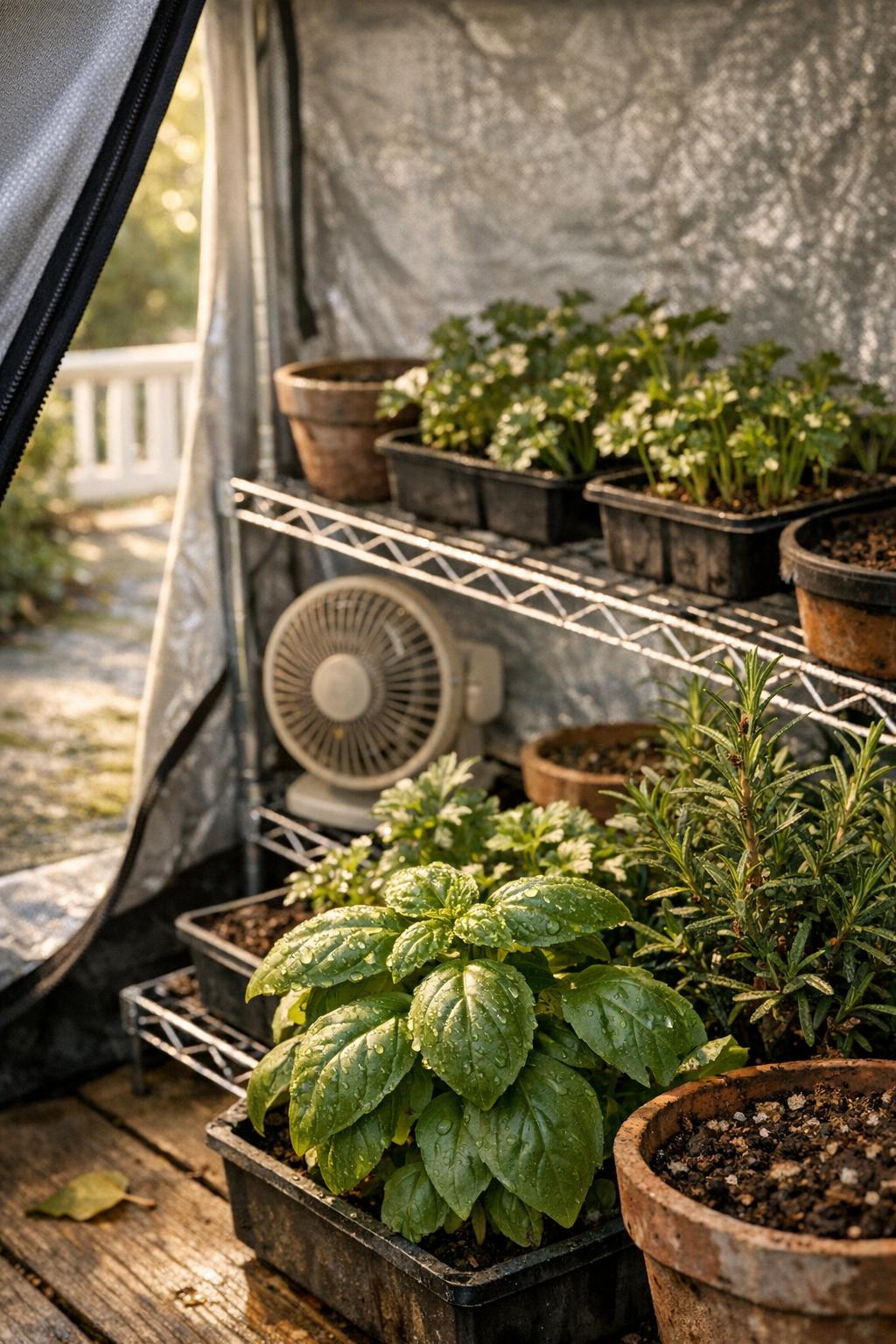
Introduction to growing herbs in a grow tent
I grow most of my herbs inside a grow tent because it gives me full control over light air and moisture. A grow tent creates a closed environment that lets herbs grow consistently regardless of outdoor weather or seasons. When growing herbs this way every choice from lighting height to airflow matters more than it would in an open room.
Using grow tents also means less mess better efficiency and fewer pests. Everything happens in a contained space designed for plant growth. If you want reliable yields and strong flavor herbs a grow tent environment makes the process far more predictable.
Choosing the right grow tent size for herbs
Inside a grow tent space planning is essential. Herbs do not need as much height as fruiting plants but they still benefit from vertical room for lights and air movement. I recommend a compact tent for most home growers since herbs like basil parsley and cilantro stay manageable in size within a tent.
The footprint of your grow tent should match your lighting and plant count. Overcrowding herbs inside a tent leads to poor airflow and uneven growth. I always leave enough open space so light reaches all sides of the plants inside the grow tent.
Lighting strategies that work inside grow tents
Grow tent lighting is one of the biggest advantages of indoor herb growing. I rely on full spectrum LED lights inside my grow tents because they stay cool and provide consistent coverage. Herbs inside a tent benefit from longer daily light exposure since there is no natural sunlight to supplement growth.
Light placement inside the grow tent matters just as much as light type. I adjust the light height to keep herbs compact and flavorful. Too much distance stretches plants while lights too close inside a grow tent can cause leaf stress.
Airflow and ventilation within a grow tent
Air movement is essential inside a grow tent because stagnant air invites mold and weak growth. I always run a small circulation fan to move air gently around my herbs. This simulates natural breezes and strengthens stems within the closed tent environment.
Ventilation systems in grow tents remove excess heat and humidity. Even herbs which prefer moderate conditions can suffer if moist air lingers too long inside a tent. Proper exhaust keeps the internal climate stable and healthy.
Soil and containers suited for grow tent herbs
Inside a grow tent overwatering is a common mistake. Since there is no natural wind or sunlight drying the soil I choose well draining potting mix designed for indoor use. Containers with proper drainage prevent root rot in the enclosed tent space.
I prefer fabric pots inside grow tents because they allow roots to breathe and release excess moisture. This works particularly well in a controlled indoor environment where evaporation is slower than outdoors.
Watering and feeding herbs inside grow tents
Watering inside a grow tent requires attention to plant size and humidity levels. I water only when the top layer of soil feels dry. Since grow tents trap moisture it is easy to overdo it if you follow outdoor watering habits.
Herbs grown in grow tents do not need heavy feeding. I use light organic nutrients at reduced strength because the controlled lighting and temperature already push steady growth. Overfeeding inside a grow tent leads to weaker flavor and excessive leaf growth.
Managing temperature and humidity in a grow tent
Temperature control is simpler inside a grow tent than in an open room but it still requires monitoring. Most herbs thrive when the tent stays moderately warm. I use sensors inside the grow tent to track conditions without opening it constantly.
Humidity inside grow tents should remain balanced. Too much moisture encourages mold while very dry air slows growth. Adjusting fan speed and ventilation keeps the internal grow tent climate within a healthy range.
Harvesting herbs grown in a grow tent
Harvesting inside a grow tent is convenient because plants are always within reach and growing at the same rate. I trim herbs regularly to prevent overcrowding and to encourage bushier growth in the limited space of the tent.
Clean tools and careful handling matter more in grow tents because any disease can spread quickly in a closed space. Regular harvesting keeps airflow open and plants productive throughout their life cycle.
Common mistakes when growing herbs in grow tents
One mistake I see often is treating grow tents like regular rooms. The enclosed environment amplifies both good and bad decisions. Too much water light or nutrients inside a grow tent shows results fast usually in a negative way.
Ignoring airflow is another issue. A grow tent without proper air movement quickly becomes unhealthy. Simple fans and exhaust systems prevent most problems before they start.
FAQ about growing herbs in a grow tent
Can all herbs be grown inside a grow tent
Most common culinary herbs do very well inside a grow tent. Woody herbs may need more space and stronger airflow but they still benefit from the controlled environment.
How long should lights stay on in a grow tent for herbs
I usually keep lights on for long daily cycles inside my grow tent. Herbs respond well to consistent lighting since there is no natural sunlight entering the tent.
Do grow tents reduce pests for herb growing
Yes grow tents limit pest access compared to open rooms. While issues can still happen the enclosed setup makes monitoring and control much easier.
Is a grow tent worth it for small herb gardens
In my experience even a small grow tent is worth it if you want year round herbs. The control and consistency you get inside a grow tent simply cannot be matched by windowsills or open indoor setups.


