
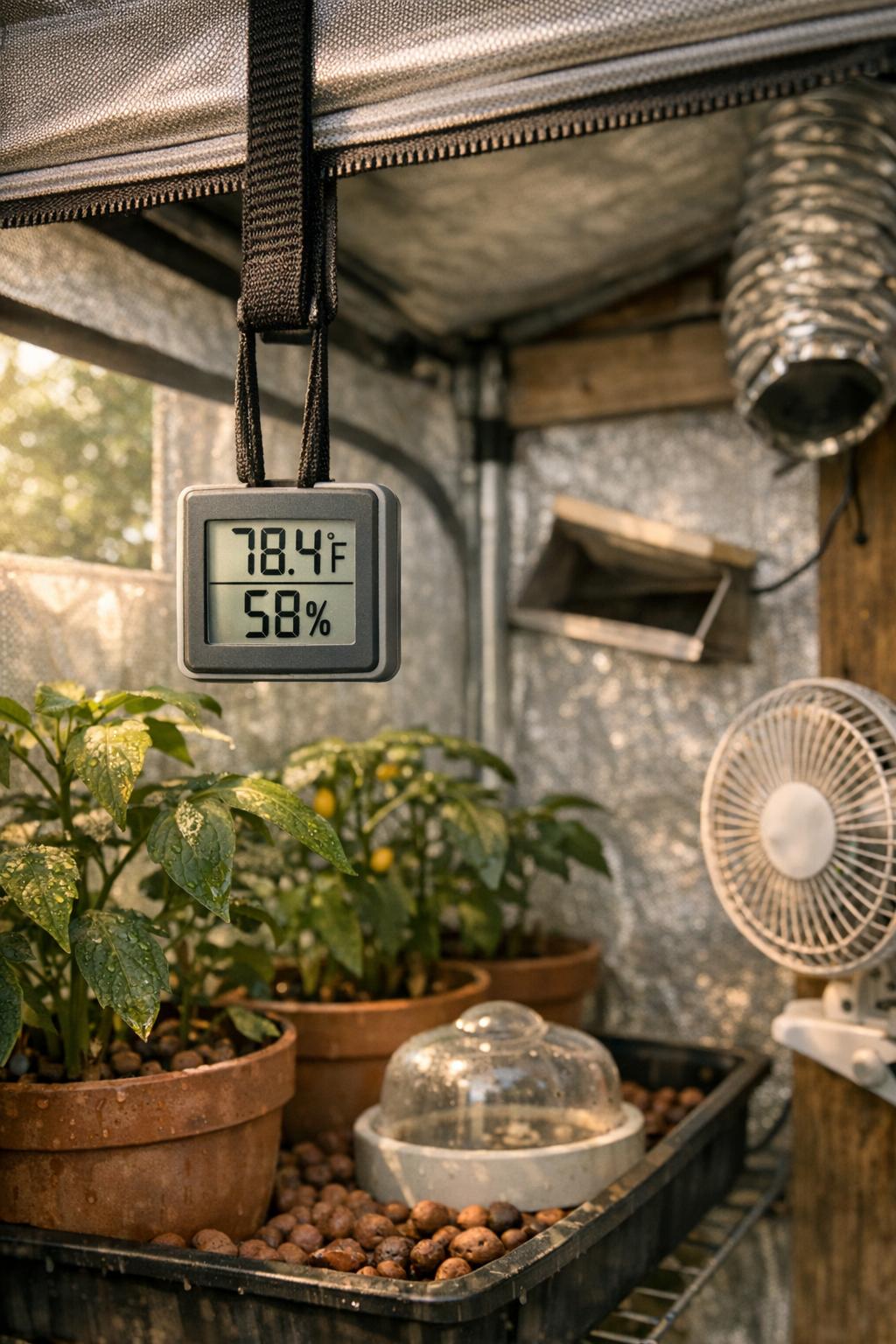
Managing climate inside a grow tent is the foundation of successful indoor gardening. When I set up a new grow tent, the first thing I focus on is not nutrients or training techniques. It is temperature and humidity. In a closed grow tent environment, small changes can happen quickly, and if you are not in control, your plants will let you know.
Unlike open rooms or outdoor gardens, a grow tent is a contained ecosystem. That is actually a major advantage. Inside grow tents, you have the ability to fine tune airflow, dial in humidity, and stabilize temperatures in ways that are impossible outside. But that control only works if you understand how all the pieces interact.
Why Climate Control Matters in a Grow Tent
Inside a grow tent, plants rely entirely on you for environmental consistency. The reflective walls trap light and warmth. Your grow lights generate heat. Transpiration from leaves increases humidity. Without proper ventilation and monitoring, the environment inside a grow tent can shift from ideal to stressful very quickly.
When temperature is too high in a grow tent, plants can suffer from slowed growth, curled leaves, and weak stems. When humidity is too high, mold and mildew become serious threats, especially during flowering. If humidity is too low, plants can become stressed and struggle with nutrient uptake.
The goal is stability. In grow tents, stability equals healthy root systems, strong foliage, and predictable growth patterns.
Ideal Temperature Ranges Inside Grow Tents
In most grow tents, I aim for daytime temperatures between 70 and 80 degrees Fahrenheit. During lights off periods, I prefer a slight drop of about 5 to 10 degrees. That small difference mimics natural cycles while keeping the grow tent environment controlled.
Lighting plays a major role in temperature control inside a grow tent. High output lights generate significant heat, especially in a confined tent space. If your grow tent is running too hot, consider adjusting light height first. Raising lights slightly can reduce heat buildup while maintaining proper light coverage.
Ventilation is critical. Every grow tent should have an inline exhaust fan pulling warm air out through ducting. Passive or active intake vents should bring in fresh air to replace it. Without this constant exchange, warm air simply recirculates inside the grow tent.
Managing Humidity in a Grow Tent
Humidity levels should change depending on the plant growth stage, but always within the controlled climate of your grow tent.
Seedling Stage
Inside a grow tent, seedlings prefer higher humidity around 60 to 70 percent. Because the tent environment is sealed, you can achieve this easily with a small humidifier placed inside the tent. I like using a compact unit that fits neatly between containers without crowding the canopy.
Vegetative Stage
As plants mature in the grow tent, I gradually lower humidity to around 50 to 60 percent. At this stage, strong airflow inside the tent becomes more important. Oscillating fans keep air moving across leaves and prevent damp pockets from forming in corners of the grow tent.
Flowering Stage
During flowering inside grow tents, humidity must come down further. I keep it around 40 to 50 percent. In a dense grow tent canopy, moisture can easily get trapped between buds. A dehumidifier positioned just outside the grow tent but connected through airflow can help regulate levels without overcrowding the interior space.
Equipment That Makes Climate Control Easy
Every grow tent setup should include a digital thermometer and hygrometer combo. I place one at canopy level inside the grow tent because that is where accurate readings matter most. Conditions near the floor can be very different from those near the lights.
An adjustable inline fan with a speed controller is one of the best upgrades for any grow tent. It allows precise control over how much warm air is removed. Pairing the fan with a carbon filter also keeps odors contained within the grow tent system.
For more advanced grow tents, a climate controller can automate the process. These devices turn fans or humidifiers on and off based on preset ranges. In a sealed tent environment, automation prevents sudden swings that happen when you are not around.
Balancing Airflow Inside a Grow Tent
Good airflow inside a grow tent does more than manage heat. It strengthens stems and prevents stagnant zones. I always place at least one oscillating fan at canopy level and another lower in the tent if space allows.
However, airflow should not be harsh. In a grow tent, constant direct wind can cause leaf edges to dry out. Aim fans to move air across and around plants, not directly blasting into them.
The size of your grow tent matters. A 2 by 2 tent requires far less airflow than a 4 by 4 or larger tent. Oversizing your exhaust fan in a small grow tent can drop humidity too quickly and cause unnecessary fluctuations.
Common Climate Mistakes in Grow Tents
One of the most common mistakes I see in grow tents is underestimating light heat. Growers install powerful lights but forget that in a confined tent space, heat accumulates faster than expected.
Another issue is over crowding. A packed grow tent restricts airflow and traps moisture between leaves. Even if your overall humidity reading looks acceptable, microclimates inside the tent canopy can develop and cause problems.
Finally, ignoring nighttime conditions can create stress. In a grow tent, temperatures can drop too much when lights turn off. If your tent is located in a cool room, consider using a small heater designed for enclosed indoor spaces, placed safely outside the direct plant area.
Dialing In Your Specific Grow Tent
Every grow tent behaves slightly differently depending on room placement, lighting type, and seasonal changes. A tent in a basement will respond differently from one in a spare bedroom. That is why monitoring matters so much.
I recommend checking readings at least twice daily during early setup. Once your grow tent stabilizes, adjustments become less frequent. Over time, you will learn how your specific grow tent responds to outside temperature shifts and lighting schedules.
The beauty of grow tents is predictability. When you lock in temperature and humidity, plants reward you with vigorous growth and fewer surprises.
FAQ
What is the best temperature for a grow tent?
Most grow tents perform best between 70 and 80 degrees Fahrenheit during lights on periods, with a small drop at night. The exact target can vary slightly by plant type, but stability inside the grow tent is more important than perfection.
How do I lower humidity inside my grow tent?
Increase exhaust fan speed, improve airflow with oscillating fans, and consider adding a dehumidifier to the room feeding air into the grow tent. Reducing plant crowding inside the tent also helps prevent trapped moisture.
Can I put a humidifier directly inside a grow tent?
Yes, during early growth stages especially. Choose a compact unit that fits comfortably inside the grow tent without restricting airflow. Always monitor humidity levels closely to avoid oversaturation in the enclosed tent space.
Do small grow tents overheat easily?
Yes, small grow tents can heat up quickly because the air volume is limited. Proper ventilation and light positioning are essential to keep temperatures stable in compact tent setups.
How often should I check climate conditions in my grow tent?
During initial setup, check at least twice per day. After your grow tent environment stabilizes, daily checks are usually enough unless you change lighting, plant density, or seasonal room conditions.


