
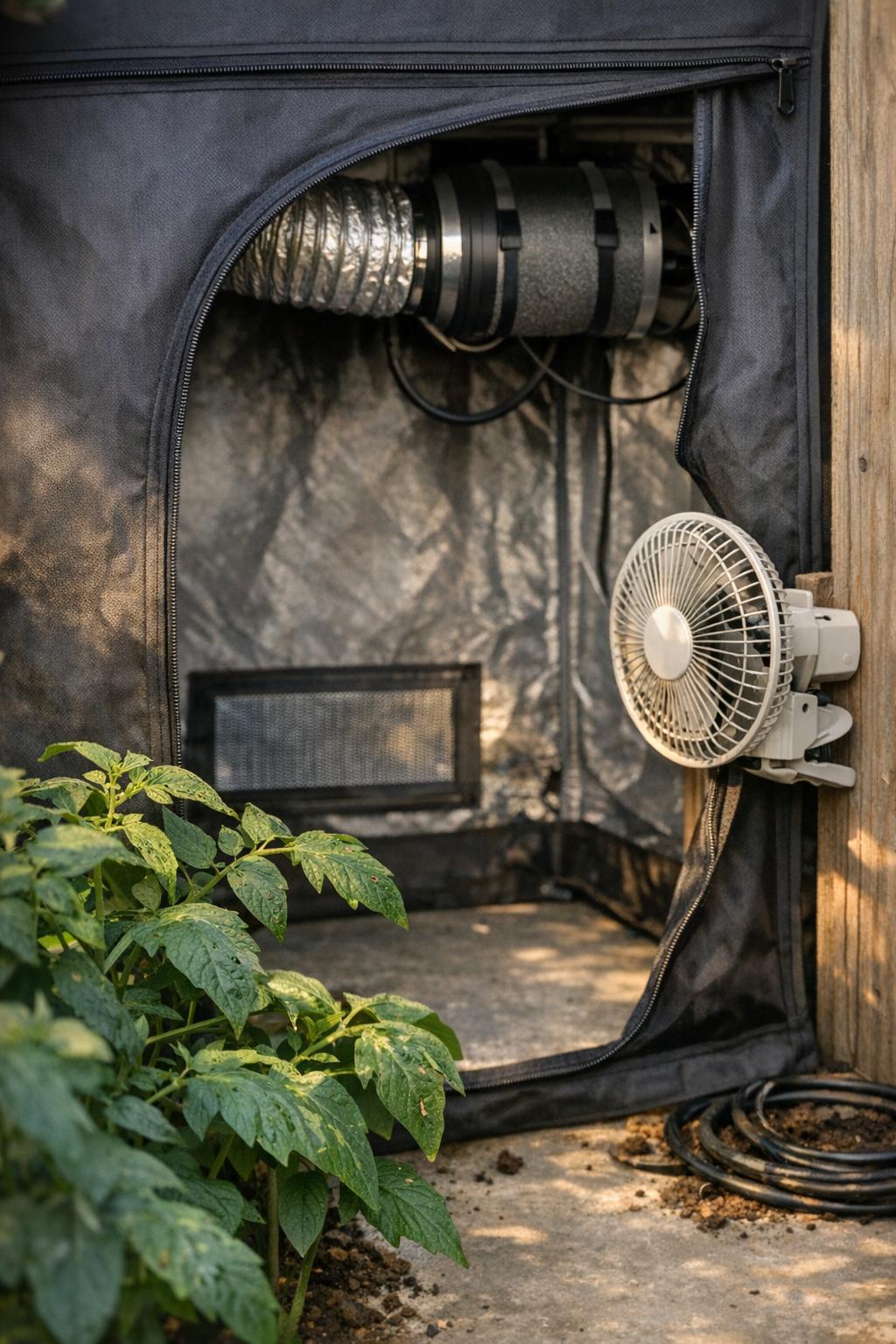
Excess negative pressure inside a grow tent is one of the most common system failures I see in indoor setups. When a grow tent is under too much suction, the walls pull inward hard, airflow becomes unstable, and your environmental control stops behaving the way you expect.
This is not just about appearance. In grow tents, air exchange drives temperature stability, humidity management, and carbon filtration efficiency. If pressure is off balance, every other component in the tent starts working against itself. In this guide, I will walk through exactly how to diagnose and correct excess negative pressure inside a grow tent environment.
What Excess Negative Pressure Looks Like in a Grow Tent
Some negative pressure inside a grow tent is good. It ensures air exits through your carbon filter and not through zipper gaps. But when the exhaust fan is pulling significantly more air than the tent can passively intake, problems begin.
Clear symptoms inside grow tents include:
- Tent walls sucking inward dramatically
- Doors difficult to unzip
- Intake flaps whistling or snapping
- Oscillating fans struggling due to reduced internal air volume
- Environmental swings when the exhaust fan ramps up
If your grow tent looks vacuum sealed, you are not in a healthy pressure range.
Why Excess Negative Pressure Happens in Grow Tents
Inside grow tents, air only enters through passive intake flaps or intake fans. Excess suction happens when:
- Your exhaust fan is too powerful for tent size
- Duct runs are short and unrestricted, increasing effective fan output
- Passive intake area is too small
- Intake vents are blocked by walls or objects
- A carbon filter is freshly cleaned or replaced, increasing airflow efficiency
Unlike a room grow, a grow tent is a flexible fabric structure. That means pressure imbalances physically distort the structure and change internal air volume. That distortion alone changes airflow behavior.
Step 1: Measure Airflow Direction and Intensity
Before changing equipment, confirm that the issue is truly excessive negative pressure.
Use the Tissue Test
Place a small piece of tissue near passive intake flaps. In a properly balanced grow tent, the tissue should gently pull inward. If it snaps aggressively against the mesh, airflow velocity is too high.
Watch the Tent Frame
If support poles bow inward noticeably, your exhaust fan is overpowering your intake capacity.
Step 2: Increase Passive Intake Surface Area
This is the simplest and often most effective fix inside grow tents.
Open Additional Intake Flaps
Most grow tents have multiple mesh covered flaps. Open more than one. Many growers rely on a single intake when the tent was designed for two or three.
Fully Unzip Inner Mesh Panels
Sometimes the outer flap is open but the inner screen is partially closed. In a grow tent, that mesh significantly restricts airflow. Open it fully if pest control is not a concern in your indoor space.
Ensure Clearance Around Intakes
Grow tents placed flush against a wall choke intake airflow. Pull the tent at least several inches away from walls so air can freely enter.
Step 3: Slow Down the Exhaust Fan
If increasing intake does not correct the issue, the exhaust fan inside your grow tent is moving too much air.
Install or Adjust a Fan Speed Controller
A quality variable speed controller allows precise tuning. Reduce fan speed gradually while observing tent wall tension.
Your goal inside the grow tent is mild inward tension, not structural collapse.
Use Environmental Controllers Carefully
If your grow tent uses a temperature or humidity trigger controller, check ramp up settings. Some controllers push fans to full output when thresholds are crossed, causing pressure distortion during cycles.
Step 4: Evaluate Carbon Filter Resistance
This step is often overlooked but matters inside grow tents.
A brand new carbon filter has lower resistance than an older one filled with dust particles. When replacing a filter, airflow can increase significantly, worsening negative pressure.
Check Filter Size
Ensure the carbon filter inside your grow tent matches the rated airflow of your fan. An undersized filter forces the fan to work harder and can create uneven suction patterns.
Inspect for Blockages
If airflow seems inconsistent, remove the filter briefly and observe tent pressure changes. Do not run permanently without filtration if odor matters, but short testing reveals system imbalance causes.
Step 5: Consider Adding an Active Intake Fan
In some grow tents, passive intake cannot keep up with high powered exhaust systems.
When to Add an Intake Fan
- Large grow tent over four feet wide
- High capacity exhaust fan above four hundred CFM
- Long ducting runs reducing natural intake draw
How to Balance Intake and Exhaust
Install a smaller inline fan at the intake port. The intake fan inside your grow tent should move slightly less air than the exhaust fan. This preserves negative pressure while preventing wall collapse.
I typically size intake airflow at around eighty percent of exhaust airflow in enclosed grow tents.
How Excess Negative Pressure Affects Environmental Stability
In grow tents, extreme suction accelerates air exchange beyond intended design. That causes:
- Rapid humidity drop during exhaust spikes
- Temperature dips near intake vents
- Inconsistent distribution of conditioned air
- Carbon filter inefficiency due to high velocity airflow
When suction is controlled, airflow becomes laminar and predictable. Oscillating fans distribute intake air evenly instead of fighting a directional vacuum effect.
Troubleshooting Excess Negative Pressure in Grow Tents
My grow tent walls still suck inward after opening all intakes
Your exhaust fan is oversized. Reduce speed or replace it with a properly rated model for your tent volume.
Pressure is fine when lights are off but bad when lights are on
Your environmental controller likely increases exhaust speed in response to heat. Instead of maximum ramp, adjust to a gradual response curve if available.
My ducting is short and straight. Does that matter?
Yes. Short straight ducting increases real world airflow output. Inside grow tents, this makes fans perform above their expected restriction level. Slightly longer duct runs or a carbon filter with proper resistance can rebalance the system.
Can I ignore strong negative pressure if temperature looks stable?
No. Structural stress on grow tents reduces zipper life, stresses seams, and destabilizes intake airflow long term. Balanced pressure improves equipment longevity.
The Target Pressure for Grow Tents
In a properly tuned grow tent:
- Walls pull inward slightly
- Doors unzip without resistance
- Intake mesh pulls gently inward
- Environmental changes happen gradually, not abruptly
When I set up grow tents, I adjust airflow until the structure holds shape with mild tension but no visible distortion. That is the balance point where filtration works, airflow distributes properly, and environmental equipment stops overreacting.
Excess negative pressure is not a plant growing issue. It is a mechanical imbalance inside an enclosed fabric system. Treat it like tuning airflow through a controlled chamber, because that is exactly what a grow tent is.
Once balanced, your grow tent will run quieter, more stable, and more predictably every day.


