
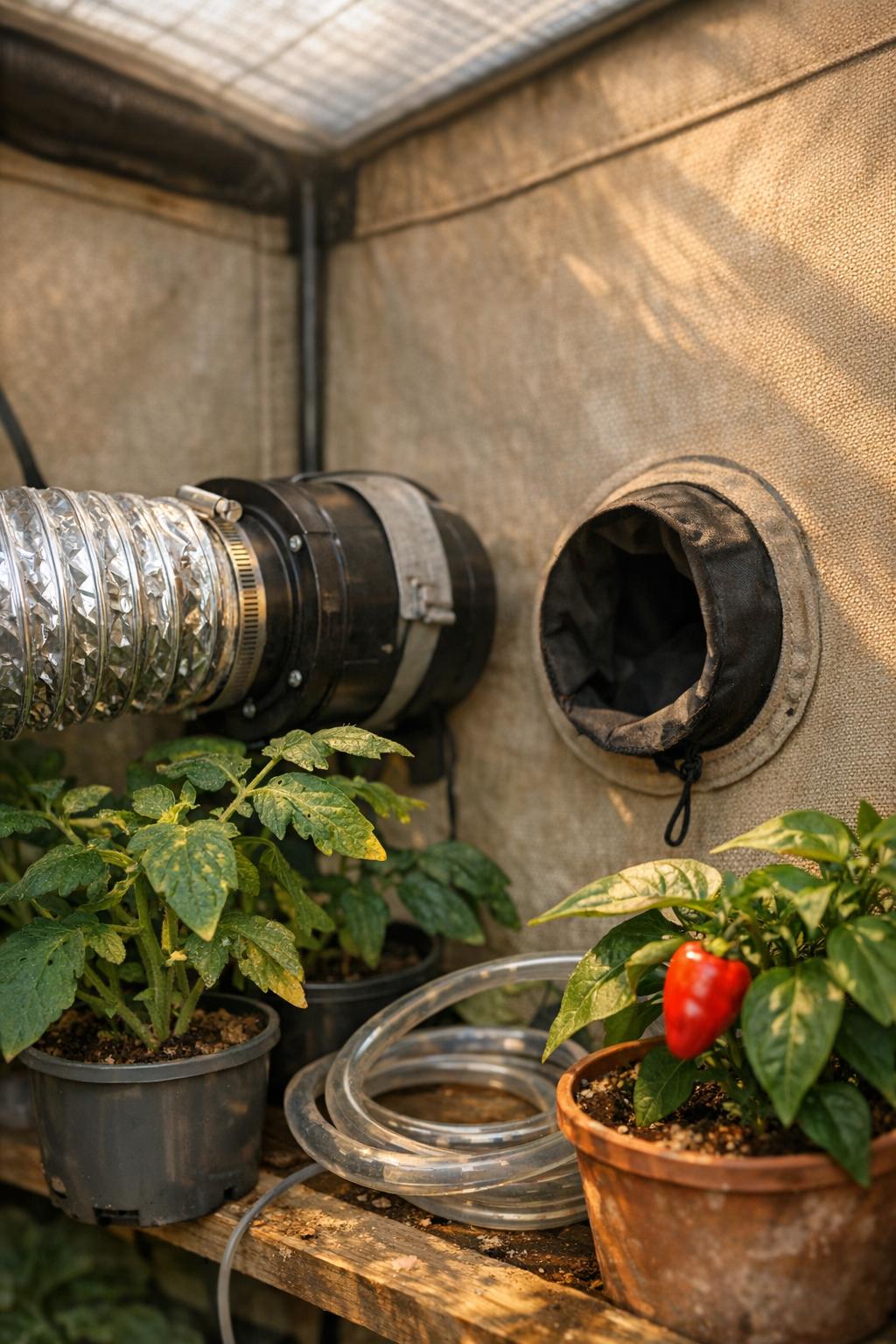
One of the most overlooked system failures inside a grow tent is excessive negative pressure. Many growers install a powerful inline fan, seal everything tightly, and assume more extraction is better. Inside grow tents, that often creates airflow imbalance that silently reduces plant performance.
When negative pressure becomes too strong in a grow tent, the tent walls suck inward hard, intake airflow becomes restricted, CO2 availability drops, and environmental controls start fighting each other. This is not a plant care issue. It is a system mechanics problem. If your tent walls look vacuum sealed, this guide will help you fix it properly.
What Excessive Negative Pressure Actually Does Inside a Grow Tent
Grow tents are enclosed fabric chambers supported by a lightweight frame. They are not designed to function under heavy vacuum force. Moderate negative pressure is good because it controls odor and ensures filtered exhaust. Excessive negative pressure creates four specific problems inside grow tents:
1. Restricted Passive Intake Flow
If your intake vents are passive, meaning they rely on suction from the exhaust fan, strong negative pressure can choke the openings. The fabric pulls tight against the mesh screens, reducing the cross sectional area where air can enter. That limits fresh air even though your exhaust fan is working harder.
2. Reduced CO2 Availability
Inside a grow tent, plants consume CO2 quickly under strong lighting. If intake air is restricted, fresh CO2 enters too slowly. Growth can stall even when temperature and humidity numbers look fine.
3. Fan Stress and Noise
An exhaust fan working against severe suction experiences higher static pressure. This reduces efficiency and increases motor strain. Over time this shortens fan life and increases power consumption inside your grow tent.
4. Structural Stress
If tent walls are pulled inward constantly, poles and corner connectors experience torque. Zippers become misaligned. Over months of continuous operation, this weakens the tent structure.
How to Diagnose Negative Pressure Imbalance
Inside grow tents, diagnosis is visual and mechanical. Here is exactly what to check.
Step 1 Check Wall Deflection
Stand in front of your grow tent during full exhaust operation. Moderate negative pressure slightly pulls the walls inward. Excessive negative pressure visibly bows all sides, sometimes by several inches. If the fabric is stretched tight like a drum skin, airflow imbalance is likely.
Step 2 Open a Zipper Slightly
Crack the main door zipper by one inch while the exhaust fan runs. If the tent fabric immediately relaxes outward and airflow noise changes dramatically, your intake is undersized for the exhaust rate.
Step 3 Observe Plant Movement
Inside a properly balanced grow tent, circulation fans create leaf movement. If leaves appear oddly still despite strong exhaust, intake restriction may be limiting internal air exchange.
Step 4 Compare Fan Rated CFM to Intake Area
Look at your inline exhaust fan rated cubic feet per minute. Now check the total open mesh area of your passive intake flaps. In many grow tents, growers run a high output fan with only one small intake flap open. That mismatch creates forced vacuum conditions.
How to Correct Excessive Negative Pressure Inside a Grow Tent
The solution is system balancing. Do not reduce extraction blindly. Adjust intake capacity to match exhaust flow.
Step 1 Fully Open All Passive Intake Vents
Most grow tents include multiple lower vent panels. Open all of them completely. Remove outer covers if necessary. After opening them, observe the wall tension again. This alone often solves the problem.
Step 2 Add a Dedicated Intake Fan
If passive vents are insufficient, install an active intake fan. This should be rated at roughly eighty percent of your exhaust fan airflow rating. The goal is slight negative pressure, not vacuum conditions.
Mount the intake fan low in the grow tent to bring in cooler fresh air. Use ducting with minimal bends to reduce resistance.
Step 3 Install a Fan Speed Controller
If your exhaust fan runs at full speed constantly, add a variable speed controller. Gradually reduce exhaust speed until the tent walls show mild inward tension rather than deep collapse. Always adjust with lights on since heat load affects airflow behavior inside grow tents.
Step 4 Increase Intake Port Surface Area
If you cannot add an intake fan, increase passive intake area. Some growers cut an additional duct port into a lower panel using a reinforced collar designed for grow tents. More intake area equals less restriction.
Step 5 Shorten Exhaust Duct Runs
Long ducting with sharp bends increases static pressure. That makes the exhaust fan work harder, deepening negative pressure inside the grow tent. Shorten duct runs and remove unnecessary turns to improve flow efficiency.
Dialing In Proper Grow Tent Pressure Balance
Inside grow tents, the ideal state is slight negative pressure. Here is how I confirm balance in my own setups.
Visual Test
Walls gently pull inward about one inch. They should not be rigid or straining.
Tissue Test
Hold a small piece of tissue near a passive intake vent. It should draw inward gently, not snap aggressively against the mesh.
Door Crack Test
Opening the door slightly should not cause a dramatic airflow rush. If you hear strong suction when cracking the zipper, pressure is still too negative.
Advanced Adjustment for CO2 Focused Grow Tents
If you supplement CO2 inside a grow tent, excessive negative pressure wastes gas immediately. In sealed or semi sealed grow tents using CO2 injection, balance is even more critical.
In these systems, reduce exhaust fan runtime using a controller that activates only when temperature exceeds your set range. During CO2 injection cycles, intake and exhaust fans should remain off unless cooling is required. Pressure balance must be maintained without constant vacuum draw.
Troubleshooting Common Problems
The Tent Still Sucks In After Opening All Vents
Your exhaust fan is oversized for the tent volume. Either reduce fan speed or replace it with a properly matched model. Many growers install high capacity fans meant for much larger grow tents.
Odor Leakage After Reducing Negative Pressure
If smell escapes after adjustments, your carbon filter airflow rating may not match the fan. Inside grow tents, odor control depends on proper filter CFM matching. Ensure the carbon filter can handle the adjusted airflow level.
Intake Fan Causes Positive Pressure
If tent walls bulge outward, intake airflow exceeds exhaust rate. Reduce intake fan speed until walls return to slight inward tension. Grow tents must never operate in positive pressure if odor control matters.
Humidity Increased After Balancing Pressure
When intake improves, airflow patterns change inside the grow tent. You may need to reposition circulation fans to eliminate moisture pockets. This is an airflow redistribution issue, not a reason to return to strong vacuum conditions.
System Mindset for Grow Tent Airflow
A grow tent is a controlled environment box. Every fan affects pressure, gas exchange, and structural load. The goal is balance, not maximum extraction.
Whenever you upgrade lighting, change duct routing, or add equipment inside grow tents, reassess pressure behavior. Watch the walls. Listen to airflow. Small mechanical changes can create large environmental shifts.
If your tent looks like it is being crushed inward, that is not efficiency. It is imbalance. Fix the intake side, match airflow correctly, and let the environment stabilize the way a properly tuned grow tent system should.


