
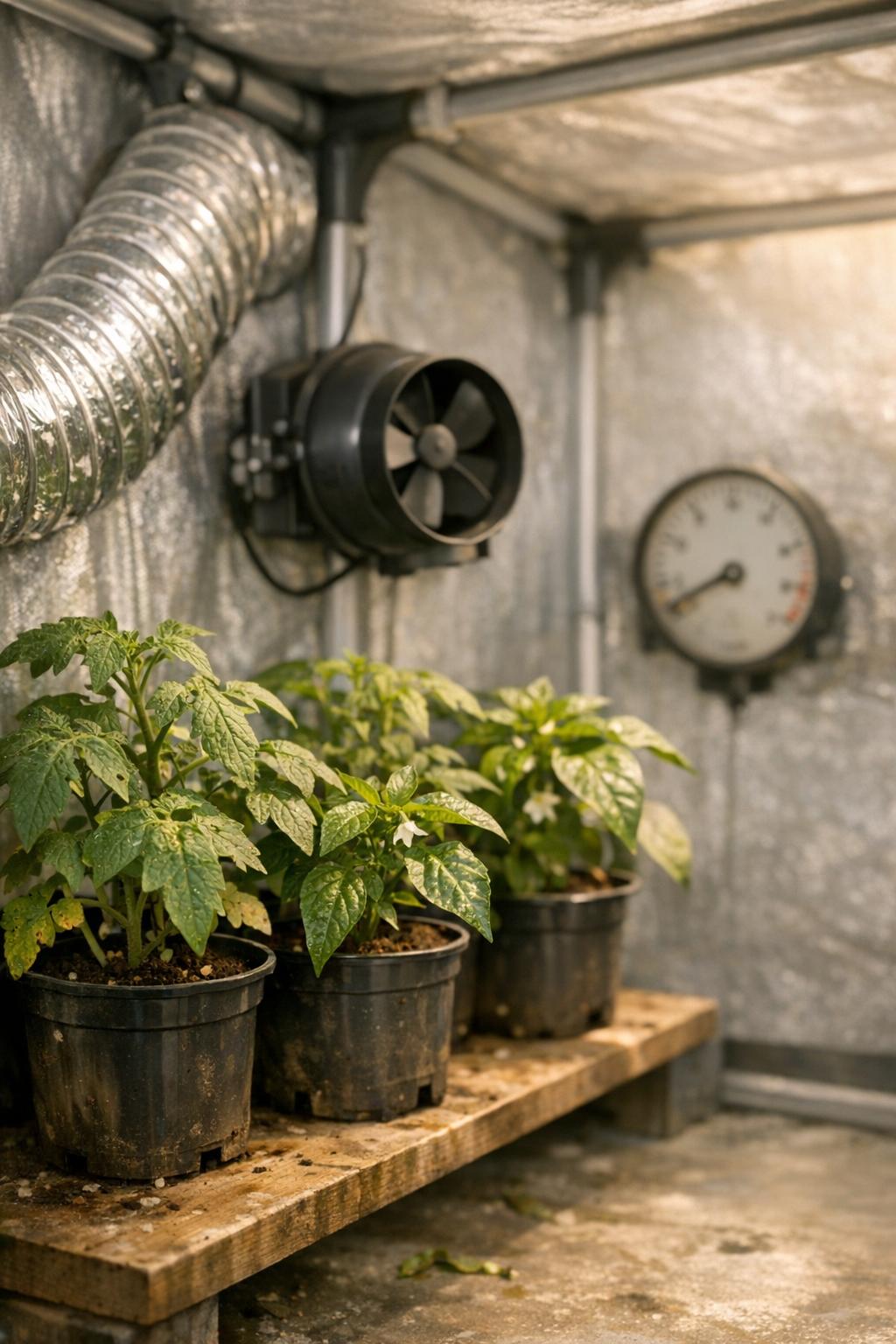
Unstable negative pressure inside a grow tent causes more problems than most growers realize. If your grow tent walls flex in and out, odors leak into the room, or airflow feels inconsistent, your ventilation system is out of balance.
Proper negative pressure in grow tents is not just about odor control. It directly affects air exchange rates, CO2 stability, and how evenly light heat and humidity move across the canopy. When pressure fluctuates, every environmental setting becomes harder to control. This guide focuses only on fixing that system level instability inside a grow tent.
What Stable Negative Pressure Should Look Like in a Grow Tent
In a properly tuned grow tent, the side walls gently pull inward and stay there. They should not pulse, collapse aggressively, or return to neutral shape when the exhaust fan cycles.
Stable negative pressure inside grow tents means:
- Air enters only through designated intake ports
- Odor cannot escape through seams or zippers
- Carbon filters operate at full efficiency
- Internal temperature adjustments respond predictably
If your grow tent does not hold steady inward tension, the issue is mechanical, not botanical. You are dealing with fan balance, intake restriction, or airflow resistance.
Main Causes of Pressure Instability in Grow Tents
1. Oversized Exhaust Fan
If your inline fan moves more air than your intake openings can supply, the grow tent will repeatedly collapse inward until passive intake flow catches up. This creates pulsing walls and uneven airflow.
2. Intake Ports Too Restricted
Many growers leave only one lower vent open. Inside grow tents, passive intake area must be large enough to match the exhaust fan capacity. Too little intake space creates vacuum swings.
3. Carbon Filter Resistance Changes
As a carbon filter loads with particles, airflow resistance increases. Inside grow tents this changes pressure balance over time. A setup that worked perfectly two months ago can become unstable without obvious warning.
4. Variable Speed Fan Hunting
Some fan controllers constantly ramp power up and down to chase temperature targets. Inside a grow tent this causes pressure oscillation. The walls flex because the exhaust rate never stabilizes.
Step by Step: How I Stabilize Negative Pressure in a Grow Tent
Step 1: Lock the Exhaust Fan at a Fixed Speed
Turn off automated ramping features temporarily. Set the inline exhaust fan to a constant medium setting. This gives you a stable baseline to measure from.
Inside grow tents, pressure must be dialed mechanically before automation is allowed to control it.
Step 2: Fully Open All Passive Intake Flaps
Open every lower intake port in the grow tent. Remove fine mesh covers temporarily for testing. You want maximum intake flow during diagnosis.
If the tent walls stop pulsing and hold steady, restricted intake was the cause.
Step 3: Match Intake Area to Fan Size
As a rule inside grow tents, passive intake area should be three to four times larger than your exhaust duct diameter.
Example:
- Four inch exhaust duct requires at least three open lower vents
- Six inch exhaust duct typically requires every intake flap open
If your grow tent only has small intake ports, add an active intake fan set at a lower speed than the exhaust fan. The exhaust must always move slightly more air to maintain negative pressure.
Step 4: Inspect Ducting and Bends
Inside grow tents, tight duct bends increase resistance and destabilize airflow. Straighten duct runs as much as possible. Keep bends gradual.
If your carbon filter is mounted inside the grow tent, ensure it is not pressed against walls. Restricted pre filter surface area reduces efficiency and alters pressure balance.
Step 5: Evaluate Carbon Filter Condition
A saturated carbon filter restricts airflow. Remove the duct from the fan temporarily and feel the airflow strength. If airflow is weak even at high speed, the filter may be clogged.
In grow tents running continuously, carbon filters often need replacement sooner than growers expect. Pressure instability that gradually worsens over weeks usually points here.
Step 6: Reintroduce Automation Carefully
Once the grow tent holds steady inward tension at fixed speed, slowly re enable temperature or humidity control features.
Set minimum fan speed high enough that the tent never returns to neutral wall position. Automation should adjust within a narrow band, not swing from near off to maximum.
Fine Tuning for Different Grow Tent Sizes
Small Grow Tents Under Three by Three
These spaces react quickly to airflow changes. Even small fan speed shifts cause visible wall movement. I run smaller grow tents with slightly lower exhaust speeds and maximize passive intake area to prevent oscillation.
Medium to Large Grow Tents
Larger grow tents require more powerful fans, which increases the risk of over pull. If the tent fabric bows deeply inward, reduce exhaust speed slightly rather than restricting intake. Restricting intake destabilizes the system.
Inside bigger grow tents, stable negative pressure should feel firm but not extreme when you press on the wall.
How Lighting and Internal Circulation Affect Pressure
Strong circulation fans inside a grow tent can push air directly toward walls and intake flaps, momentarily altering airflow paths. While they do not change overall pressure dramatically, poor positioning can create localized turbulence that feels like instability.
Keep oscillating fans angled across the canopy, not aimed directly at intake vents. In grow tents with powerful LED fixtures, rising heat columns can briefly change air density near the exhaust point. Stable exhaust speed minimizes these micro fluctuations.
Troubleshooting Guide for Grow Tent Pressure Problems
The Walls Balloon Outward
This means positive pressure. Your intake fan is stronger than your exhaust fan, or your exhaust duct is blocked. Reduce intake speed immediately. In grow tents, odor leaks happen under positive pressure.
The Tent Sucks In Too Hard
Excessive inward collapse restricts internal air movement. Open more passive intake area or reduce exhaust speed slightly. The tent should curve inward gently, not fold.
Pressure Changes When Room Door Opens
Your lung room is influencing the grow tent. If the outer room becomes negative when the house ventilation system runs, your tent will struggle to draw intake air. Ensure the room supplying the grow tent has adequate fresh air supply.
Odor Escapes Even With Inward Walls
Check zipper seams, cable ports, and duct connections. Inside grow tents, even minor duct leaks before the carbon filter allow untreated air to exit. Seal all joints with proper clamps and foil tape.
The Goal: Controlled Slight Vacuum
Inside grow tents, you are aiming for controlled slight vacuum, not extreme suction. When exhaust airflow, intake area, and filter resistance are balanced, the tent becomes predictable. Environmental adjustments respond quickly. Odor stays contained. Air exchange remains consistent.
If your ducting is straight, intake area is generous, carbon filter is clean, and exhaust speed is steady, negative pressure will stabilize. Once that foundation is solid, every other environmental improvement inside your grow tent becomes easier to manage.


