
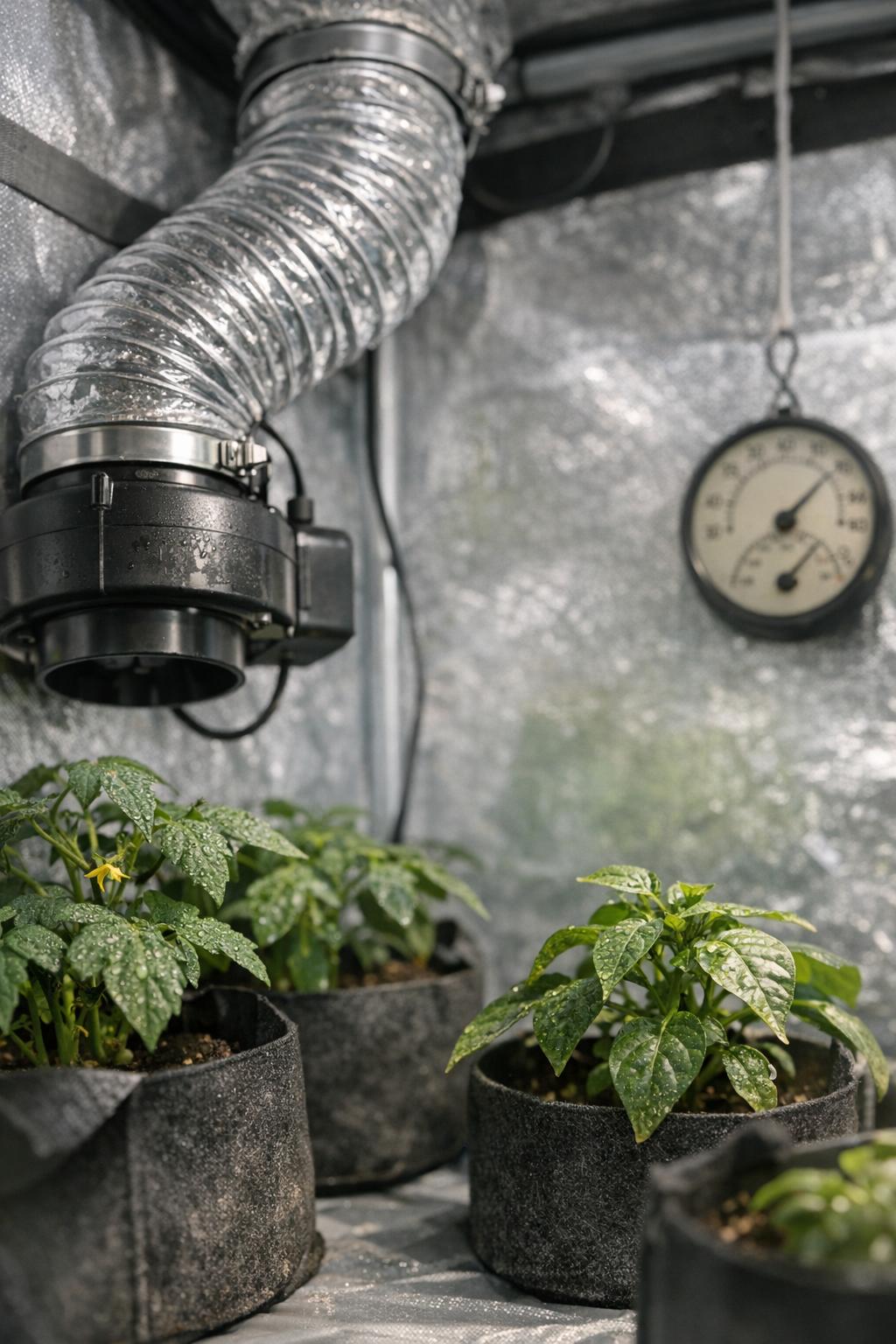
Negative pressure is the backbone of odor and airflow control inside a grow tent. When a grow tent is not maintaining proper negative pressure, smells leak, heat builds unevenly, and your inline fan system works harder than it should. This is not a plant problem. It is a system imbalance.
I see this constantly in grow tents where the exhaust fan, intake openings, and passive flaps are not tuned to work together. The good news is that negative pressure issues are mechanical. That means they can be measured, adjusted, and fixed with precision.
What Proper Negative Pressure Looks Like in a Grow Tent
Inside a properly balanced grow tent, the tent walls should slightly suck inward when zipped. Not collapsing. Not rigid. Just gently pulled in. That visual cue tells you the exhaust fan is removing slightly more air than is entering passively.
If your grow tent walls are bulging outward, air is being forced in faster than it is being removed. If the walls are severely sucked inward, your intake area is too restricted and airflow across the canopy is being reduced.
The goal is controlled vacuum pressure that keeps air, heat, and odor moving in one direction through the carbon filter and out of the tent.
Why Negative Pressure Fails in Grow Tents
1. Intake Area Too Small
Most grow tents rely on passive intake flaps near the bottom. If you only open one small mesh vent, your inline fan will struggle. The fan pulls air faster than it can enter, creating strain and reducing overall air exchange efficiency.
Fix this by opening multiple lower intake vents. If your grow tent allows it, fully open the mesh panels on the opposite side of your exhaust. More intake area reduces resistance and stabilizes pressure.
2. Carbon Filter Restriction
A clogged or humidity saturated carbon filter dramatically reduces airflow in grow tents. As the filter loads with particles and moisture, static pressure increases. Your fan might be running at full speed but moving less air.
Remove the filter temporarily and observe the tent walls. If negative pressure improves immediately, the filter is the bottleneck. Replace old carbon filters or reduce humidity spikes inside the grow tent that prematurely clog carbon pores.
3. Ducting That Is Too Long or Crushed
Every bend inside ducting adds resistance. In grow tents with several tight turns between the fan and exhaust port, airflow drops sharply.
Shorten duct runs as much as possible. Keep duct paths straight. Avoid compressing flexible ducting. If your grow tent layout forces sharp turns, consider rigid duct sections to maintain internal diameter.
4. Oversized Intake Fans
Some growers install powered intake fans inside grow tents. If that intake fan pushes more air than the exhaust removes, you lose negative pressure entirely.
If using an intake fan inside a grow tent, ensure it is rated lower than the exhaust fan. Exhaust must always dominate intake airflow to preserve odor control.
Step by Step Diagnosis Inside a Grow Tent
Here is how I systematically test negative pressure problems inside grow tents.
Step 1: Perform the Wall Test
Fully zip the grow tent. Turn on only the exhaust system. Observe the tent walls. Slight inward pull is correct. No movement or outward bulging indicates imbalance.
Step 2: Check Intake Configuration
Open all passive intake flaps at the bottom of the grow tent. Repeat the wall test. If pressure stabilizes, restricted intake was the issue.
Step 3: Isolate the Carbon Filter
Disconnect the carbon filter but leave the fan connected. Run the system briefly. If airflow improves dramatically, replace or service the filter.
Step 4: Inspect Duct Runs
Look inside the grow tent and along the exhaust path. Straighten ducting. Remove unnecessary bends. Ensure there are no crushed sections behind the tent.
Step 5: Measure Airflow Output
If possible, use an anemometer at the exhaust port of the grow tent. Compare readings before and after adjustments. This removes guesswork and confirms improvements.
Advanced Optimization for Stable Negative Pressure
Balance Fan Speed
Many modern grow tents use variable speed inline fans. Instead of running at maximum power, reduce speed slightly after optimizing intake area. Excessive exhaust can cause tent wall collapse and reduce even airflow across plants.
The ideal setup creates smooth airflow from intake vents, across the canopy, through the carbon filter, and out of the grow tent without turbulence.
Use Internal Circulation Correctly
Oscillating fans inside grow tents should support airflow direction, not fight it. Position circulation fans to move air toward the filter side of the tent. This prevents stagnant pockets and supports consistent air exchange.
Seal Light Leaks That Become Air Leaks
Small pinholes, poorly sealed duct ports, and loose zippers in grow tents allow unintended air entry. These air leaks weaken controlled intake flow.
Use light proof tape on unused duct ports. Fully tighten drawstrings around duct sleeves. Ensure the grow tent zipper closes tightly along the entire seam.
Common Mistakes That Make Negative Pressure Worse
- Running intake and exhaust at equal speed inside a grow tent
- Leaving upper vent flaps open which disrupt airflow direction
- Mounting the carbon filter outside the grow tent and pulling air through long ducting
- Ignoring humidity buildup that saturates carbon filters
Every one of these mistakes disrupts the designed airflow pattern inside grow tents. Air must enter low, pass through the canopy, and exit high through filtration.
Troubleshooting FAQ for Grow Tent Negative Pressure
Why does my grow tent lose negative pressure at night?
Night cycles often reduce inline fan speeds if connected to temperature controllers. When lights turn off inside a grow tent, controller settings may lower exhaust output. Disable automatic speed reductions and maintain minimum airflow at all times.
Why are odors leaking even though the tent walls are sucking inward?
If your grow tent shows negative pressure but odor persists, inspect duct joints and filter seals. Air may be escaping after the carbon filter. Clamp all duct connections tightly and check for small tears in ducting.
Can a grow tent be too airtight?
No, but intake area can be too small. A grow tent material itself does not cause problems. Restricted intake vents do. Increase passive intake surface before adjusting fan power.
Should I add a stronger exhaust fan to fix pressure?
Not immediately. Most grow tents fail due to imbalance, not lack of power. First increase intake area, shorten duct runs, and verify filter condition. Only upgrade fan size if airflow remains insufficient after optimization.
Final System Check
After making adjustments, run your grow tent fully closed for several hours. Observe wall tension, monitor odor outside the tent, and verify steady airflow at the exhaust. The system should feel stable. No wall pulsing. No fabric snapping inward. Just smooth inward tension and consistent air movement.
When negative pressure is correctly tuned in a grow tent, odor control becomes reliable, heat management improves, and your ventilation equipment operates efficiently without strain. It is not about turning fans to maximum. It is about mechanical balance inside a sealed environment.
Grow tents reward precise airflow tuning. Once dialed in, the system maintains itself with minimal adjustment. That is when your ventilation stops being a problem and becomes a predictable, controlled tool.


