
Introduction
When I first started growing indoors, I underestimated how much humidity could make or break a harvest inside a grow tent. A grow tent is a sealed and reflective environment, which means moisture behaves very differently than it would in an open room. If you ignore humidity in grow tents, problems show up fast and usually when it is hardest to fix them.
Everything in a grow tent affects humidity, from watering habits to how warm the lights run. Because you are growing in an enclosed space, you have full control but also full responsibility. In this guide I will walk through exactly how I manage humidity inside my grow tent at every stage of growth.
Why Humidity Matters So Much in a Grow Tent
Inside a grow tent, air volume is limited and reflective walls trap heat and moisture. This means moisture from soil, leaves, and even the air coming from your exhaust system quickly builds up. In an open room, humidity can disperse. In grow tents, it accumulates.
High humidity in a grow tent can lead to fungal issues, weak growth, and poor transpiration. Low humidity is just as risky and can cause stunted plants and curled leaves. Because you are working in a sealed indoor environment, you must actively manage humidity instead of reacting after problems appear.
Target Humidity Levels for Grow Tents
Seedling Stage
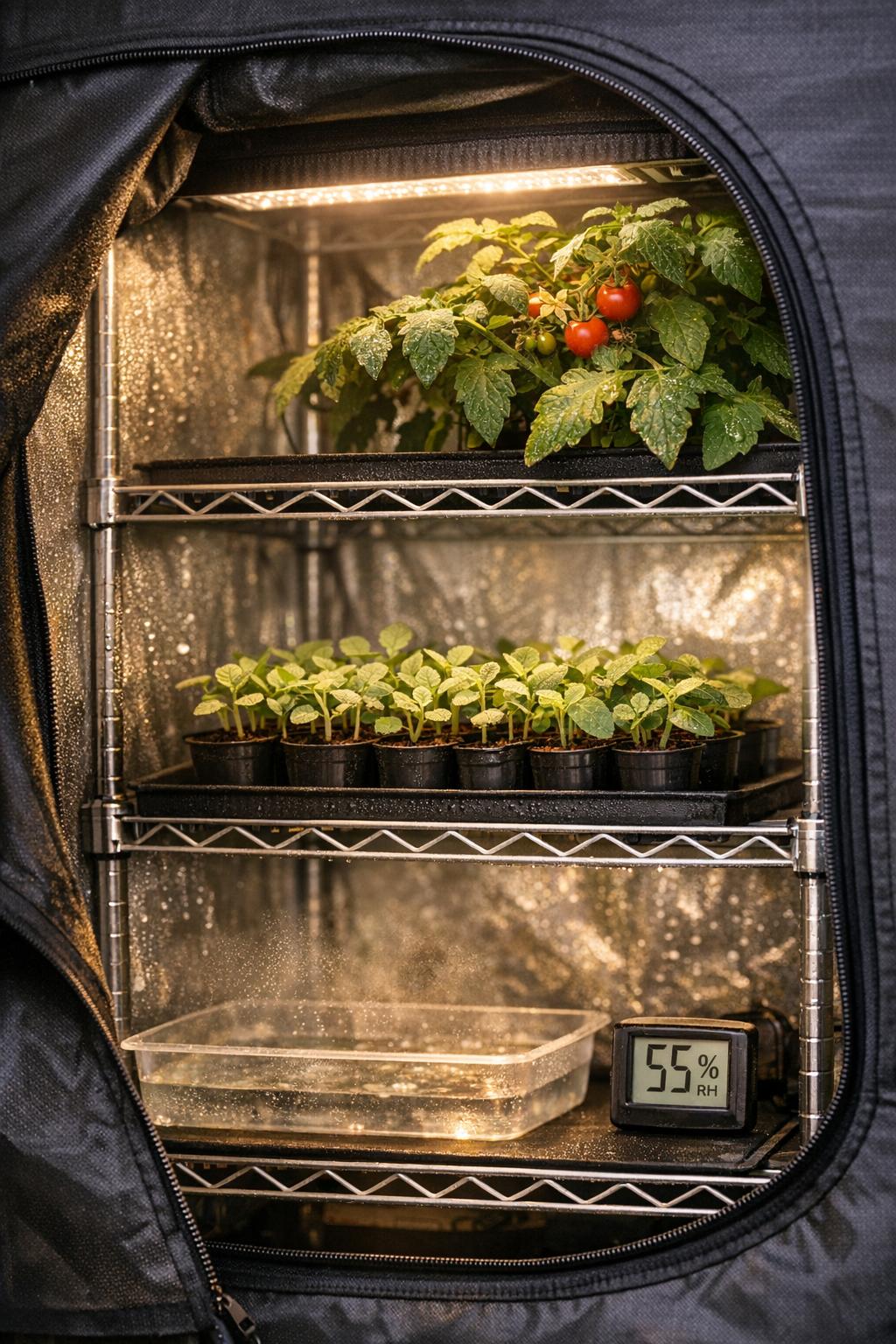
Seedlings inside a grow tent benefit from higher humidity because their root systems are still small. I aim for around sixty to seventy percent humidity during this stage. Inside a grow tent, this level helps seedlings take in moisture through their leaves while they establish roots.
To maintain this in a grow tent, I often reduce exhaust fan speed and use a small humidifier placed outside the direct light path. Because the tent is enclosed, small adjustments have a big impact.
Vegetative Stage
During vegetative growth, I gradually lower humidity in the grow tent to around fifty to sixty percent. At this stage, strong transpiration is important, and slightly drier air inside the grow tent encourages root development and nutrient uptake.
This is where airflow becomes critical. Oscillating fans inside the grow tent help move moisture away from leaf surfaces and prevent pockets of damp air.
Flowering Stage
Flowering plants inside a grow tent need lower humidity to avoid mold and bud rot. I target forty to fifty percent and sometimes slightly lower near harvest. Since grow tents trap moisture, this often requires active dehumidification.
A dehumidifier near the grow tent intake works better than placing one directly inside if space is limited. The key is keeping the air entering the tent dry enough to balance moisture produced inside.
Tools I Use to Control Humidity in Grow Tents
Every grow tent setup is different, but certain tools are almost universal. A digital hygrometer is non negotiable. I use at least one at canopy level inside the grow tent so I know what the plants actually experience.
An inline exhaust fan with a speed controller is my main humidity control tool. In a grow tent, adjusting fan speed changes humidity faster than almost anything else. For added stability, a programmable controller can automate this process based on humidity readings.
Humidifiers and dehumidifiers should always be sized for the volume of your grow tent. Oversized units cause swings, while undersized ones run constantly without effect.
Watering Practices That Affect Grow Tent Humidity
Overwatering is one of the biggest hidden humidity problems in grow tents. Wet soil continuously releases moisture into the enclosed space. Inside my grow tent, I let containers dry slightly between waterings to reduce excess evaporation.
I also water shortly after lights turn on. The warmth and airflow inside the grow tent help evaporate surface moisture in a controlled way instead of letting it linger overnight.
Managing Airflow Inside a Grow Tent
Airflow is not just about cooling. In a grow tent, it prevents stagnant humid air from settling around leaves and buds. I use at least one oscillating fan aimed across the canopy and another below it.
Exhaust and intake placement matters. Fresh air entering low and exiting high helps remove warm humid air efficiently from the grow tent. This airflow pattern keeps humidity more consistent from top to bottom.
Common Humidity Mistakes in Grow Tents
The biggest mistake I see is treating a grow tent like a regular room. Because grow tents are enclosed, small changes have big effects. Adding a humidifier without monitoring often causes more problems than it solves.
Another mistake is ignoring nighttime humidity. When lights go off in a grow tent, temperatures drop and humidity spikes. I plan my exhaust settings to account for this rather than reacting after condensation appears.
FAQ About Grow Tent Humidity
Do I need a humidifier for a grow tent
In many indoor environments, yes. Grow tents dry out quickly under strong lights, especially during the seedling stage. A small controllable humidifier is often necessary.
Can high humidity damage plants inside a grow tent
Absolutely. In grow tents, high humidity encourages mold, mildew, and poor transpiration. Because air is enclosed, these issues spread faster than in open spaces.
Should I put a dehumidifier inside my grow tent
If space allows, it can work, but I usually place it outside the tent near the intake. This keeps temperatures more stable inside the grow tent while still lowering humidity.
How often should I check humidity in my grow tent
I check readings daily during early growth and multiple times a day during flowering. Grow tents can change conditions quickly, especially after watering.
Final Thoughts
Humidity control inside a grow tent is about consistency, not perfection. Because grow tents magnify every variable, paying attention early saves a lot of stress later. With the right tools, airflow, and habits, managing humidity becomes second nature and your plants will show it.


