
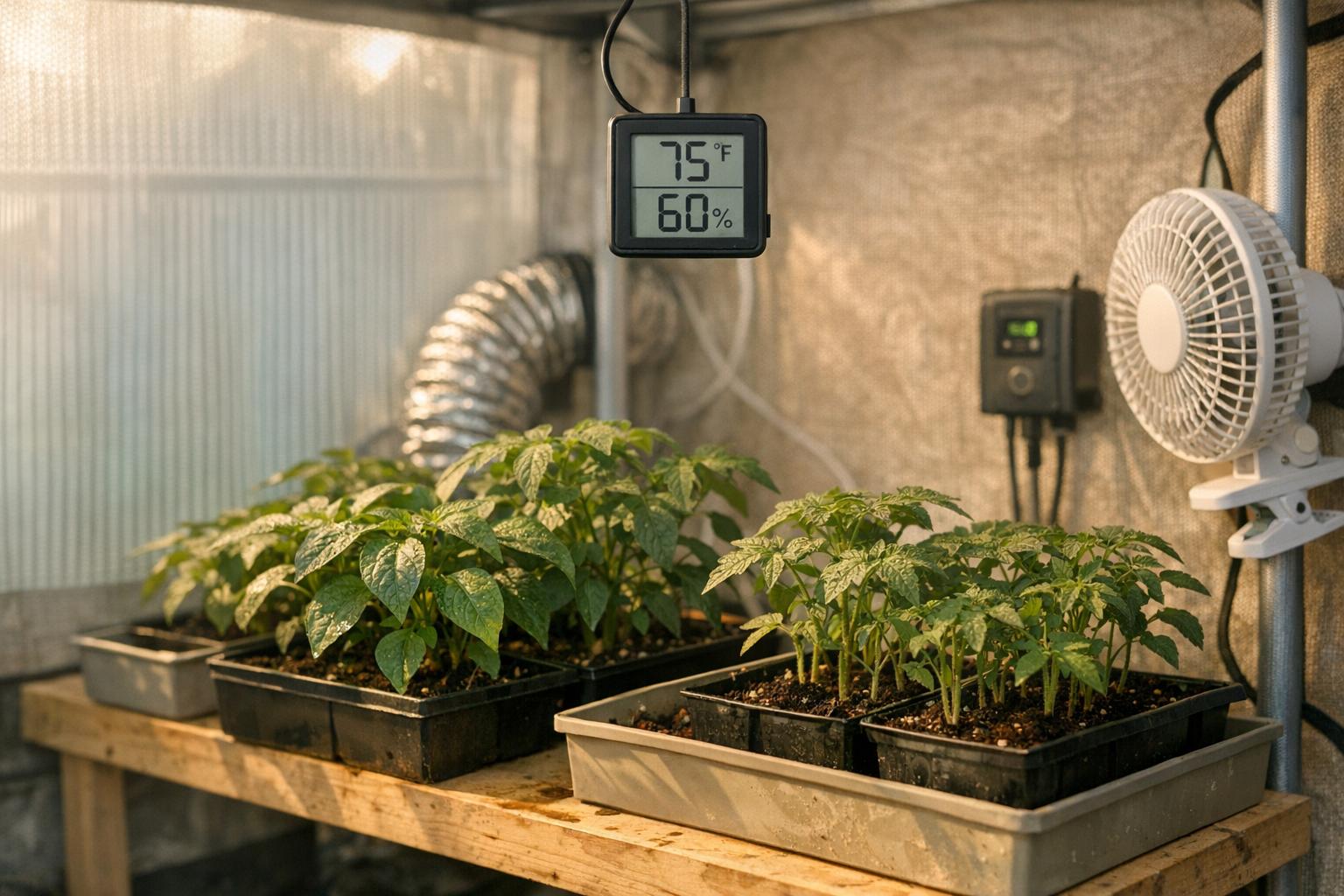
Managing climate inside a grow tent is the skill that separates average harvests from truly impressive ones. When you are working in grow tents, you are in full control of the environment, which means success depends on how well you manage temperature and humidity from day one.
Unlike outdoor gardening, a grow tent creates a closed system. Every light, fan, and watering session directly affects the climate inside your grow tent. That control is powerful, but it also means small mistakes can quickly build into larger problems. Let us walk through exactly how I control temperature and humidity inside my own grow tent setups.
Why Climate Control Matters in a Grow Tent
Inside a grow tent, plants rely entirely on the artificial conditions you create. There is no natural breeze, no shifting cloud cover, and no unexpected cool evening air. Temperature and humidity inside grow tents directly affect transpiration, nutrient uptake, and overall plant structure.
When temperature is too high inside a grow tent, plants stretch and become stressed. When humidity is too high, mold and mildew can thrive in the enclosed tent space. On the other hand, air that is too dry forces plants to over transpire, which can lead to nutrient imbalances within the confined environment of your grow tent.
Ideal Temperature Ranges Inside a Grow Tent
Vegetative Stage
During the vegetative stage inside my grow tent, I aim for temperatures between 70 and 80 degrees Fahrenheit with lights on. When lights are off inside the grow tent, I allow a slight drop to around 65 to 70 degrees. Because a grow tent holds heat from lighting systems, constant monitoring is essential.
Flowering Stage
During flowering inside a grow tent, I prefer slightly cooler conditions. Around 65 to 78 degrees works well. In tightly sealed grow tents, high temperatures combined with dense foliage can create moisture pockets, so managing both heat and airflow becomes even more important at this stage.
Ideal Humidity Levels Inside a Grow Tent
Seedling Stage
Seedlings inside a grow tent prefer higher humidity levels, typically between 60 and 70 percent. Since a grow tent encloses moisture, I make small adjustments using a humidifier rather than overwatering the growing medium.
Vegetative Stage
As plants mature inside the grow tent, I reduce humidity to around 50 to 60 percent. At this point, the enclosed grow tent environment can trap excess moisture under dense leaves, so proper air circulation is critical.
Flowering Stage
During flowering inside a grow tent, I gradually lower humidity to between 40 and 50 percent. In late flowering inside grow tents, I sometimes drop humidity closer to 40 percent to reduce the risk of mold forming within thick buds in the confined tent space.
How to Control Temperature Inside a Grow Tent
Choose the Right Lighting
Lighting is the main heat source inside most grow tents. High intensity lights raise the temperature quickly inside the tent enclosure. I always match my light power to the size of the grow tent. Too much light in a small grow tent creates constant overheating issues.
Use Proper Ventilation
An inline fan and carbon filter system are essential in any grow tent. Warm air collects at the top of the grow tent, so I position the exhaust system high to pull hot air out efficiently. Passive intake vents at the bottom of the grow tent allow cooler air to enter.
Add Circulation Fans
Oscillating fans inside a grow tent help distribute heat evenly. Without internal air movement, hot spots form under lights. A stable internal breeze ensures that every plant inside the grow tent experiences the same consistent conditions.
Control the Lung Room
The room that houses your grow tent directly affects the air entering it. If the surrounding space is hot, your grow tent will struggle to cool down. I always monitor both the external room and the internal grow tent climate together.
How to Control Humidity Inside a Grow Tent
Use a Humidifier or Dehumidifier
Inside grow tents, small adjustments make a big difference. During early growth, I use a compact humidifier inside the grow tent to raise moisture levels. During flowering, I often place a dehumidifier either inside the grow tent or in the room feeding air into it.
Water Carefully
Overwatering raises humidity dramatically inside a grow tent. Since grow tents are enclosed, excess water evaporates into the same air your plants breathe. I water only when necessary and avoid leaving standing water inside trays within the tent.
Increase Air Exchange
If humidity climbs too high inside a grow tent, increasing exhaust fan speed quickly stabilizes conditions. Faster air exchange removes moist air and replaces it with drier air from outside the grow tent.
Monitoring Is Non Negotiable in a Grow Tent
Because a grow tent is a controlled enclosure, I never rely on guesswork. I use a digital hygrometer and thermometer combo placed at canopy height inside the grow tent. Conditions near the floor of a grow tent can differ from those at the top, so sometimes I use multiple sensors.
Consistency is everything inside grow tents. I check readings daily and make minor adjustments before small swings become serious problems. In a grow tent environment, prevention is far easier than correction.
Balancing Temperature and Humidity Together
Temperature and humidity inside a grow tent are deeply connected. When temperatures rise, relative humidity drops. When temperatures fall, humidity rises. I always adjust these factors together rather than chasing them separately.
Understanding vapor pressure deficit changed how I manage my grow tent. Instead of focusing only on temperature or humidity, I consider how both interact to influence plant transpiration inside the tent. Dialing this in creates steady growth and stronger stems in the confined grow tent environment.
Common Mistakes Inside Grow Tents
Oversized Equipment
Installing equipment that is too powerful for your grow tent causes constant fluctuations. A fan that is too strong can dry out a small grow tent quickly.
Ignoring Night Conditions
Temperatures and humidity shift dramatically inside a grow tent when lights turn off. I always monitor the dark cycle inside my grow tent to prevent moisture spikes.
Poor Airflow Around Dense Plants
In a full grow tent, thick foliage restricts movement. I prune strategically to allow airflow throughout the grow tent canopy.
FAQ
What is the best temperature for a grow tent?
Most plants thrive between 70 and 80 degrees Fahrenheit inside a grow tent during lights on. Slightly cooler temperatures during lights off help maintain balance inside the grow tent.
What humidity is too high in a grow tent?
Anything above 60 percent during flowering inside a grow tent increases the risk of mold. In a sealed grow tent, excess humidity should be corrected quickly.
Should I place a dehumidifier inside my grow tent?
In smaller grow tents, a compact unit can work well inside the enclosure. In larger setups, managing humidity in the room feeding air into the grow tent is often more efficient.
How often should I check climate levels in my grow tent?
I check my grow tent readings daily. In extreme weather or when adjusting equipment, I monitor my grow tent multiple times per day to maintain stability.
Mastering temperature and humidity inside a grow tent takes attention and small consistent adjustments. The advantage of grow tents is total environmental control. When you learn to guide that control with intention, your plants reward you with stronger growth, better structure, and far more consistent harvests.


