
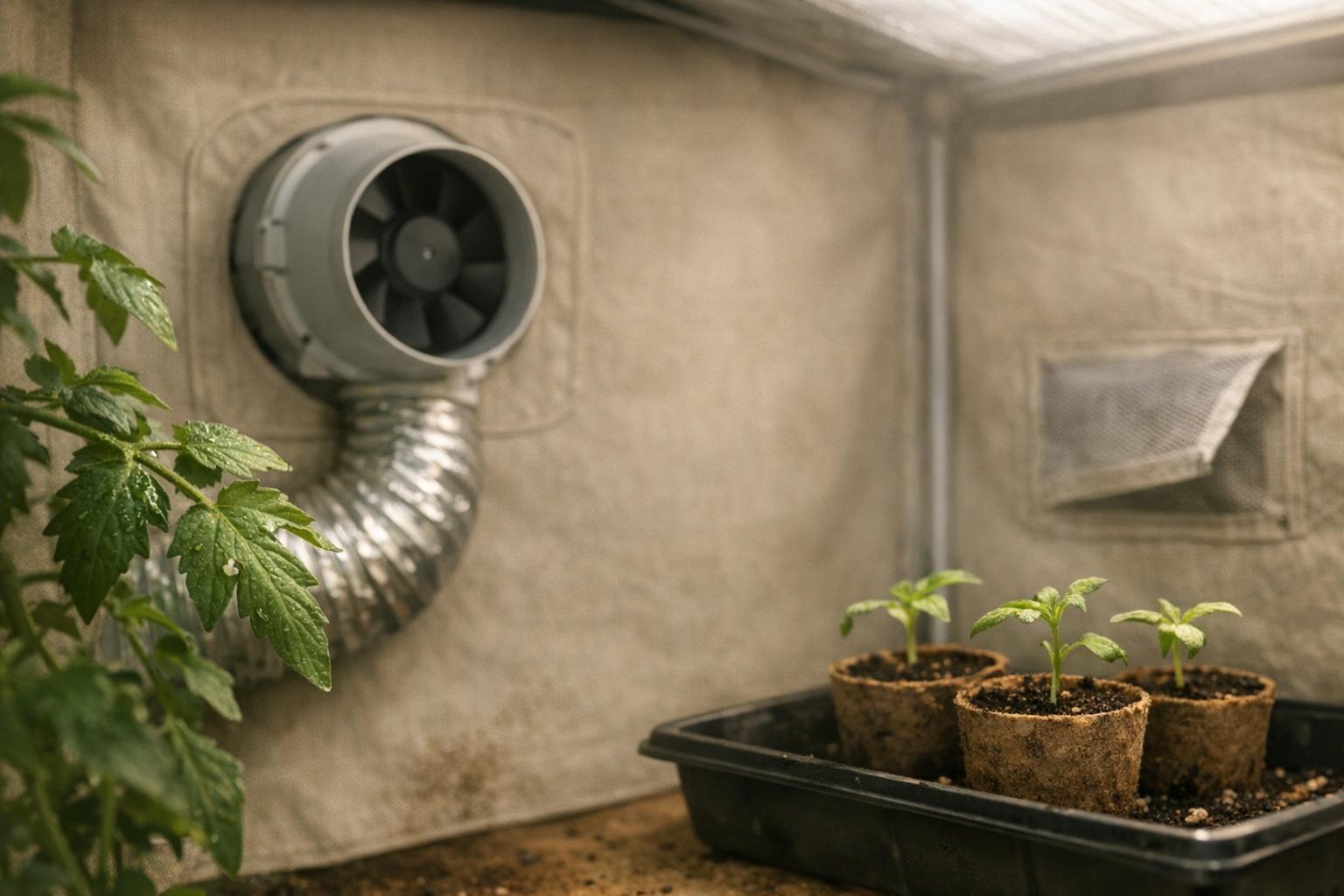
Negative pressure problems inside a grow tent can quietly wreck your entire environmental control strategy. If your grow tent walls are sucking inward too aggressively, zipper seams are straining, or odors are escaping despite a carbon filter, you are not dealing with a plant issue. You are dealing with a system imbalance.
In grow tents, negative pressure is intentional. It keeps odor contained and ensures air flows through your filtration system correctly. But when that negative pressure becomes excessive or unstable, airflow distribution, filter efficiency, and even equipment lifespan suffer. This guide walks through how to properly diagnose and correct negative pressure imbalance inside a grow tent without sacrificing ventilation performance.
What Proper Negative Pressure Should Look Like in a Grow Tent
In a properly tuned grow tent, the tent walls should gently pull inward when the exhaust fan is running. The inward bow should be visible but modest. Zippers should close easily. Duct ports should not whistle or collapse.
If the tent looks vacuum sealed, structural poles are flexing, or intake flaps are snapping tightly shut, your exhaust is overpowering passive intake airflow. That imbalance reduces actual air exchange efficiency even though the fan appears strong.
This is not about temperature or humidity. This is about airflow physics inside a sealed fabric enclosure.
Step 1: Confirm the Source of Excess Negative Pressure
Before making changes, confirm that your grow tent is experiencing too much negative pressure and not simply normal suction.
Quick diagnostic test
- Close all passive intake flaps on the grow tent.
- Turn the exhaust fan to full speed.
- Observe how aggressively the tent walls collapse inward.
- Slowly open one lower passive intake flap.
- Watch how the tent structure responds.
If opening one flap barely reduces collapse, your intake area is insufficient for the exhaust capacity. If opening multiple flaps suddenly causes odors to leak around seams, your airflow path is poorly distributed.
You are looking for balance, not maximum suction.
Step 2: Calculate Intake Area vs Exhaust Capacity
Most growers oversize exhaust fans inside grow tents without increasing intake capacity. Passive intake must be two to three times larger in surface area than your exhaust duct diameter.
Example. If you are using a six inch exhaust duct, the actual airflow demand requires roughly seventy two square inches of open passive intake space. One small mesh flap is rarely enough.
If your grow tent only has one small lower intake open, the fan is starving for air. When a fan cannot pull enough intake air, static pressure increases. That reduces true air exchange while increasing wall collapse.
The fix is usually simple. Increase passive intake area low on the tent. Keep carbon filtered exhaust high.
Step 3: Improve Passive Intake Efficiency Inside the Grow Tent
Opening more intake flaps is the first move. But placement matters inside a grow tent.
Correct intake setup
- Open intake flaps only near the bottom of the grow tent.
- Keep upper ports sealed to preserve directional airflow.
- Ensure intake mesh screens are clean and not clogged with dust.
If your grow tent sits directly against a wall, pull it forward slightly so intake vents are not blocked. Fabric tents need space to breathe.
I often see growers push grow tents tight into corners, which restricts intake and increases pressure imbalance.
Step 4: Adjust Exhaust Speed Instead of Running at Maximum
An inline fan running at full speed is often unnecessary inside a sealed grow tent. Overspeeding the fan increases static pressure and reduces filter dwell time.
Install a fan speed controller and reduce output gradually.
Adjustment method
- Open adequate lower intake vents.
- Set the exhaust fan to seventy percent power.
- Observe tent wall position.
- Reduce speed until walls show gentle inward pull without structural strain.
- Check for odor leaks around zippers.
Balanced negative pressure means odor does not escape even when you crack the zipper slightly.
Step 5: Check for Carbon Filter Restriction
An aging carbon filter inside a grow tent increases airflow resistance. Higher resistance increases negative pressure intensity even if fan speed remains constant.
If your grow tent recently began collapsing more aggressively and no configuration has changed, inspect the filter.
Signs of a restricted filter
- Increased tent wall suction over time
- Fan sounds strained
- Reduced airflow at exhaust outlet
Replace or service the carbon filter if restriction is confirmed. A clogged filter forces your fan to work against higher resistance, increasing internal vacuum pressure while lowering effective air exchange.
Step 6: Consider Active Intake for Larger Grow Tents
In grow tents above four by four feet, passive intake may not be sufficient if using a powerful exhaust system.
Adding a small inline fan as an active intake stabilizes internal pressure.
Active intake setup inside a grow tent
- Install intake fan at a lower port
- Keep intake fan rated at slightly lower cubic feet per minute than exhaust fan
- Use a dust filter sleeve to prevent contamination
The intake should support airflow, not overpower exhaust. You still want slight negative pressure, just not excessive vacuum force.
Troubleshooting Common Grow Tent Pressure Problems
Why are my grow tent zippers hard to open while the fan runs
The exhaust system is pulling significantly more air than the intake allows. Increase passive intake area or reduce exhaust speed. Forcing zippers under heavy negative pressure weakens stitching over time.
Why does odor leak even though my tent walls are collapsing inward
Severe negative pressure can create micro gaps along duct connections and equipment ports. The solution is not more suction. The solution is balanced airflow. Also check that duct clamps are tight and that no upper intake ports are partially open.
Why did my tent frame start bending slightly
High powered inline fans inside smaller grow tents can create more vacuum force than the aluminum poles are designed to handle. Relieve pressure immediately by opening additional intake vents. Long term structural stress reduces tent lifespan.
Why does reducing fan speed improve plant movement inside the grow tent
When pressure is excessive, air races toward the exhaust point instead of distributing evenly across the canopy. Balanced pressure improves cross ventilation within the grow tent and leads to more uniform airflow patterns.
Final System Check
After making adjustments, stand in front of your grow tent and observe three things.
- Tent walls show mild and stable inward pull.
- No fabric distortion around zippers or seams.
- No detectable odor outside the tent.
That is optimal negative pressure. Not dramatic collapse. Not neutral bulging. Controlled containment.
Grow tents function as controlled airflow chambers. When intake and exhaust are balanced properly, every other environmental control system inside the tent works more predictably. Fixing negative pressure imbalance is not about reducing power. It is about restoring proper airflow mechanics inside your grow tent.
Once you dial this in, your ventilation system becomes quieter, more efficient, and far more consistent.


