
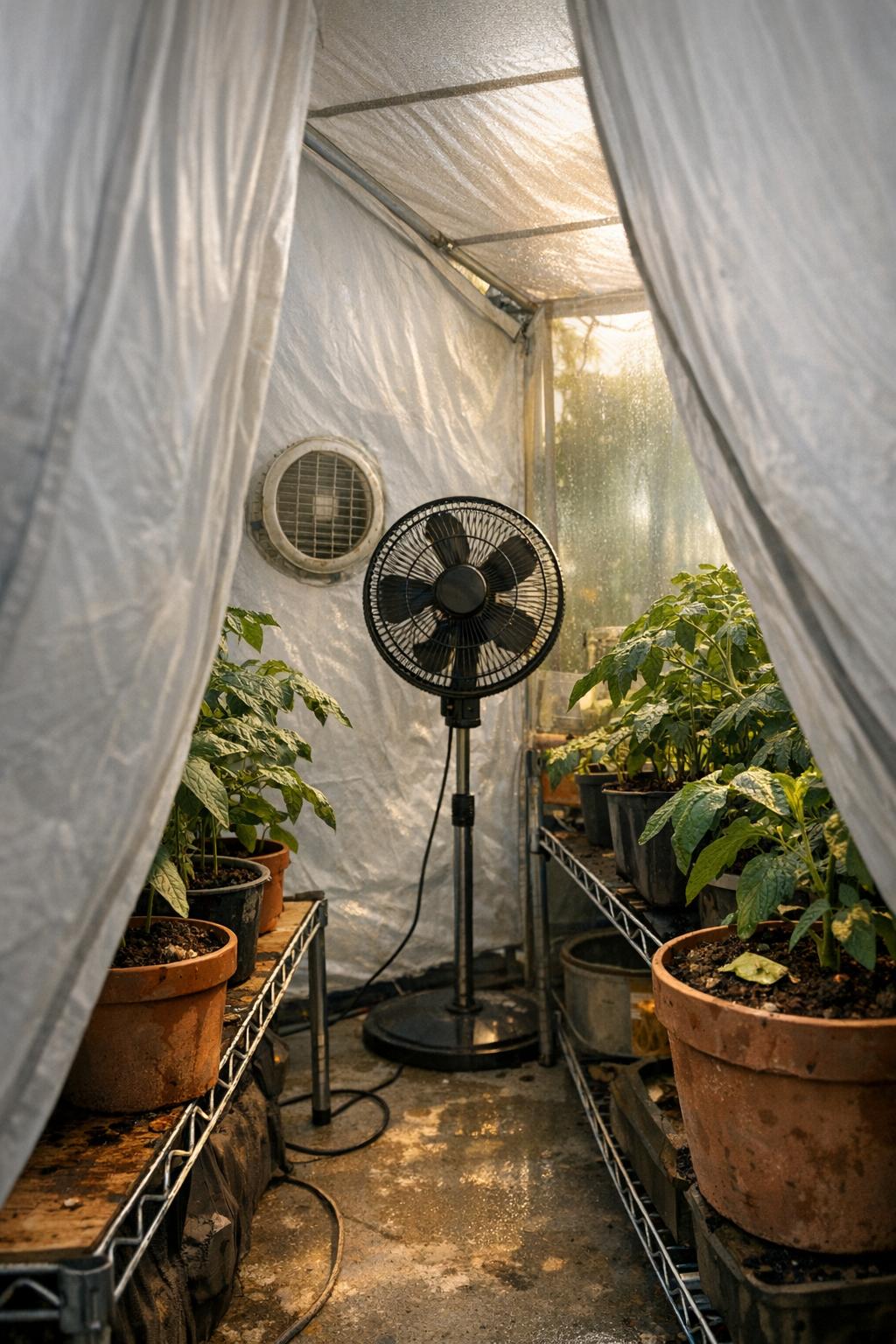
If your grow tent walls are sucking inward like a vacuum sealed bag, you are dealing with excess negative pressure inside your grow tent. This is not just a cosmetic issue. It affects airflow patterns, stresses your tent frame, reduces intake efficiency, and can create unstable environmental control.
In sealed grow tents with inline exhaust systems, air balance is everything. When exhaust airflow is stronger than intake airflow, the tent fabric collapses inward. I have fixed this problem in many grow tents, and it always comes down to a precise imbalance in the ventilation system. Here is how to diagnose and correct it properly.
What Causes Grow Tent Walls to Suck In
Inside grow tents, exhaust fans usually pull more air out than passive intakes can replace. That creates negative pressure. A small amount of negative pressure is good because it prevents odors from leaking out. Too much negative pressure causes structural distortion and airflow inefficiency.
In practical terms, your inline fan is evacuating air faster than your intake vents can deliver replacement air. The tent fabric collapses inward to compensate.
The most common causes inside grow tents are:
Exhaust Fan Running Too Fast
If your inline fan is running at full power in a small grow tent, it can easily exceed the airflow capacity of passive mesh vents.
Blocked or Restricted Intake Flaps
Many growers keep intake flaps mostly closed to maintain light control. Inside grow tents, this restriction severely limits replacement airflow.
Small Ducting or Excessive Bends
If intake air is ducted through long or narrow flexible ducting, airflow resistance increases. The exhaust continues pulling aggressively while intake lags behind.
High Resistance Carbon Filters
Carbon filters inside grow tents add drag to the exhaust side. To compensate, growers increase fan speed, which worsens negative pressure imbalance.
Why Excess Negative Pressure Hurts Grow Tent Performance
Many growers assume strong suction is good. It is not.
Inside grow tents, excessive negative pressure creates several system problems:
Unstable Air Circulation Patterns
When tent walls bow inward, internal air movement becomes unpredictable. Oscillating fans may not circulate evenly, leading to microclimates around the canopy.
Reduced Intake Efficiency
Passive intake vents become constricted when the fabric folds inward. This further reduces incoming airflow and increases system stress.
Fan Wear and Electrical Inefficiency
An overworked exhaust fan pulling against heavy resistance uses more energy and generates more heat inside your grow tent system.
Structural Frame Stress
Repeated inward collapse puts long term stress on poles and corner joints of grow tents.
Step by Step: How I Fix Grow Tent Wall Collapse
Step 1: Measure Actual Airflow Behavior
Turn off oscillating fans inside the grow tent. Watch how the tent reacts when only the exhaust system runs. If the walls immediately pull inward aggressively, airflow imbalance is confirmed.
Step 2: Open All Passive Intake Vents Fully
Inside grow tents, passive mesh vents are often underused. Fully open at least one lower intake vent. Preferably open two on opposite sides of the tent.
If the suction reduces significantly after opening vents, you have verified intake restriction as the primary cause.
Step 3: Reduce Exhaust Fan Speed
If your inline fan has a speed controller, reduce speed gradually. Watch the tent walls. The goal inside grow tents is slight inward tension, not deep collapse.
I aim for just enough negative pressure that the fabric is gently tight but not warped.
Step 4: Increase Intake Area If Needed
Some grow tents have small mesh intakes that are insufficient for high output exhaust systems. If fully open vents still cause collapse, add a ducted passive intake port.
Install light proof duct sleeves that allow more replacement air without compromising darkness inside the grow tent.
Step 5: Consider Active Intake
If your exhaust system is large, such as above 400 cubic feet per minute in a small grow tent, passive intake may never keep up. In that case, install a small inline fan as an active intake.
The intake fan should move slightly less air than the exhaust fan. Inside grow tents, this balance maintains mild negative pressure without structural distortion.
Dialing in Proper Pressure Balance
The correct setup inside grow tents is controlled mild negative pressure. Here is how I confirm it.
Tissue Test
Hold a small piece of tissue near any seam or zipper. If air is gently drawn inward but the tent walls stay mostly square, pressure is ideal.
Visual Frame Alignment
Vertical support poles inside grow tents should remain straight. If they bow inward, pressure is excessive.
Consistent Zipper Operation
Zippers on properly balanced grow tents open smoothly. If they are tight and pulled sideways, negative pressure is too strong.
Common Mistakes That Make It Worse
Oversizing the Inline Fan
Many growers install powerful fans designed for larger grow tents. When run in a small enclosure, airflow imbalance is unavoidable unless controlled carefully.
Running Exhaust at Full Speed All the Time
Inside grow tents, maximum speed is rarely necessary continuously. Use a controller to match exhaust rate to actual heat and humidity load.
Blocking Intakes for Light Control Without Compensation
If light leaks are a concern, use light proof duct attachments rather than choking intake mesh panels.
Troubleshooting: Still Collapsing After Adjustments
The Carbon Filter Is Extremely Restrictive
Old carbon filters clog with dust inside grow tents. This increases resistance and changes pressure balance. Replace heavily used filters.
Ducting Is Too Long or Crushed
Check all duct lines inside and outside the grow tent. Sharp bends and compressed flexible ducts reduce airflow efficiency, forcing fans to work harder.
Room Air Supply Is Limited
Grow tents draw replacement air from the room they sit in. If that room is tightly sealed, intake air cannot replenish the tent properly. Crack a door slightly to allow adequate airflow into the room itself.
Intake Ports Positioned Too High
Passive intake vents should be near the bottom of grow tents. If only upper side ports are open, airflow patterns become inefficient and suction increases.
When Negative Pressure Is Actually Useful
Slight negative pressure inside grow tents is important for odor control. It ensures all air exits through the carbon filter rather than leaking through seams.
The key word is slight. Inside grow tents, you want controlled airflow dominance, not structural deformation.
When balanced correctly, your tent will look square, operate quietly, circulate evenly, and maintain stable environmental readings.
If your grow tent walls are sucking in hard, treat it as a ventilation system imbalance, not a cosmetic annoyance. Fixing airflow balance improves efficiency, protects equipment, and stabilizes the entire growing environment inside your grow tent.


