
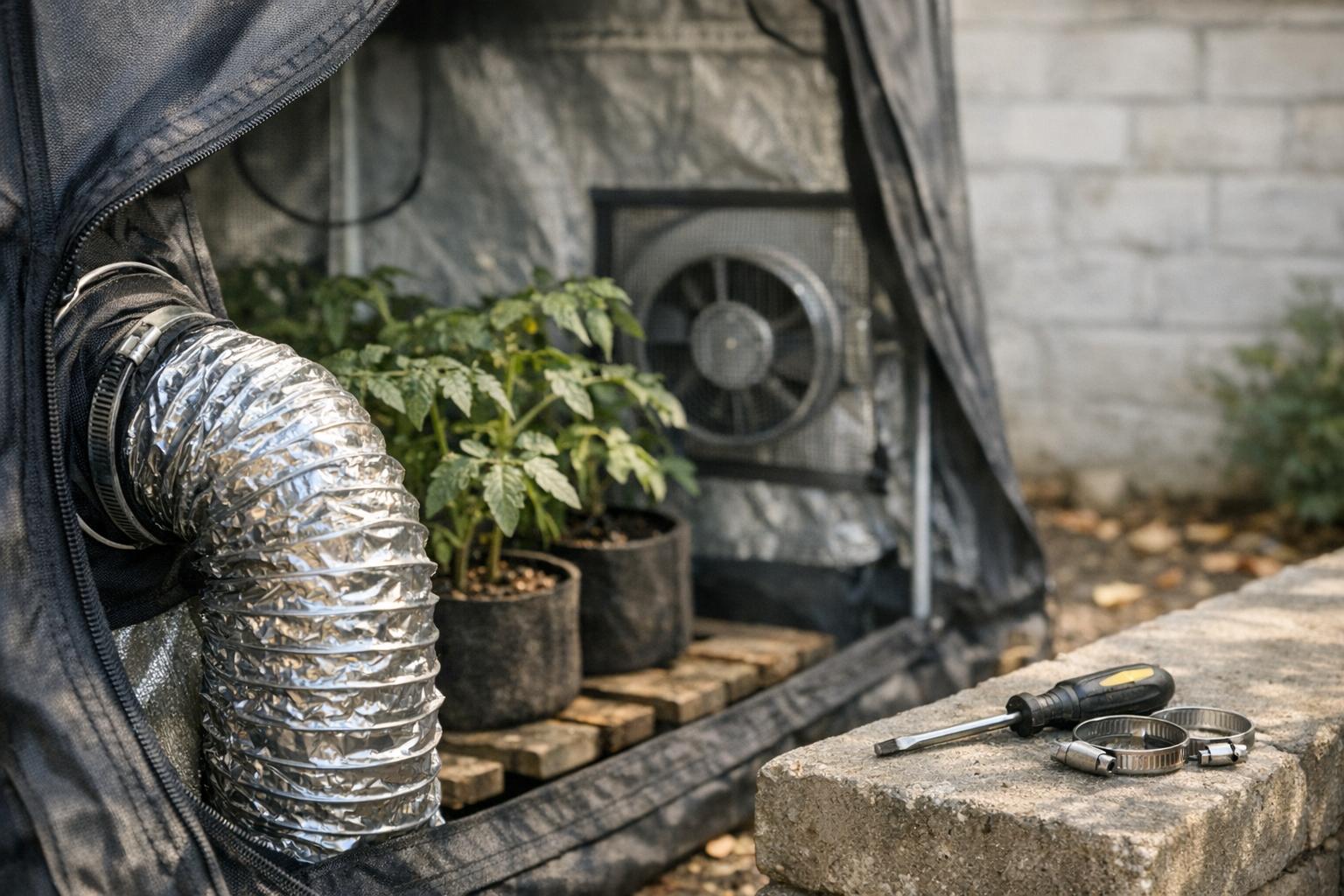
Negative pressure inside a grow tent is often considered a good thing, but when it becomes excessive it creates system failures that most growers misdiagnose. If your grow tent walls are sucking inward too aggressively, zippers are hard to close, or airflow seems uneven across the canopy, you are dealing with a ventilation imbalance that needs correction.
This guide focuses entirely on correcting negative pressure mechanics inside grow tents. We are not talking about outdoor airflow or general room ventilation. This is about sealed grow tent systems where inline fans, passive vents, carbon filters, and ducting interact in a confined environment.
Understanding Negative Pressure Inside a Grow Tent
Negative pressure happens when your exhaust fan pulls more air out of the grow tent than passive or active intake allows back in. In controlled grow tents this is intentional because it prevents odor leaks and stabilizes airflow direction. The problem begins when the pressure differential becomes extreme.
Excessive negative pressure in grow tents can cause:
- Tent walls collapsing inward and reducing internal volume
- Restricted passive intake airflow
- Stress on zippers and seams
- Reduced carbon filter efficiency due to choked intake
- Uneven circulation across the canopy
The solution is not turning everything down randomly. The solution is rebalancing the intake and exhaust system inside your grow tent with precision.
Step 1 Measure the Severity of Negative Pressure
Before adjusting anything, confirm that pressure is the root issue.
Visual Wall Test
Stand back and observe your grow tent while all ventilation is running:
- Minor inward flex is normal
- Severe inward bowing indicates excessive exhaust pull
- If the floor tray visibly shifts inward, your intake is insufficient
Door Resistance Test
Slowly open the grow tent door while the exhaust fan runs. If air forcefully rushes inward and the door pulls from your hand, negative pressure is too high.
Once confirmed, correct the airflow balance inside the grow tent rather than simply slowing the exhaust blindly.
Step 2 Increase Controlled Intake Airflow
Most negative pressure problems in grow tents are caused by undersized passive intake capacity.
Open Additional Passive Intake Flaps
Many growers only open one bottom vent in their grow tent. This restricts airflow severely. Open at least two low vents on opposite sides to distribute intake evenly.
This reduces turbulence and prevents one sided airflow patterns that create canopy hot spots.
Remove Fine Mesh if Safe
Some grow tents include fine mesh screens that drastically reduce intake efficiency. If your grow tent environment is already clean and pest controlled, removing or loosening the mesh can significantly improve intake flow.
Upgrade to Active Intake
If passive vents are fully open and the grow tent still collapses inward, install a small inline fan as an intake booster. Size it at roughly sixty percent of your exhaust fan capacity. This maintains mild negative pressure without structural strain.
In grow tents larger than four by four feet, active intake is often necessary when using high powered exhaust systems.
Step 3 Match Exhaust Power to Tent Volume
Oversized exhaust fans are a common system design mistake in grow tents.
Calculate Proper Air Exchange
Measure the cubic volume of your grow tent by multiplying length width and height. Your exhaust fan should move that volume once every one to two minutes after accounting for carbon filter resistance.
If your fan exchanges the full tent volume multiple times per minute, you are likely generating excessive negative pressure.
Use a Speed Controller Properly
Rather than reducing fan speed to the lowest setting, dial it down gradually while watching tent wall tension. The goal is slight inward flex, not suction collapse.
Inside grow tents, the sweet spot is where odor control remains effective but the structure retains its shape.
Step 4 Check Carbon Filter and Duct Restrictions
Airflow imbalance inside a grow tent is not always caused by too much exhaust power. Sometimes restrictions create turbulence that amplifies pressure differences.
Inspect Carbon Filter Condition
A clogged carbon filter forces the fan to pull harder, increasing negative pressure fluctuations. If your filter is older than one year of continuous use, test airflow by temporarily disconnecting it. If tent wall suction decreases, replace the filter.
Straighten Duct Runs
Sharp bends in ducting increase resistance. In grow tents with short vertical clearance, ducting is often compressed unnecessarily. Use gradual curves and minimize length wherever possible.
Inside confined grow tents, even minor duct inefficiencies magnify airflow imbalance.
Step 5 Stabilize Internal Circulation Fans
Oscillating fans inside a grow tent do not directly control pressure, but they influence how pressure imbalances affect plants.
If negative pressure pulls intake air aggressively from one lower vent, plants near that path receive stronger airflow while others remain stagnant. Adjust clip fans so they redistribute incoming air evenly across the canopy.
This prevents microclimates that occur specifically in enclosed grow tents with directional pressure gradients.
Troubleshooting Excessive Negative Pressure in Grow Tents
Why Are My Grow Tent Walls Sucking in Even With All Vents Open?
Your exhaust fan is likely oversized for your grow tent or your ducting resistance is low enough to increase effective pull. Add an intake booster fan or reduce exhaust speed gradually until wall tension stabilizes.
Can I Run Zero Negative Pressure in My Grow Tent?
No. Grow tents require slight negative pressure to prevent odor leaks and to ensure air exits through the carbon filter. The goal is balance, not neutrality.
Why Did Negative Pressure Get Worse After Installing a New Carbon Filter?
New filters often have lower resistance than old clogged ones. Your fan is now moving more air, increasing suction inside the grow tent. Recalibrate fan speed after installing new filtration.
Should I Cut Additional Holes in My Grow Tent?
No. Altering the tent compromises structural integrity and light control. Use existing intake ports and scale your airflow equipment correctly instead.
Designing a Stable Grow Tent Ventilation System
The simplest stable configuration for most grow tents includes:
- Exhaust fan sized appropriately for tent volume
- Carbon filter matched to fan capacity
- At least two open passive intake vents or one active intake fan
- Straight efficient duct routing
When these elements are balanced, your grow tent should show mild inward wall flex, easy zipper operation, and consistent airflow across the canopy.
Excessive negative pressure is not a plant problem. It is a mechanical imbalance within the enclosed grow tent system. Correcting it improves odor control, airflow uniformity, equipment lifespan, and overall environmental stability.
If your grow tent feels like it is vacuum sealed, treat it as a ventilation design issue. Balance intake with exhaust deliberately and your entire system will perform more efficiently.


