
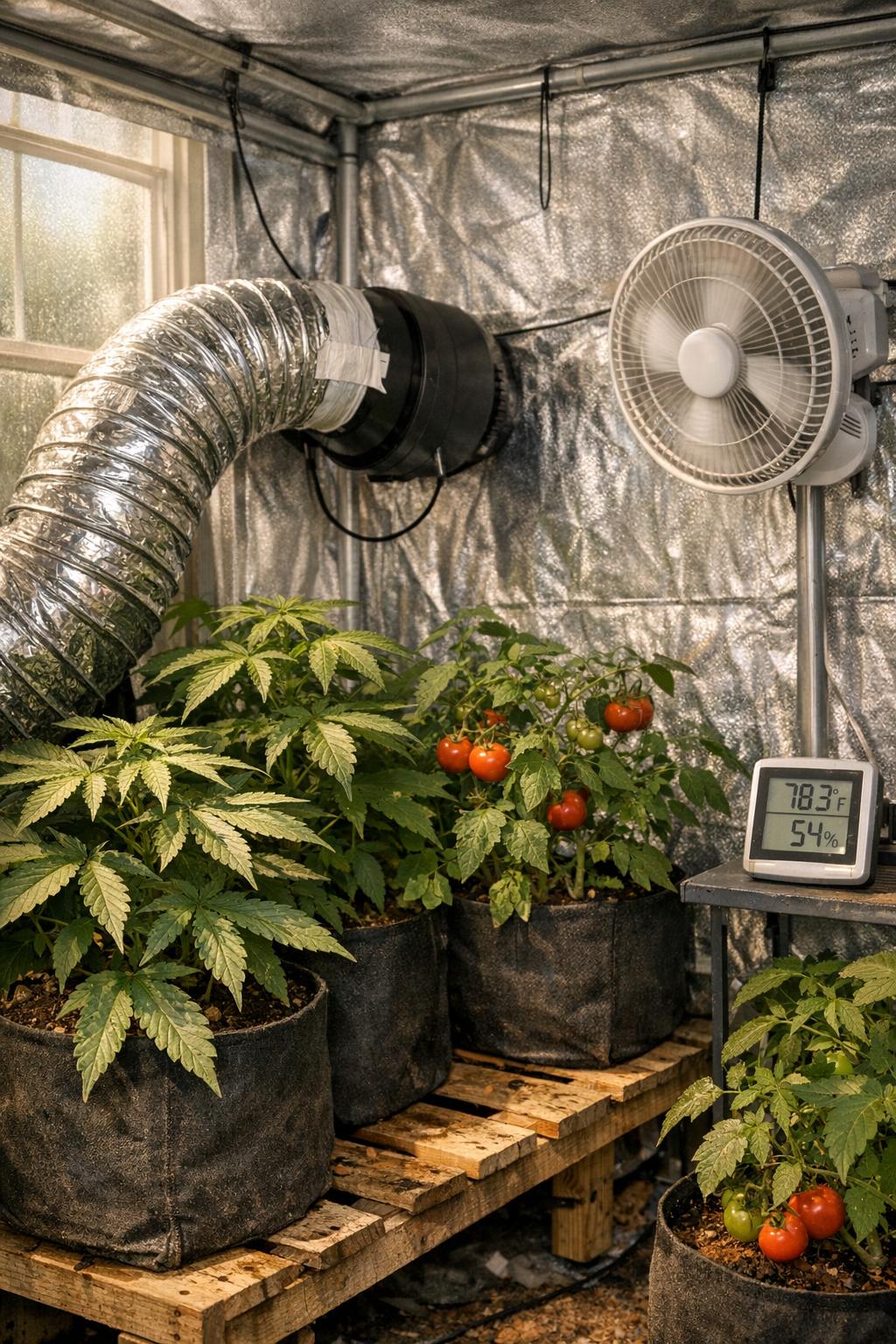
Negative pressure is the backbone of a properly functioning grow tent. If your grow tent is not pulling inward slightly on the walls, the entire system begins to fail. Odors escape, humidity drifts, carbon filters underperform, and airflow becomes unpredictable. This is not a plant problem. It is a system mechanics problem inside the grow tent.
I see this often in grow tents where the exhaust fan is installed but the tent walls either balloon outward or collapse too aggressively. Both conditions signal airflow imbalance. Inside a grow tent, stable negative pressure is what keeps odor contained and environmental control consistent. Here is exactly how to diagnose and fix it.
Understanding Negative Pressure in a Grow Tent
In a grow tent, negative pressure happens when the exhaust system removes slightly more air than passive or active intake brings in. The result should be a gentle inward pull on the tent fabric. If this does not happen, one of three things is wrong:
- Air is escaping before reaching the carbon filter
- Intake airflow is overpowering exhaust
- Ducting resistance is reducing true exhaust capacity
You are not trying to create extreme suction inside a grow tent. You are creating controlled air direction. Air must enter through designated intake ports, travel across the canopy, pass through the carbon filter, and exit through the exhaust duct. If any part of that chain breaks, pressure balance fails.
Step by Step Diagnosis Inside the Grow Tent
Step 1 Check Tent Wall Behavior
Zip the grow tent completely closed. Turn on only the exhaust fan. Leave intake fans off for this test.
Observe the tent walls:
- If walls pull inward slightly, exhaust is functioning
- If walls stay neutral, you have air leaks or weak exhaust
- If walls push outward, intake is overpowering exhaust
This five minute test tells you where to focus.
Step 2 Inspect All Duct Connections
Inside grow tents, small duct leaks cause major pressure instability. Run your hands along every duct joint while the fan is running. Feel for moving air. Check:
- Connection between carbon filter and fan
- Connection between fan and exhaust duct
- Exit port seal at the tent wall
If air escapes before reaching the exit point, negative pressure weakens. Reseal joints using proper clamps and foil tape designed for ventilation systems. Cloth tape is not acceptable inside a grow tent ventilation setup.
Step 3 Evaluate Carbon Filter Restriction
A saturated carbon filter restricts airflow. In grow tents running continuously, filters often clog earlier than expected due to high humidity cycles.
Temporarily disconnect the carbon filter from the fan while keeping the fan mounted inside the grow tent. Run the system for one minute.
- If wall suction increases noticeably, your filter is restricting airflow
- If nothing changes, the issue lies elsewhere
If the filter is the bottleneck, replacement is more effective than cleaning. Carbon filters are not meant to be washed inside grow tent systems.
Step 4 Measure Intake Area
Passive intake inside a grow tent should be at least three times the surface area of your exhaust duct diameter. If your exhaust duct is six inches, your combined open intake flaps should equal roughly eighteen inches of diameter when calculated by area.
If intake openings are too small, the exhaust fan strains and airflow becomes turbulent. This creates fluctuating pressure and weak odor containment.
Open additional lower intake ports inside the grow tent. Always use the screened sections to prevent pests.
Fixing Overpowered Intake Fans
Active intake fans often cause positive pressure in grow tents. If your tent walls puff outward, this is likely the problem.
Solution:
- Reduce intake fan speed below exhaust fan speed
- Or remove powered intake entirely and switch to passive intake
In most grow tent systems, a properly sized exhaust fan does not need a powered intake. The exhaust should create natural suction through lower vents. Adding intake fans without balancing airflow usually destabilizes the system.
Correct Fan Sizing for Stable Negative Pressure
Many grow tents suffer from mismatched fan sizing. A common mistake is oversizing intake while undersizing exhaust.
Inside a grow tent, calculate air volume correctly:
Length multiplied by width multiplied by height equals total cubic feet.
Your exhaust fan should replace that air volume at least once per minute after accounting for duct resistance and carbon filtration. Since carbon filters reduce efficiency by up to thirty percent, choose a fan rated higher than your raw cubic footage.
If your grow tent is four by four by six feet, that equals ninety six cubic feet. A fan rated around two hundred cubic feet per minute provides headroom after resistance losses.
Undersized fans create unstable pressure and poor odor containment.
Duct Routing Inside a Grow Tent
Duct layout inside grow tents directly affects pressure stability. Every bend reduces airflow efficiency.
For best results:
- Keep duct runs as short as possible
- Use gradual curves instead of sharp turns
- Avoid crushing flexible ducting
If ducting exits the grow tent and immediately bends ninety degrees, resistance increases significantly. Reconfigure to create a smoother path. Small changes here restore strong negative pressure.
Balancing Environmental Controllers
Environmental controllers inside grow tents sometimes cycle fans erratically. If your exhaust only activates at certain humidity or temperature thresholds, pressure fluctuates throughout the day.
A grow tent performs best when the exhaust runs continuously at a baseline speed. Use a speed controller to maintain constant airflow, then allow environmental triggers to increase speed rather than switch the fan off completely.
This prevents pressure swings that release odor and disturb internal airflow patterns.
Troubleshooting Common Grow Tent Pressure Problems
Why are my tent walls sucking in too much
Excessive inward collapse means intake airflow is too restricted. Open additional passive vents or slightly reduce exhaust speed. Severe collapse stresses zippers and frame poles.
Why does odor leak when I unzip the tent
Brief odor release during unzip is normal. Continuous odor leakage while sealed means your grow tent lacks negative pressure. Recheck duct seals and confirm intake is not overpowering exhaust.
Why did my pressure suddenly change
Sudden changes often come from carbon filter saturation, duct disconnection, or a failing fan motor. Inspect these components immediately. Grow tent systems are closed environments. Any hardware weakness shows up quickly.
My Practical Setup Recommendation
After years of adjusting grow tents, I keep systems simple. One properly sized exhaust fan mounted inside the grow tent. Carbon filter attached directly to the fan. Short straight duct run exiting the upper port. Passive intake flaps open at the base opposite the exhaust side. Continuous low speed operation.
This configuration creates stable negative pressure without constant adjustment. No powered intake. No excessive duct bends. No cycling on and off all day.
When negative pressure is correct, the grow tent becomes predictable. Odor stays contained. Airflow path remains stable across the canopy. Environmental control devices work as intended because air is moving consistently through the system.
If your grow tent feels unstable or smells outside the enclosure, do not adjust nutrients or lighting. Fix airflow mechanics first. In controlled indoor systems like grow tents, pressure balance is the structural foundation of everything else.


