
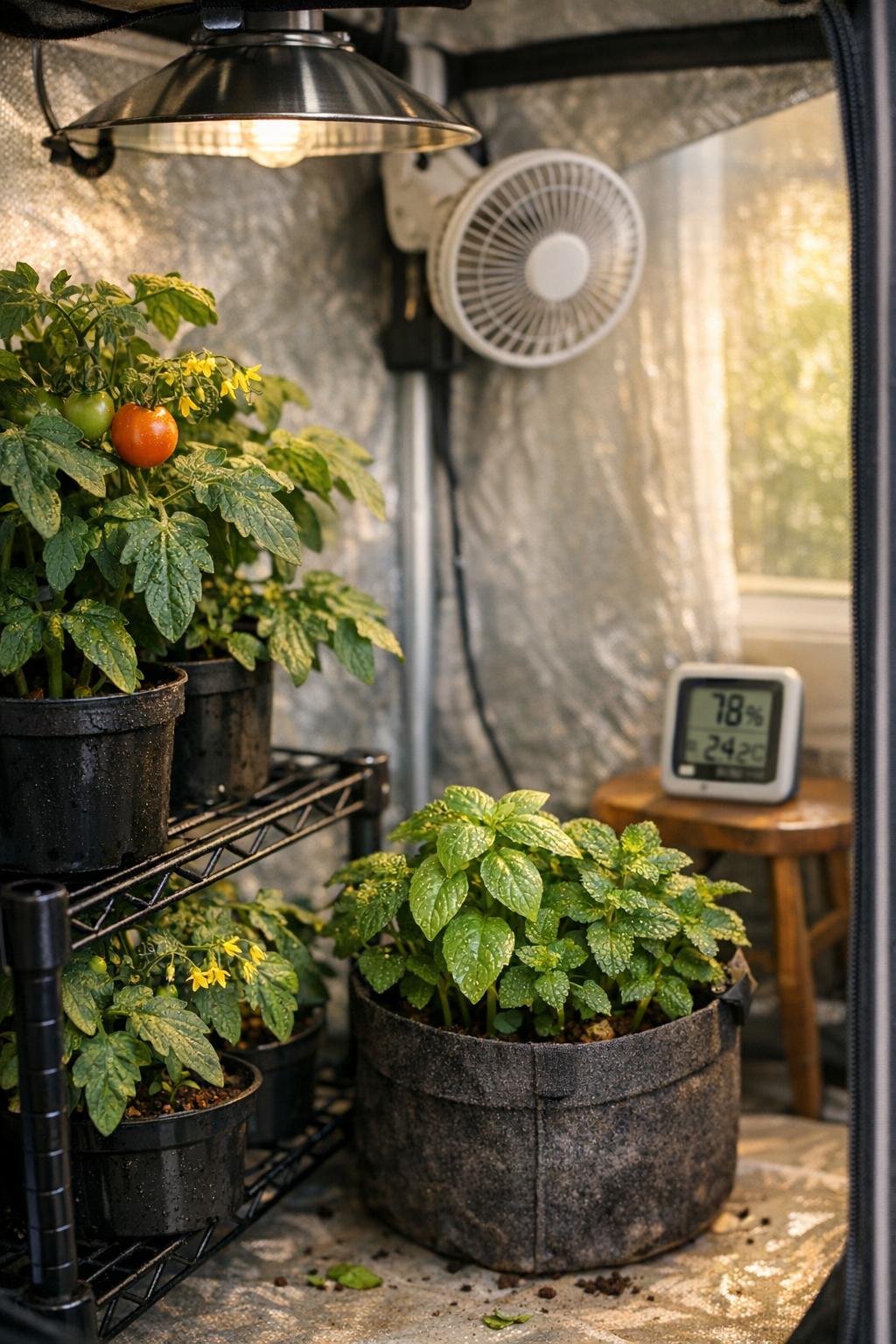
Growing plants inside a grow tent changed the way I garden. A grow tent gives you complete control over light, humidity, airflow, and temperature in a way that no windowsill or backyard ever could. If you want consistent results, stronger growth, and fewer pests, a grow tent is one of the most reliable environments you can create.
In a grow tent, every element of the plant’s life is intentional. Light does not depend on the weather. Humidity does not swing with the seasons. Airflow is engineered, not accidental. When you learn to manage these variables properly inside a grow tent, your plants respond with steady growth and dependable yields.
Why a Grow Tent Makes Such a Difference
A grow tent works because it creates a sealed, reflective enclosure that locks in light and allows you to manage airflow precisely. The reflective interior maximizes your artificial lighting, ensuring plants receive even coverage from top to bottom. Without a grow tent, much of that light would spill into the room and go to waste.
Another advantage of growing inside a grow tent is environmental stability. You can install an inline fan with a carbon filter, position oscillating fans for air movement, and monitor humidity with precision. This controlled setup reduces stress on plants and prevents many common issues such as mold and weak stems.
Setting Up Lighting Inside a Grow Tent
Lighting is the backbone of any grow tent setup. Since your plants rely completely on artificial light, choosing the right fixture matters. I recommend full spectrum LED fixtures sized appropriately to your tent. The goal inside a grow tent is even canopy coverage, not just brightness.
Height is critical when hanging lights in a grow tent. Too close and you risk light burn. Too far and your plants stretch. I adjust light height as plants grow, maintaining strong intensity without stressing the leaves. Because the grow tent walls reflect light inward, you get excellent efficiency when everything is positioned correctly.
Managing Airflow and Ventilation in a Grow Tent
Airflow inside a grow tent must be deliberate. Plants need fresh air to support strong growth, and stagnant air invites mold. I use an inline exhaust fan to pull warm air out of the top of the grow tent while passive or active intake ports draw fresh air in.
Inside the grow tent, I also place oscillating fans at canopy level. This gentle movement strengthens stems and prevents moisture from settling on leaves. In a sealed grow tent environment, airflow is not optional. It is one of the key systems that keeps plants healthy.
Controlling Temperature and Humidity in a Grow Tent
A grow tent allows you to fine tune temperature and humidity for each growth stage. During early growth, I keep humidity slightly higher to support young plants. As they mature, I gradually lower humidity to reduce the risk of mold inside the grow tent.
Temperature inside a grow tent should stay consistent. Because the tent encloses your lighting system, heat can build quickly. Proper ventilation and, if needed, a small environmental controller help maintain balance. The beauty of a grow tent is that once dialed in, conditions remain stable day after day.
Watering and Feeding Inside a Grow Tent
Watering inside a grow tent requires attention because the environment is controlled. Plants do not receive rain or natural fluctuations. I water based on container weight and soil dryness, not on a calendar. Overwatering is one of the most common mistakes growers make in a grow tent.
Feeding is equally precise. Since plants in a grow tent rely entirely on you for nutrients, deficiencies show quickly if you neglect them. I prefer a simple feeding schedule and careful observation. Leaves tell you everything when you take time to look.
Choosing the Right Grow Tent Size
Size matters when selecting a grow tent. A small grow tent is perfect for beginners or limited spaces, while larger grow tents allow for multiple plants and greater flexibility. Whatever size you choose, avoid overcrowding. Inside a grow tent, airflow and light distribution depend on proper spacing.
I always recommend starting smaller than you think you need. It is easier to manage temperature, humidity, and lighting in a modest grow tent than in an oversized one. Once you master control, scaling up becomes much easier.
Keeping Your Grow Tent Clean
Cleanliness is critical in a grow tent because the enclosed environment can amplify problems. I regularly wipe down the reflective walls and inspect the corners for moisture buildup. Dead leaves are removed immediately.
Since grow tents isolate your plants, pests are less common than outdoors. However, if something does enter the grow tent, it can spread quickly. Preventive cleaning and consistent inspections protect your entire setup.
Common Mistakes When Growing in a Grow Tent
Ignoring Environmental Monitoring
A basic thermometer and hygrometer inside your grow tent are not optional. Guessing conditions defeats the purpose of having a controlled environment.
Using Weak Lighting
A grow tent cannot compensate for inadequate lighting. Even with reflective walls, poor light leads to weak growth.
Overcrowding the Space
Too many plants inside a grow tent restrict airflow and create humidity pockets. Fewer plants with proper spacing usually produce better results.
Final Thoughts on Growing in a Grow Tent
When you grow inside a grow tent, you become the climate. That responsibility can feel intimidating at first, but it is also empowering. Once your lighting, airflow, and environment are balanced, your grow tent becomes a predictable and efficient garden that performs year round.
I prefer growing in a grow tent because it eliminates guesswork. Every decision creates a measurable result. With patience and attention, your grow tent can produce plants that are stronger and healthier than most outdoor gardens ever could.
FAQ
What size grow tent is best for beginners?
A small grow tent such as a two by four foot model is ideal for beginners. It provides enough space to learn environmental control without becoming overwhelming.
How often should I check conditions inside my grow tent?
I recommend checking temperature and humidity daily. In a grow tent, small changes can happen quickly due to lighting and airflow adjustments.
Do I need ventilation if my grow tent is in a cool room?
Yes. Even in a cool room, a grow tent requires proper ventilation to exchange air and control humidity. Fresh air is essential for healthy growth.
Can I grow year round in a grow tent?
Absolutely. One of the biggest advantages of a grow tent is the ability to garden year round regardless of outdoor weather conditions.
Is a grow tent worth the investment?
If you value consistency and control, a grow tent is worth it. The ability to manage every variable leads to stronger plants and more predictable harvests.


