
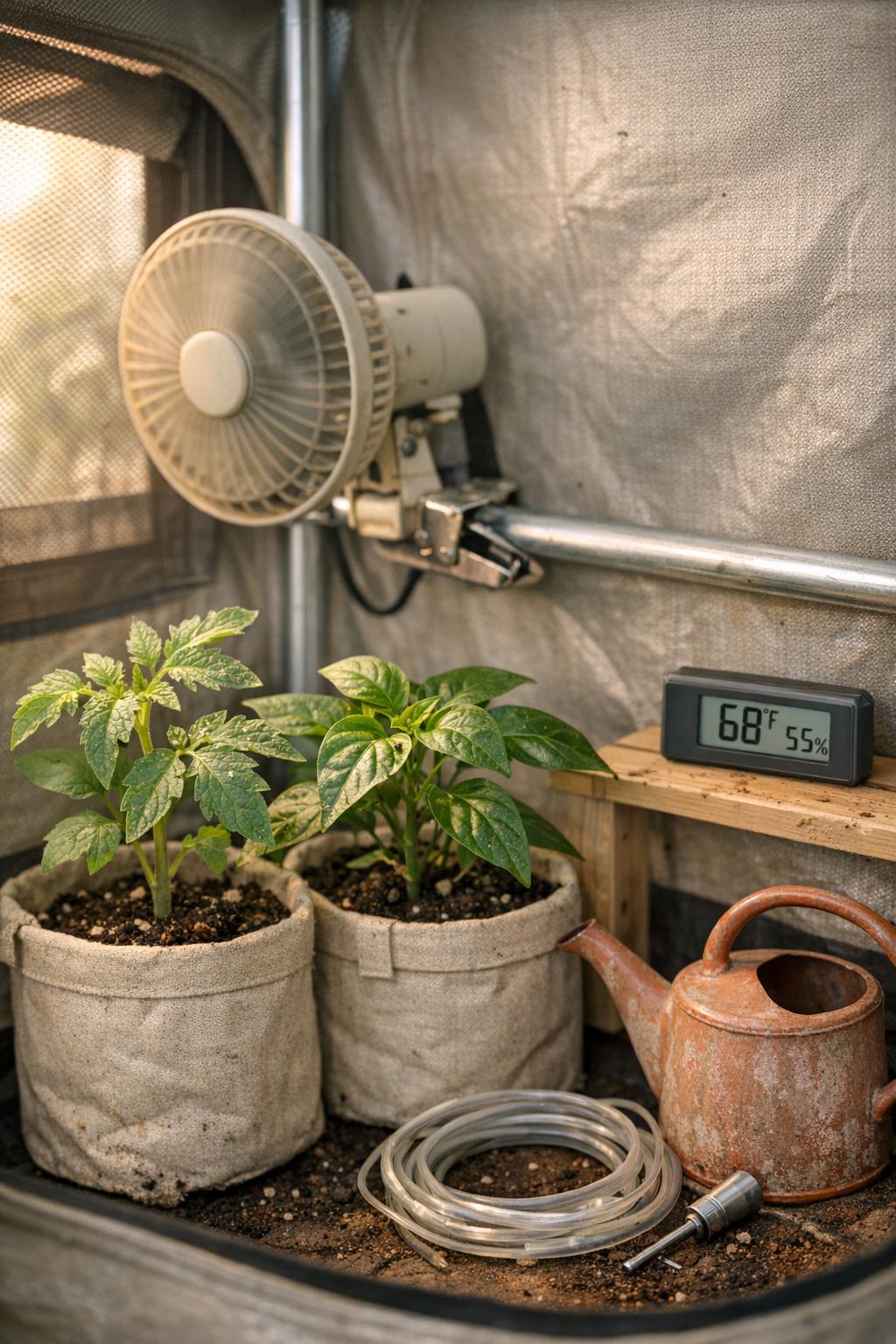
If you are growing inside a grow tent, climate control is not optional. It is the entire game. A grow tent gives you the power to control temperature, humidity, airflow, and light with precision, but only if you understand how each piece works together.
Inside grow tents, plants depend completely on the environment you build for them. Unlike outdoor gardens, there is no breeze, no natural temperature swing, and no seasonal rhythm unless you create it. When I set up a grow tent, I treat it like a sealed ecosystem that needs balance every single day.
Why Climate Matters More in a Grow Tent
In a grow tent, the reflective walls amplify light and trap heat. Your lighting system, whether LED or HID, actively changes the internal temperature. Without proper ventilation and airflow, heat builds quickly in grow tents and stresses plants long before you notice visible damage.
Humidity behaves differently inside a grow tent as well. Plants release moisture through transpiration, and in an enclosed grow tent that moisture has nowhere to go unless you force it out. This means mold and mildew can develop faster than many new growers expect.
Managing Temperature Inside a Grow Tent
Ideal Temperature Ranges
Inside my grow tent, I aim for 70 to 80 degrees Fahrenheit during the light period and slightly cooler during the dark period. Because a grow tent is enclosed, even small changes in room temperature outside the tent can influence what happens inside.
I always measure temperature at canopy level in the grow tent. Heat rises, especially under powerful lights, so relying on a floor level reading gives you a false sense of security.
Using Ventilation to Control Heat
An inline fan connected to ducting is the backbone of temperature control in grow tents. I position the exhaust fan near the top of the grow tent where hot air naturally collects. Pulling warm air out continuously keeps temperatures stable.
Passive intake vents at the lower part of the grow tent allow cooler air to enter as hot air exits. In larger grow tents, I often add an active intake fan to increase airflow and maintain consistent negative pressure.
Controlling Humidity in a Grow Tent
Target Humidity by Growth Stage
Seedlings inside a grow tent prefer higher humidity, often around 60 to 70 percent. As plants mature, I gradually lower humidity in the grow tent to around 40 to 50 percent during flowering. Because the grow tent traps moisture, adjustments must be deliberate.
I use a digital hygrometer mounted at plant height in the grow tent. Checking it daily helps me respond before excess humidity causes condensation on leaves or tent walls.
Dehumidifiers and Humidifiers Inside Grow Tents
In smaller grow tents, a compact dehumidifier placed just outside the tent but connected through airflow often works best. This reduces heat buildup inside the grow tent itself. For very tight spaces, a small unit inside the grow tent can work, but monitor temperature carefully.
During early growth, if humidity is too low inside the grow tent, a small humidifier placed near the intake vent distributes moisture evenly. I avoid placing it directly under lights to prevent uneven moisture pockets.
Air Circulation Within the Grow Tent
Exchanging air is only part of the equation. Inside a grow tent, you also need constant air movement around the plants. I mount oscillating fans to the tent poles so that air flows across the canopy without blasting any one plant directly.
This internal airflow strengthens stems and prevents stagnant humidity zones inside the grow tent. When leaves gently flutter, I know circulation is adequate. If they whip around, the fan is too strong for that grow tent space.
Light Cycles and Their Effect Inside a Grow Tent
Because a grow tent is light sealed, you have full control over day and night cycles. This control directly impacts temperature and humidity patterns inside the grow tent. Lights on periods generate heat, while lights off periods cool the space.
I set my timers so the lights inside the grow tent run during cooler hours of the day. This reduces the workload on ventilation systems and keeps temperatures more stable.
Monitoring and Automation in Grow Tents
Grow tents reward consistency. I use timers for lights and sometimes controllers that trigger fans based on temperature thresholds. Automation inside a grow tent does not replace observation, but it prevents dramatic swings.
At minimum, every grow tent should have a thermometer and hygrometer combo device. More advanced setups may include environmental controllers that regulate fans, heaters, or humidifiers automatically.
Common Climate Mistakes in a Grow Tent
One mistake I see often is undersizing ventilation for the grow tent. A weak exhaust fan cannot keep up with heat from strong lighting. Another issue is overcrowding plants, which restricts airflow inside the grow tent and traps humidity between leaves.
Ignoring small fluctuations is also risky. Inside a grow tent, problems escalate faster than in open environments. A slight humidity increase can become a fungal outbreak if left unchecked in that enclosed space.
Dialing In Your Grow Tent Environment Over Time
Every grow tent setup behaves a little differently depending on room conditions, light intensity, and plant density. I keep notes during each cycle to see how temperature and humidity shift inside my grow tent as plants grow larger.
As the canopy fills out, transpiration increases and humidity rises inside the grow tent. Preparing for that shift before flowering begins saves a lot of stress later.
FAQ
What is the ideal temperature inside a grow tent?
Most plants thrive between 70 and 80 degrees Fahrenheit during lights on periods inside a grow tent. Slightly cooler temperatures during lights off periods help mimic natural conditions while staying controlled.
How do I lower humidity in my grow tent?
Increase exhaust fan speed, improve internal air circulation, or add a dehumidifier connected to the airflow of the grow tent. Avoid overcrowding plants, as dense foliage traps moisture inside the tent.
Do I need an intake fan in my grow tent?
Small grow tents can rely on passive intake vents, but larger grow tents often benefit from an active intake fan to maintain steady airflow and consistent temperature control.
How often should I check conditions in my grow tent?
I recommend checking temperature and humidity readings at least once daily. During seasonal changes or when adjusting equipment, monitor your grow tent more frequently to catch fluctuations early.
When you treat your grow tent like a controlled ecosystem and stay proactive, climate becomes your strongest advantage. Master that environment, and your plants will respond with healthier growth and stronger yields.


