
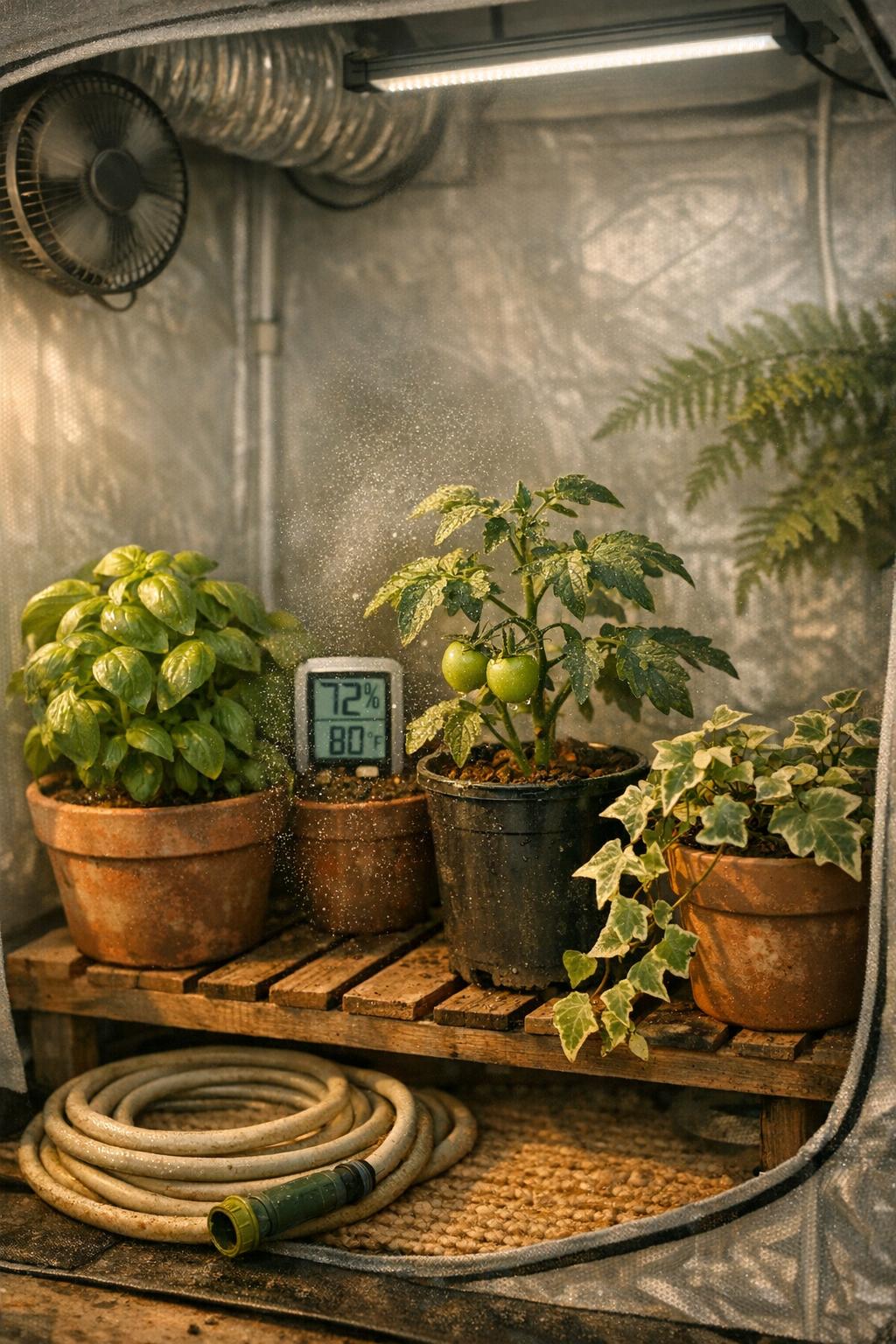
Growing inside a grow tent completely changes how you approach gardening. In a grow tent, you are responsible for everything the plant experiences, from light intensity to air movement to humidity. That level of control is exactly why I prefer growing in grow tents, but it also means small mistakes show up quickly.
If you want faster growth, healthier leaves, and heavier yields inside your grow tent, you need to treat the tent as a controlled ecosystem. Every adjustment you make inside that enclosed fabric space affects temperature, airflow, and moisture. When you dial those elements in correctly, plants respond with explosive growth.
Create the Ideal Microclimate Inside Your Grow Tent
A grow tent works best when it functions as a sealed environment. I always start by stabilizing temperature and humidity before I think about nutrients or training. Inside a grow tent, swings in temperature happen fast because the space is compact and insulated.
For most plants in vegetative growth, I aim for temperatures between 70 and 80 degrees Fahrenheit while lights are on inside the grow tent. When lights are off, I allow a slight drop but never a dramatic swing. Large fluctuations inside a grow tent can slow growth because plants constantly adjust instead of focusing energy on new leaves and roots.
Humidity inside a grow tent should match plant stage. Younger plants prefer higher humidity in the 60 percent range. As plants mature, I gradually lower humidity to prevent moisture buildup inside the enclosed tent space. Because grow tents trap air more easily than open rooms, monitoring humidity daily is essential.
Dial In Lighting for Maximum Growth
Lighting inside a grow tent is different from placing a plant near a window. In a grow tent, your light source is the sun. The intensity, distance, and schedule must be deliberate.
Light Intensity and Distance
I always adjust my light height based on how plants respond inside the grow tent. If leaves stretch upward aggressively, the light may be too far away. If leaves taco or bleach, the light may be too close in the concentrated tent environment.
Because grow tents reflect light off interior walls, the effective intensity is higher than in an open room. I use that reflective advantage to maintain even canopy coverage, making sure no corner of the grow tent stays in shadow.
Light Schedule Control
One of the greatest advantages of a grow tent is full control over the light cycle. I use timers so my plants inside the grow tent receive precise and consistent light hours every single day. Consistency inside a grow tent prevents stress and encourages steady vegetative growth.
Airflow Is Non Negotiable in a Grow Tent
Because a grow tent is enclosed, stagnant air builds quickly if you do not move it. Proper airflow strengthens stems and regulates temperature inside the grow tent.
Inline Fans and Exhaust Systems
I run an inline fan to pull warm air out of the grow tent and draw fresh air in through passive vents. This constant exchange prevents heat from building up under the lights and keeps carbon dioxide levels balanced inside the tent.
If you skip proper exhaust in a grow tent, humidity pockets develop and growth slows. Plants breathe through their leaves, and stale air inside a grow tent suffocates that process.
Oscillating Fans Inside the Tent
I also place oscillating fans inside the grow tent to create gentle movement across the canopy. Air circulation inside a grow tent prevents mold and encourages thicker stems that can support future flowers or fruit.
Watering Practices Designed for Grow Tents
Water behaves differently inside a grow tent than in open spaces. Because humidity can remain elevated in a grow tent, overwatering becomes a common issue.
I always allow containers to dry slightly between waterings inside the grow tent. The controlled humidity slows evaporation, so roots need more oxygen time. Lifting pots inside the grow tent is my preferred method to judge moisture levels accurately.
Runoff management is also critical in a grow tent. I never allow standing water to remain in trays because trapped moisture increases humidity inside the tent and attracts pests.
Feeding for Aggressive Tent Growth
In a grow tent, plants often grow faster due to optimal light and climate control. That rapid growth means precise feeding matters even more.
I start with moderate nutrient strength and observe how plants behave inside the grow tent. Burned leaf tips show up quickly in a controlled tent environment. It is always easier to increase feeding than to correct nutrient excess inside a grow tent.
I also check pH consistently when growing in containers inside a grow tent. Because you control every input, imbalance becomes obvious fast. Staying consistent keeps roots efficient and growth steady.
Space Management Inside a Grow Tent
Grow tents limit vertical and horizontal space, so plant training becomes essential. I shape plants early to maximize canopy exposure under the lights.
Inside a grow tent, I prefer topping and low stress training to create an even canopy. An even surface ensures all plants inside the grow tent receive equal light intensity from the reflective walls and overhead fixture.
Without training, one tall plant can dominate the limited height of a grow tent and reduce overall productivity. Thoughtful shaping allows you to take full advantage of the grow tent footprint.
Daily Monitoring Inside the Grow Tent
A grow tent rewards consistency. I unzip my grow tent daily to check leaf posture, soil moisture, temperature, and humidity. Small adjustments inside a grow tent have immediate effects.
Because grow tents isolate plants from natural weather patterns, problems usually trace back to something within your control. That is empowering. Every improvement you make inside the grow tent directly improves plant performance.
Frequently Asked Questions
How often should I check conditions inside my grow tent?
I recommend checking your grow tent at least once per day. Since grow tents are controlled environments, changes in temperature, humidity, or equipment performance impact plants quickly.
Do I need an exhaust fan in every grow tent?
Yes. Proper ventilation inside a grow tent is essential for temperature control and fresh air exchange. Even small grow tents benefit from an inline exhaust system.
What is the biggest mistake beginners make in a grow tent?
Overwatering and poor airflow are the most common mistakes I see inside a grow tent. Because the environment is enclosed, excess moisture does not dissipate the way it would outside the tent.
Can I grow multiple plant types in one grow tent?
You can, but they must prefer similar temperature, humidity, and light conditions inside the grow tent. Since the tent shares one controlled climate zone, mismatched plants will struggle.
When you treat your grow tent as a precision environment instead of just a place to keep plants, growth accelerates. Control the climate. Manage the light. Keep air moving. Water carefully. Feed intentionally. Inside a well managed grow tent, plants do exactly what you guide them to do.


