
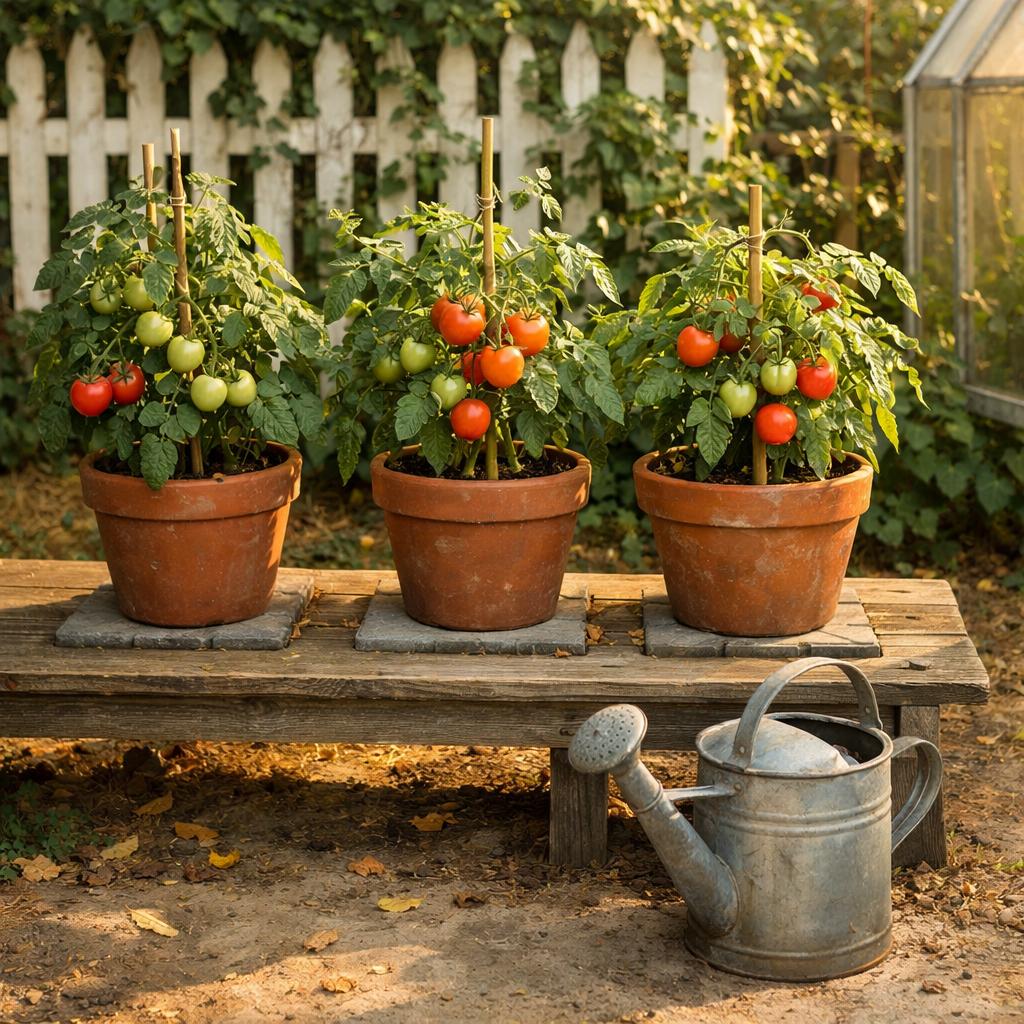
Why container tomatoes need a different watering approach
I have grown tomatoes in almost every setting including open ground raised beds and tight urban patios. Containers are their own world. They dry out faster heat up quicker and forgive fewer mistakes. Most problems I see with container tomatoes trace back to watering that is either rushed or inconsistent.
In a pot the root system is limited by design. That means you control nearly everything. Water is not just about preventing wilting. It is about setting a steady rhythm that allows the plant to build strong roots flowers and fruit without stress. I am opinionated here because the calm steady approach always wins.
Start with the right container and soil
Watering begins before the first pour. If the container is too small you will chase moisture all season and still fall short. I recommend a pot that holds at least five gallons of soil for a single indeterminate tomato and slightly less for compact varieties.
Soil matters even more. Use a quality potting mix that holds moisture without becoming heavy. Garden soil alone packs too tightly and drains poorly. I like mixes that include compost since it improves water retention while still allowing air to reach the roots.
Before planting I water the soil thoroughly. This initial soak removes dry pockets and sets the stage for even moisture later.
How often to water tomatoes in containers
This is where gardeners ask for a schedule and where I push back. Containers do not run on the clock. They respond to weather plant size and root development.
Instead of counting days I check moisture. I press my finger into the soil up to the second knuckle. If it feels dry at that depth it is time to water. If it is still cool and damp I wait. This habit prevents both overwatering and stress.
In warm summer weather this often means watering once a day. During peak heat it can mean morning and late afternoon watering. Early in the season it might mean every few days. The plant will tell you if you pay attention.
How to water deeply and evenly
Tomatoes do best with deep even watering. A quick splash on the surface does more harm than good. Water should reach the full root zone and encourage roots to grow downward.
I water slowly until I see moisture coming from the drainage holes. Then I pause. If the soil settles and the level drops I add a bit more. This ensures the entire pot is evenly moistened.
Try to avoid wetting the leaves. While a little splash will not ruin a plant keeping foliage dry reduces disease risk and keeps growth clean.
Signs you are watering incorrectly
Tomatoes are expressive plants. They show you when something is off long before the harvest suffers.
Wilting in the heat that recovers in the evening usually points to shallow watering. Constant wilting even in the morning suggests severe drought stress or root problems.
Yellowing lower leaves often come from overwatering or poor drainage. Split fruit is a classic sign of uneven moisture where the plant goes from dry to soaked too quickly.
When I see these symptoms I do not add fertilizer first. I adjust watering and observe for a week. Most of the time that solves it.
Mulch is not optional in my garden
If you want calmer easier watering use mulch. A layer of straw shredded leaves or fine bark on top of the soil reduces evaporation and keeps temperatures steady.
Mulch also protects the soil surface from becoming crusted which allows water to soak in more evenly. In containers this makes a noticeable difference within days.
I apply mulch once the plant is established and the soil has warmed. It feels like a small step but it pays back daily.
Adjusting watering as plants grow and fruit
Tomato water needs increase as the plant grows and sets fruit. What worked in early growth will not be enough later. This is normal and not a failure on your part.
During flowering and fruit development consistency matters more than volume. Sudden changes cause blossom drop and misshapen fruit.
I keep my routine steady and only increase the amount slightly when needed. When the weather cools toward the end of the season I slowly reduce watering rather than stopping abruptly.
FAQ
Can I use self watering containers for tomatoes
Yes and they can work well if sized correctly. Still check moisture regularly. Do not assume the reservoir is perfect. Roots need oxygen as much as water.
Is morning or evening watering better
Morning is best. It prepares the plant for the day and allows excess moisture to evaporate from the surface. Evening watering is acceptable during extreme heat if the plant needs relief.
How do I know if I am overwatering a container tomato
Look for persistent yellow leaves slow growth and soil that stays wet for days. Make sure drainage holes are open and reduce watering frequency.
Should I water more when tomatoes start to ripen
No. Keep watering consistent but do not increase it. Too much water at this stage leads to diluted flavor and split skins.
Can rain replace my regular watering
Sometimes. Light rain often wets only the surface. After rain check the soil depth rather than assuming the pot is fully watered.
My steady approach to better container tomatoes
Watering tomatoes in containers is not about tricks or schedules. It is about attention and consistency. When you slow down and respond to what the plant and soil are telling you the results show quickly.
I have learned to trust this calm method season after season. It saves time reduces stress and produces tomatoes that taste the way home grown fruit should.


