
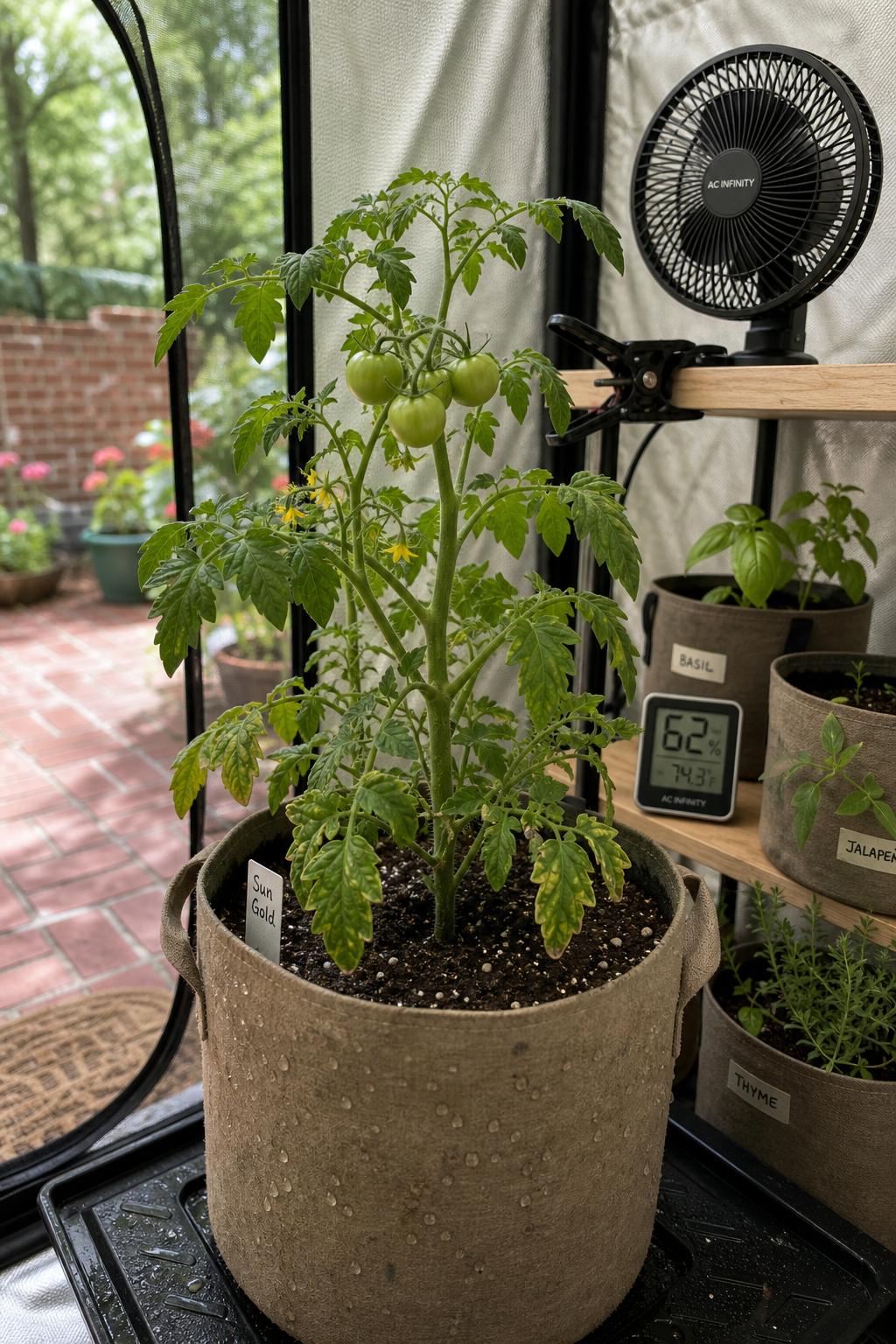
Why Overwatering Inside a Grow Tent Is Not the Same as in Open Air
Overwatering inside a grow tent behaves very differently than overwatering in open air. In a grow tent, every environmental variable is controlled, contained, and constantly cycling. That enclosure changes how water moves through your medium, how quickly oxygen returns to the root zone, and how long moisture lingers around the pot walls.
In open air, excess moisture has unlimited space to evaporate. In grow tents, the air volume is restricted, airflow follows specific paths, and humidity builds quickly between exhaust cycles. That means the same amount of water can produce entirely different root conditions depending on how your tent system is configured.
The mistake I see often is treating watering inside a grow tent the same way you would in a greenhouse or patio garden. Inside a tent, the root zone is part of a closed mechanical system. If you do not think about airflow direction, container breathability, and exhaust timing, water sits longer than you expect and oxygen drops faster than you realize.
How Controlled Airflow Changes Dry Down Speed
In a grow tent, airflow is not random. It is engineered. Intake vents pull air from the bottom or sides. Oscillating fans circulate locally. Exhaust fans remove humid air from the top. This creates a layered drying pattern that can slow moisture evaporation at the base of your pots.
Even with strong circulation, most grow tents prioritize canopy movement. Leaves flutter. Stems strengthen. But the lower third of the tent, especially beneath dense foliage, often receives less direct airflow. Water evaporates more slowly at the soil surface and even slower inside the root mass.
Fabric pots change this equation, but not always the way growers expect. Inside grow tents, fabric pots breathe through their sidewalls. However, if plants are positioned too close together, those sidewalls become trapped in a microclimate pocket. Moisture accumulates between pots, slowing lateral evaporation.
Another factor inside grow tents is cyclical humidity. When lights shut off, transpiration drops. Exhaust often runs at lower speed. Relative humidity rises. That nighttime spike reduces the dry back period significantly. A watering schedule that seems safe during lights on hours can become excessive once lights off humidity is factored in.
In other words, dry down inside a grow tent depends less on time and more on airflow mechanics and environmental cycling.
The Early Root Zone Warning Signs Most Growers Miss
Overwatering inside a grow tent rarely shows up first as drooping leaves. The early signals are subtler and system specific.
1. The pot feels heavy but the surface looks dry
Inside grow tents with strong top airflow, the surface dries quickly while the lower two thirds remain saturated. If you lift the pot and it still feels dense several days later, the root zone has not recovered oxygen yet.
2. Condensation on lower tent walls
If you see light moisture collecting near the lower interior walls of your grow tent shortly after watering, moisture is lingering in the lower air layer. That indicates evaporation is occurring slowly at substrate level.
3. Persistent humidity elevation after irrigation
Inside a stable grow tent, humidity should spike briefly after watering and then settle. If your sensor shows elevated humidity lasting more than several hours, your medium is releasing moisture slowly and remaining saturated.
4. Slowed growth despite adequate light
Inside grow tents with optimized lighting, slowed vertical or leaf growth often points to reduced root oxygen rather than insufficient nutrients. Chronic saturation reduces root respiration long before visible leaf damage appears.
A Simple Reset Plan to Rebalance Moisture in Your Grow Tent
If you suspect overwatering inside your grow tent, the solution is not simply waiting longer between waterings. You must adjust the tent system so the root zone dries consistently and predictably.
Step 1: Increase Lower Zone Air Movement
Add a small oscillating fan aimed across the base of the pots, not at the canopy. Inside grow tents, this single adjustment often shortens dry down time by a full day. The goal is consistent lateral movement around container sides.
Step 2: Raise Pots Off the Tent Floor
Place pots on risers or mesh stands inside the grow tent so air can circulate beneath them. Direct contact with the tent floor traps moisture under the container. Elevation improves drainage evaporation significantly.
Step 3: Adjust Exhaust Timing After Watering
For the first six to twelve hours after irrigation, increase exhaust speed slightly inside your grow tent. This removes humid air quickly and restores vapor pressure balance. After that window, return to normal settings.
Step 4: Reduce Volume Per Irrigation
Inside grow tents, smaller and more precise watering events perform better than heavy saturation. Instead of drenching the entire medium, apply enough water to reach field capacity without prolonged runoff. Observe how long the pot takes to feel noticeably lighter before repeating.
Step 5: Increase Plant Spacing If Possible
Crowded grow tents create humidity pockets between pots. Even a few centimeters of additional spacing can improve airflow around fabric containers and accelerate sidewall evaporation.
Step 6: Monitor Pot Weight Rather Than Calendar Days
Inside a controlled grow tent system, environmental settings determine drying speed, not the calendar. Physically lift each container daily. Water only when the pot feels significantly lighter than its fully saturated weight.
Troubleshooting Overwatering Inside a Grow Tent
Why does my grow tent stay humid long after watering?
This usually indicates insufficient exhaust speed following irrigation or poor lower canopy airflow. Increase exhaust temporarily and ensure air is moving across the pot surfaces, not just above them.
Can fabric pots prevent overwatering inside grow tents?
Fabric pots help, but inside grow tents they only work as intended if air can move freely around them. If they are pressed together or against tent walls, breathability is reduced.
Should I lower humidity to fix overwatering?
Lowering overall tent humidity can help, but it is not the primary fix. The critical factor inside grow tents is restoring oxygen to the root zone through airflow and controlled irrigation, not simply drying the air.
How long should pots take to dry inside a grow tent?
That depends on plant size and tent airflow configuration, but generally a mature plant in an optimized grow tent should show a noticeable weight reduction within twenty four to forty eight hours. If the pot remains heavy beyond that without active growth, moisture is lingering too long.
Overwatering inside a grow tent is a systems problem, not a watering problem. The enclosure amplifies small imbalances in airflow and cycling. Once you tune how air moves around and beneath your pots, moisture behaves predictably and roots recover quickly. Treat the tent as an engineered environment, not just a covered space, and overwatering becomes far easier to control.


