
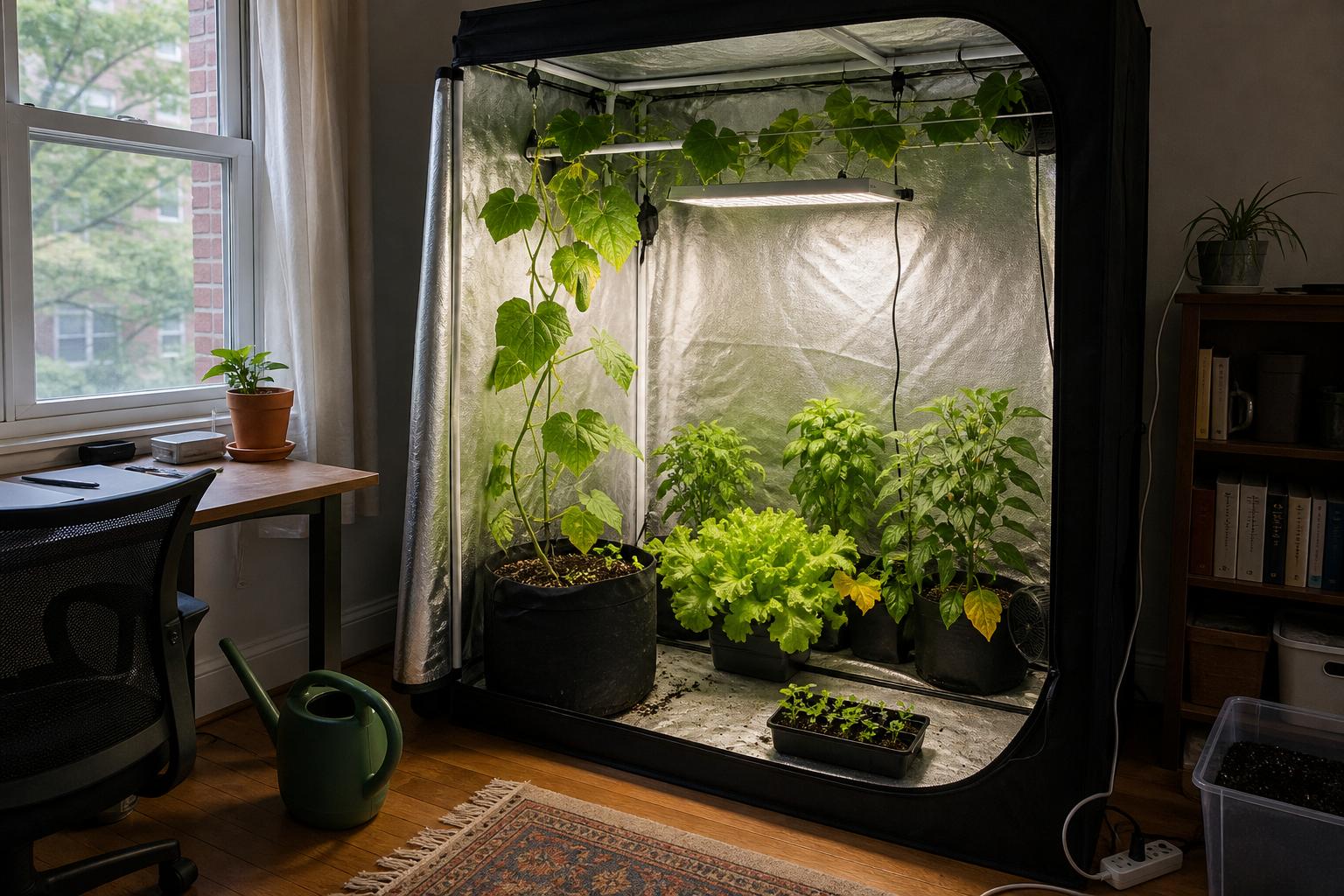
A cucumber can look perfectly manageable inside a grow tent for several weeks. Then the main vine reaches the light, broad leaves spread over nearby herbs, and tendrils wrap around anything they can find. What seemed like a simple vertical crop suddenly controls the entire tent.
The usual advice is to give cucumbers a trellis. That is only part of the solution inside a grow tent. The vine also needs a planned route that keeps it away from the light, ventilation equipment, and the space you need for watering and pruning.
Why Cucumber Vines Quickly Disrupt a Grow Tent
Cucumber leaves are large compared with the footprint of most small grow tents. A single leaf can shade several lettuce plants or most of a tray of young basil. The vine itself is flexible when young, but it becomes much less cooperative once the stem thickens.
I have noticed that cucumber growth often feels slow until the plant has several healthy leaves and a settled root system. After that, the top can move surprisingly quickly. Waiting until the vine reaches the fixture is waiting too long.
Another issue is the tendrils. Inside a grow tent, they do not know the difference between a proper support and a light cord, fan guard, thermometer cable, or neighboring pepper plant. I regularly check for tendrils in the wrong places because they can make routine maintenance far more awkward than it needs to be.
One mistake I made early on was letting the vine grow straight toward the brightest part of the tent. When it reached the safe clearance below the light, I tried to bend it sharply to one side. The older stem resisted, the growing tip became crowded, and several leaves ended up pressed together.
Give the vine a route, not just a support.
Choose a Vertical Route Before Growth Accelerates
For an ordinary home grower, I prefer a single main leader routed along one side of the grow tent. Run it upward near a rear corner, then guide it across the upper side of the tent while maintaining the clearance required by your light.
This perimeter route is more useful than placing the cucumber in the middle. It protects the central light footprint for shorter vegetables and leafy greens, and it leaves a clearer path to reach pots, reservoirs, and runoff trays.
Before training begins, look at the entire grow tent and reserve space for:
- The recommended gap below the grow light
- The exhaust opening and circulation fan
- A clear area for opening the tent and reaching the pot
- Nearby basil, lettuce, peppers, or other edible plants
- The future width of mature cucumber leaves
I usually install a strong vertical string from near the cucumber container to an upper frame bar. Soft plant ties or reusable clips can then hold the stem loosely to the string. A narrow trellis panel also works, but it occupies more usable wall space and can be harder to remove from a packed grow tent.
My preference is string with loose clips. It is inexpensive, easy to adjust, and does not require shifting several containers when the cucumber needs a new direction. The tradeoff is that you must check it frequently during fast growth.
Train the Main Vine While It Is Still Flexible
The safest time to redirect a cucumber vine is when the newest section is soft and flexible. Do not pull directly on the growing tip. Hold the stem lower down, move it gradually toward the support, and attach it below a leaf joint.
I use a simple routine inside the grow tent:
- Check the newest growth every day or two.
- Unwind tendrils that have grabbed cords, fans, or neighboring plants.
- Move the flexible stem toward its planned route.
- Add a loose clip or tie below a leaf joint.
- Turn large leaves so they face open space rather than another plant.
Never tighten a tie against the stem. Cucumber stems expand quickly, and a snug tie can pinch them before you notice. Leave enough room for the stem to move slightly.
Once the vine reaches the top portion of the route, guide it sideways in small adjustments rather than forcing one sharp turn. If the top is already stiff, lower the attachment point and create a broad curve. A gentle curve uses a little more space, but it is much safer than cracking the main stem.
Side shoots need some judgment. Removing every side shoot creates a tidy single vine, but it can also remove productive growth. In a crowded grow tent, I keep the strongest main leader and shorten side shoots that push into neighboring crops or the access path. This may sacrifice some potential fruiting sites, but reliable airflow and usable tent space matter more than maximum foliage.
Correct Shading, Crowding, and Airflow Problems
If the cucumber has already taken over the grow tent, do not respond by stripping off many leaves at once. Large healthy leaves power the plant, and sudden heavy pruning can leave developing cucumbers without enough foliage.
Correct the layout in this order:
- Move the growing tip first. Redirect future growth toward an open side or upper perimeter.
- Free trapped equipment. Remove tendrils from cables, fan guards, and light hangers.
- Separate overlapping leaves. Use clips to create small gaps between the cucumber and nearby crops.
- Remove selectively. Cut damaged, yellowing, or badly positioned lower leaves before removing healthy upper leaves.
- Recheck fan movement. Leaves should move gently rather than being pinned together by strong air.
What surprised me most was how often a small routing change solved what looked like an airflow problem. When cucumber leaves overlap in layers, adding another fan is not always the answer. Open the canopy before buying more equipment. That avoids extra noise, electricity use, and heat inside a small home.
Also watch the plants beneath the cucumber. Lettuce leaning toward the aisle, basil stretching, or pepper leaves staying unusually dark under the vine are signs that the canopy is blocking useful light. Move containers if possible, but do not keep rearranging the entire grow tent to accommodate one cucumber. The cucumber should follow its assigned route.
If upper leaves are touching the fixture or showing pale, dry patches, lower the vine by loosening several clips and creating a wider curve along the side. Do not simply bend the top downward and let it hang over the center. That usually creates a second layer of shade.
What I Would Change First
Open the grow tent and trace the cucumber stem from the container to the growing tip. Decide where that tip should be a week from now, then clear and install the route today.
If I could make only one change, I would place a vertical string near a rear corner and begin guiding the main leader around the tent perimeter. Redirect the newest flexible growth first, then deal with crowded leaves. That one decision makes lighting, airflow, watering, and harvesting easier without adding another piece of powered equipment.


