
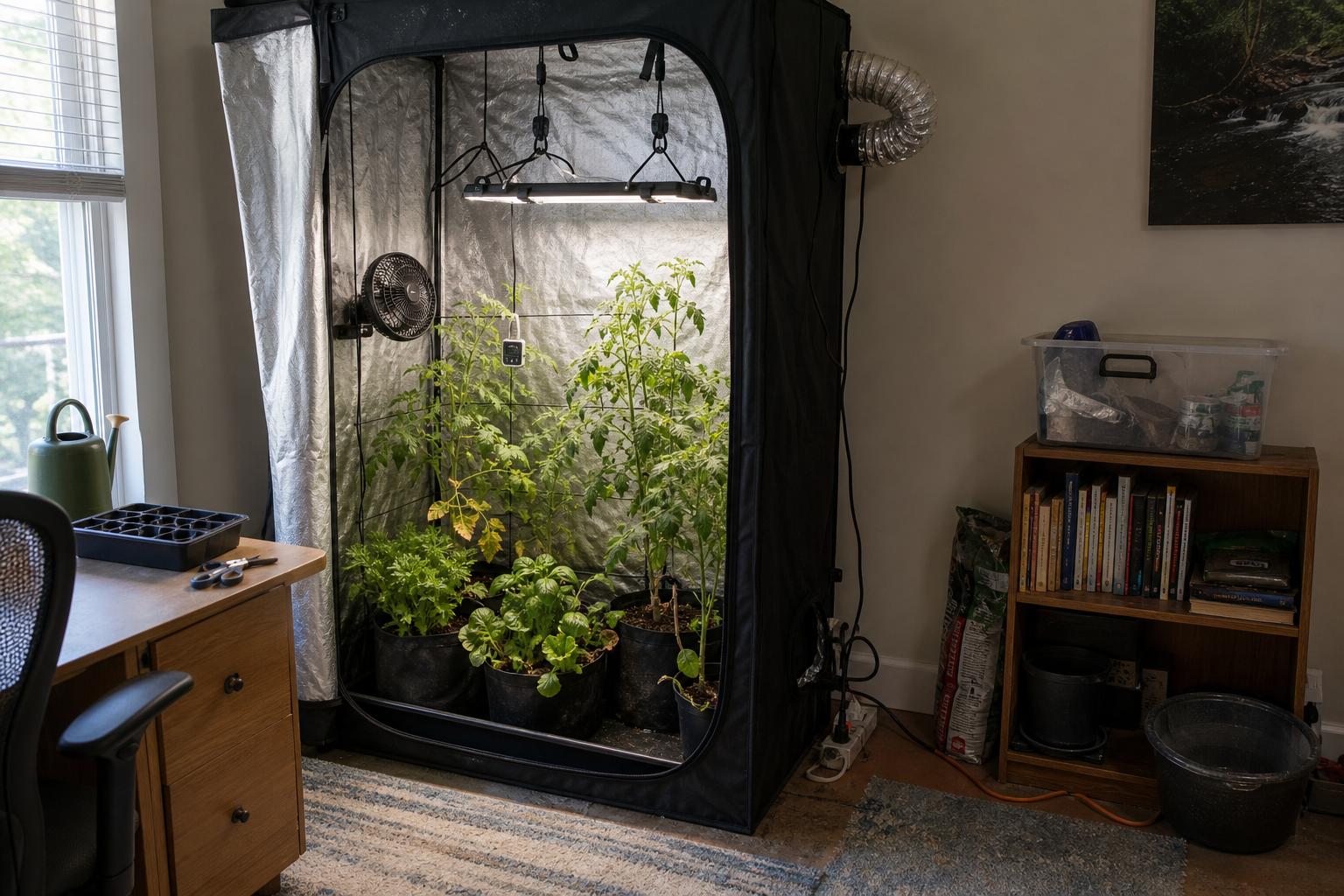
Grow tent accessories are easy to accumulate. A basic grow tent can quickly fill with sensors, controllers, fans, trays, hangers, nets, and gadgets that promise healthier plants or easier harvests. Some genuinely help. Others take up outlets and floor space without fixing a real problem.
After growing vegetables, herbs, and leafy greens inside grow tents for years, I have found that the most useful accessories do one of three things. They make conditions more stable, improve access to the plants, or remove friction from routine care. If an accessory does none of those, I am reluctant to give it space inside a small tent.
Start With the Problems Your Grow Tent Actually Has
Buying accessories before identifying a problem is one of the easiest ways to overspend. A second circulation fan will not correct a watering problem. A humidifier will not help lettuce that is wilting because its roots are sitting in warm, saturated growing medium.
Inspect the grow tent before shopping. Open it at the time of day when the light has been running for several hours. That is when heat, moisture, and access problems usually become obvious.
- Check whether temperature and humidity stay within a reasonable range during both light and dark periods.
- Look for still pockets of air beneath dense lettuce, basil, or tomato foliage.
- Decide whether every container can be reached without bending stems or moving several other plants.
- Look for water collecting on the tent floor or beneath saucers.
- Listen for equipment noise that becomes irritating in the surrounding room.
This simple inspection gives every potential purchase a job. Buy the solution to the problem you can observe, not the accessory that looks most advanced.
Accessories That Improve Monitoring and Control
A temperature and humidity meter with memory
A basic meter is essential inside a grow tent, but I strongly prefer one that records minimum and maximum readings. The current display only tells you what is happening while you are looking at it. The stored readings reveal whether the tent overheats in the afternoon or becomes too humid after the light turns off.
Place the sensor near the plant canopy, shaded from direct light and away from the exhaust opening. A meter hanging against the tent wall can report conditions that are noticeably different from what basil or lettuce leaves are experiencing.
I made the mistake early on of trusting a sensor placed above the light. It showed a warm, dry environment while the crowded foliage below remained cooler and much more humid. Moving the sensor down was more useful than buying another device.
A reliable timer
A timer is not exciting, but it prevents irregular lighting inside the grow tent. Consistent light periods matter for leafy greens, herbs, peppers, and compact tomatoes, and a timer removes one daily task that is easy to forget.
For most home growers, a simple grounded digital timer is more practical than a complicated wireless system. Smart controls are useful when remote access solves a genuine scheduling problem, but they add setup steps and another possible connection issue. I would rather have a plain timer that works every day.
A fan speed controller or environmental controller
If the exhaust fan runs too loudly or removes heat faster than necessary, adjustable speed control can make a meaningful difference. In an apartment, reducing constant fan noise may be just as valuable as reducing electricity use.
An automatic environmental controller is worth considering when grow tent temperatures swing widely or humidity climbs every night. It can increase exhaust speed only when needed. However, it is not the first accessory I would buy for a stable tent. Automation is most useful after the basic setup works manually.
One properly placed circulation fan
Small grow tents rarely need a collection of fans. One adjustable fan aimed across the canopy often provides enough leaf movement for herbs and greens. The leaves should move gently rather than flap continuously.
I have noticed that a fan mounted above the canopy often misses the humid pocket beneath tightly spaced containers. When basil or lettuce fills the tent, I angle the fan slightly downward or move it to a side support. Placement usually matters more than fan count.
Simple Additions That Make Plant Care Easier
Environmental equipment gets most of the attention, but access accessories often improve a grow tent more because they are used every day.
- Waterproof trays: Use trays that can contain a genuine spill, not shallow saucers that overflow immediately. They protect the tent floor and make runoff easier to remove.
- Container risers: Raising pots above collected water prevents the growing medium from drawing runoff back through the drainage holes.
- A narrow watering wand: This reaches containers at the rear of the grow tent without dragging front plants out of position.
- Adjustable light hangers: Secure hangers make canopy adjustments easier as peppers, tomatoes, and herbs grow at different rates.
- Dedicated pruning scissors: Keeping a clean pair beside the tent makes it easier to remove crowded leaves before airflow becomes restricted.
One mistake I see often is packing a grow tent so tightly that every watering session becomes a rearrangement project. More plants may look productive at first, but damaged stems, hidden pests, and spilled nutrient solution quickly cancel that advantage.
Leave yourself a working path.
In a very small grow tent, that may simply mean keeping the front corners clear and placing shorter herbs near the door. I prefer growing one fewer container if it lets me inspect every plant without pulling half the tent apart.
Plant stands, turntables, and trellis nets
A low stand can raise short lettuce or parsley closer to the light while taller peppers remain on the floor. A sturdy turntable also helps with a single large pepper or tomato container, provided it fits completely inside the waterproof tray.
Trellis nets are more complicated. They support tomatoes and climbing vegetables well, but they also lock containers into position. That makes cleaning, runoff removal, and plant inspection harder inside a compact grow tent. For ordinary home growing, individual stakes and soft ties are usually more convenient. I use a net only when the crop truly needs broad support.
Accessories I Would Usually Skip
Some products can work, but that does not make them sensible for a small food growing setup.
- Carbon dioxide kits: Most home vegetable grow tents are not sealed tightly enough to use added carbon dioxide efficiently. Ventilation carries it into the room.
- Powered intake fans: Most small grow tents can draw replacement air through open vents while the exhaust fan creates gentle inward pull.
- Multiple cheap sensors: Several inaccurate readings create confusion. One dependable meter in the correct location is better.
- Decorative monitoring screens: A large display is not useful if it does not change how you manage the grow tent.
- Automatic watering bought too early: Pumps and tubing can help during travel, but they add leak points and require testing. Hand watering remains simpler for a small collection of containers.
So where should the budget go first?
My preferred order is measurement, spill protection, reliable scheduling, airflow, then automation. This order handles the problems most likely to affect edible plants while keeping cost, noise, and maintenance under control.
Do a Ten Minute Accessory Audit
Stand in front of your grow tent while its light and fans are operating. Check the canopy reading, reach for the container farthest from the door, and inspect the floor for moisture. Then identify the single task or condition causing the most trouble.
If you cannot describe the problem clearly, wait before buying anything. If temperature swings are the issue, improve monitoring or fan control. If watering is awkward, buy a wand or rearrange the containers. If runoff is escaping, add deeper trays and risers.
I would start with a dependable temperature and humidity meter with memory. Put it at canopy height, review the readings for several light and dark cycles, and let that information decide which grow tent accessory deserves your money next.


