
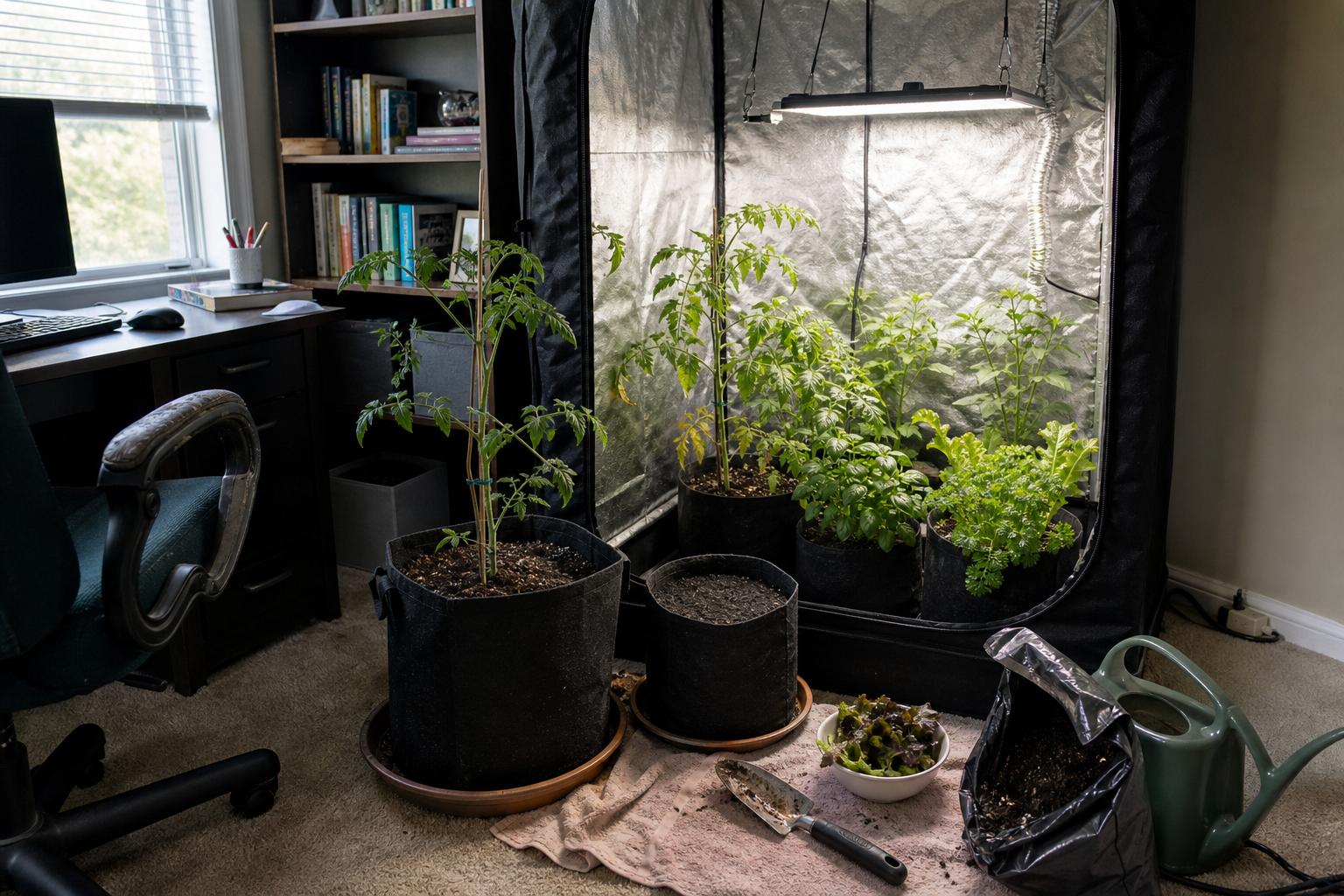
It is easy to assume that a struggling grow tent needs another fan, sensor, controller, or bottle of nutrients. Equipment feels like a direct solution because you can plug it in, adjust a setting, and watch a number change.
But inside a grow tent, the conditions around the roots often matter more than another piece of equipment. Good soil quietly stabilizes moisture, oxygen, and nutrient access, which makes the entire tent easier to manage.
I have grown leafy greens in simple setups that performed reliably because the soil was loose and evenly moist. I have also watched peppers struggle in much more elaborate grow tents because their pots stayed wet and airless around the roots.
Why Root Conditions Control More Than Most Growers Realize
A plant growing inside a grow tent experiences two environments. There is the environment above the pot, where we measure light, temperature, and humidity. Then there is the environment inside the pot, which is harder to see.
If the soil holds too much water, the roots lose access to oxygen. If it dries unevenly, fine roots repeatedly die back. If it compacts, water may run down the sides of the pot while the center remains surprisingly dry.
The plant usually shows the problem above the soil. Leaves droop, tips brown, growth slows, or older leaves turn yellow. That often sends the grower toward the control panel instead of the pot.
A perfect tent temperature cannot rescue roots that are sitting in dense, wet soil.
One mistake I made early on was responding to drooping plants with more airflow. I assumed the leaves needed better circulation. The real problem was that the potting mix had collapsed and remained wet near the bottom. More fan speed only dried the leaf edges and the soil surface faster, which made the diagnosis even more confusing.
What Good Grow Tent Soil Needs to Do
Soil inside a grow tent does not need to be complicated. It needs to perform four jobs consistently within the limited volume of a container.
- Hold usable moisture without remaining saturated
- Drain excess water into a saucer or collection tray
- Keep air spaces open after repeated watering
- Provide steady nutrient access without becoming excessively rich
A quality indoor potting mix usually starts with peat, coco fiber, or a blend of both. These materials hold moisture while remaining lighter than soil dug from the ground. Perlite or pumice creates larger spaces that continue to hold air after watering.
Compost or worm castings can add nutrients and improve moisture distribution, but more is not always better inside a grow tent. Too much fine compost can make a container heavy and slow to drain. It can also feed fungus gnats if the surface stays damp.
I prefer a light mix that needs occasional feeding over a rich mix that stays wet for days. Adding nutrients later is easy. Removing dense material from the roots of a growing tomato or pepper is not.
The surface can be misleading
Grow tent lights and circulation fans dry the top layer first. I have noticed that a pot can look dusty on the surface while remaining wet several inches down. Watering by appearance alone often keeps the lower half of the container continuously saturated.
Lift the pot before watering. A recently watered container feels noticeably heavier than one that is ready for more water. This simple habit tells me more than a basic moisture meter, especially in small grow tents where I can reach every pot.
Common Soil Problems Equipment Cannot Fix
Before buying another device, look for these common container problems inside the grow tent.
Dense soil with very little aeration
If water sits on the surface or takes a long time to leave the drainage holes, the mix may be too dense. Stronger fans will not put oxygen back into a saturated root zone.
For a small herb or leafy green, repotting into a lighter mix is usually the most practical answer. For a larger pepper or tomato, allow the container to dry moderately, then carefully move it into a slightly larger pot with fresh mix around the root ball.
A pot that is too large
Large containers seem safer because they hold more soil and water, but a small plant cannot use that moisture quickly. In the steady conditions of a grow tent, the unused mix may stay wet for a long time.
Match the pot to the current root system, then move up in size as the plant grows. Lettuce and compact herbs can use shallow containers. Fruiting peppers and tomatoes eventually need more root volume, but seedlings do not need to start there.
No clear path for drainage
Every container in my grow tents has open drainage holes and a saucer or tray that I can inspect. Decorative pots without drainage create too much uncertainty. A layer of stones at the bottom does not solve the problem and reduces usable root space.
Empty standing runoff rather than letting the pot soak in it. This also limits excess moisture entering the room, which matters in an apartment or small home.
Repeatedly adding products to stressed soil
Yellow leaves often lead to more fertilizer, calcium products, pH adjusters, and root additives. If the soil is waterlogged, damaged roots may be unable to use what is already there.
Do not feed a root problem blindly. Check soil moisture, drainage, pot weight, and root space before increasing nutrients.
A Simple Soil Setup for More Reliable Growth
For most vegetables, herbs, and leafy greens inside a grow tent, I would start with this practical setup:
- Use two parts quality indoor potting mix based on peat or coco fiber.
- Add one part perlite or pumice if the original mix looks fine, heavy, or short on visible aeration.
- Add up to one part finished compost or worm castings for established vegetables. Use less for seedlings and tender herbs.
- Mix everything before filling the container so aeration is distributed throughout the pot.
- Fill lightly without pressing the mix down. Water slowly and confirm that excess water can leave freely.
If the bagged potting mix already contains plenty of perlite and compost, do not add ingredients just to make the recipe exact. The finished texture matters more than the formula. When squeezed damp in your hand, the mix should hold loosely and then break apart with a light touch.
I generally prefer plastic pots with generous drainage holes for a small grow tent. They dry more slowly and predictably than fabric pots, and they release less moisture into the room. Fabric pots are useful if you tend to overwater, but they can dry quickly around the edges and raise tent humidity through evaporation.
What I Would Check First
Choose one plant in your grow tent and inspect its container before changing any equipment. Lift the pot, feel the mix below the surface, watch how quickly water drains, and note how long the container stays heavy.
If the mix remains dense and wet for several days, repot that plant into a lighter, airier mix and compare its new growth with the others. That small test is cheaper and quieter than adding equipment, and it often reveals whether the real problem has been below the soil surface all along.


