
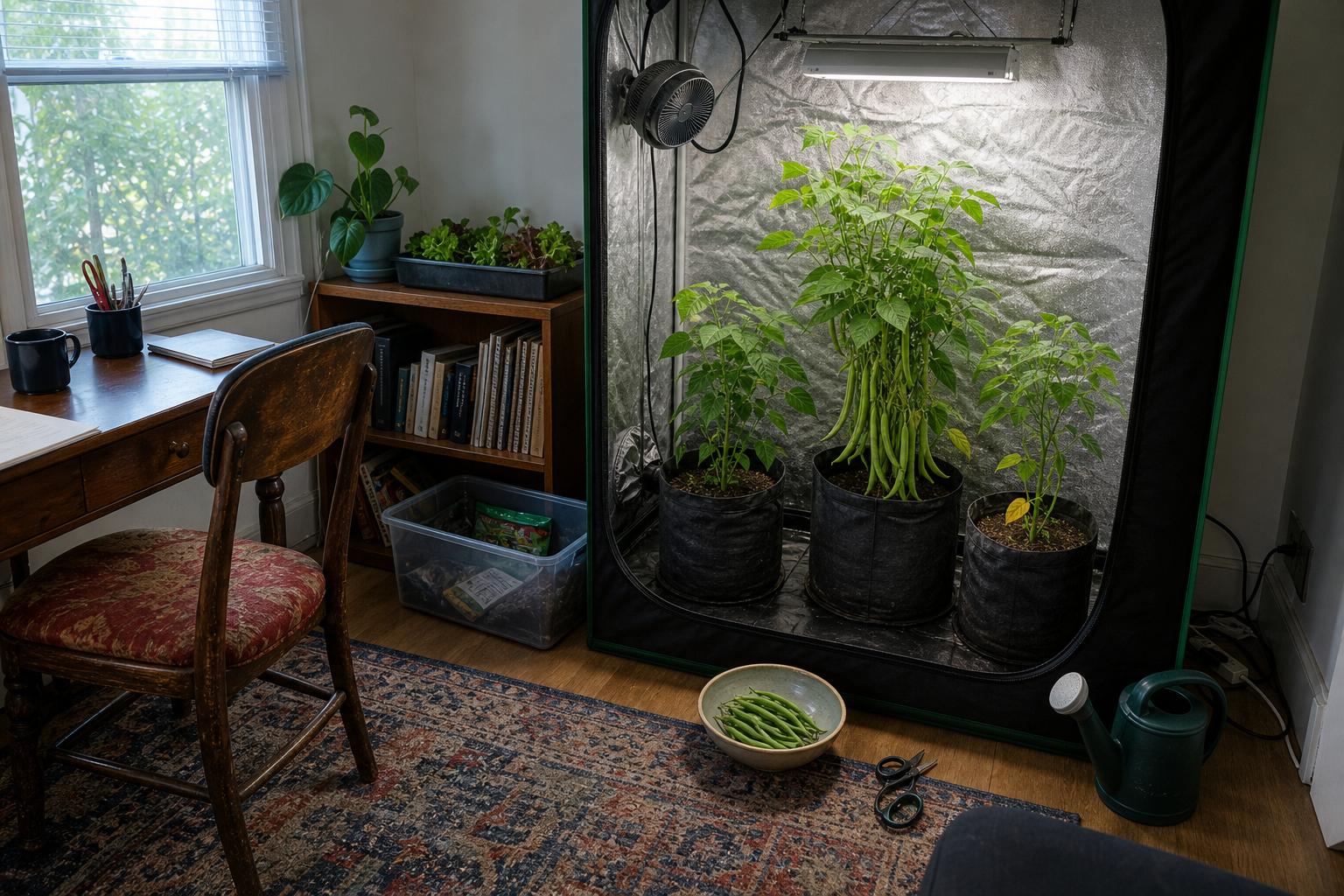
Bush beans look like a sensible crop for a grow tent. They stay shorter than climbing beans, need no tall trellis, and produce familiar food that is easy to use. The surprise comes when their broad leaves begin filling the tent and shading everything beside them.
I enjoy growing bush beans inside a grow tent, but I do not consider them an efficient default crop. They are worthwhile when you can give them a bright section of the tent and accept a concentrated harvest. If your main goal is the most food from every square inch, leafy greens and compact herbs usually make better use of the space.
Why Bush Beans Use More Grow Tent Space Than Expected
The word bush makes these plants sound compact. They are compact compared with climbing beans, but they are not compact in the same way as lettuce, parsley, or small basil plants.
Inside a grow tent, a healthy bush bean plant develops a wide canopy with overlapping leaves. The stems may remain fairly short while the leaves spread toward the light and neighboring plants. Once several plants touch, the center of the canopy becomes difficult to inspect and slow to dry.
Plan for width rather than height.
One mistake I made early on was planting beans closely because the young seedlings looked thin and upright. A few weeks later, the leaves formed a solid green layer. Air from the circulation fan skimmed over the top instead of moving through the plants, and picking beans without snapping stems became awkward.
For an ordinary home grow tent, I prefer giving each bush bean roughly 9 to 12 inches of horizontal room. The exact spacing depends on the variety, but crowding several plants into one small pot rarely improves useful production. It usually creates more leaves, hidden flowers, and moisture trapped around the growing medium.
The container also claims valuable floor space
A bush bean needs more root room than a small herb or a quick crop of lettuce. I use a container around 2 gallons for one plant, with enough depth to keep the root zone evenly moist. A wider rectangular container can hold several plants, but they should still have similar spacing across the surface.
Shallow containers may seem efficient inside a grow tent, yet they dry quickly under an LED fixture and moving air. That creates a cycle of wilt, heavy watering, and excess runoff. A slightly larger container is usually easier to manage than a tightly packed shallow tray.
This is the first real tradeoff. The floor area occupied by two or three bean containers could support repeated cuttings of lettuce, arugula, cilantro, or compact Asian greens.
The Conditions That Make a Bean Harvest Worthwhile
Bush beans earn their space when the grow tent can provide strong light without excessive heat. They are more demanding than leafy greens. Under weak light, the stems stretch, flowering is disappointing, and the plant occupies space without producing enough pods to justify it.
I place beans directly under the brighter central portion of my LED fixture, not along a dim tent wall. I normally run the light for about 14 to 16 hours, while watching leaf posture and fixture heat. The correct hanging height depends on the actual light, so I use plant response rather than copying a single universal number.
- Pale, stretched growth often means the beans need more usable light.
- Curled upper leaves or bleached patches can mean the fixture is too close or the canopy is too warm.
- Flowers dropping without pods may point to heat stress, dry roots, or poor air movement.
Beans are able to pollinate themselves, but the still air inside a grow tent does not always help the process. A gently moving canopy is useful. I have noticed better pod formation when a circulation fan lightly stirs the leaves rather than blasting one side of the plant.
Temperature matters as well. A tent that becomes hot whenever the light is on can produce plenty of leaves and few beans. Increasing exhaust speed may help, but that adds noise and sends more heat into the room. In a small apartment, it is often more practical to grow beans during the cooler part of the year than to run louder ventilation all summer.
A Practical Layout for Light, Airflow, and Picking
The best grow tent layout is not the one that fits the most containers. It is the one that lets you reach the plants, see the growing medium, and find pods before they become tough.
What worked better for me was arranging bush beans in a single row rather than a dense block. In a rectangular tent, I place that row along the back or one side, provided I can still reach behind the foliage. Short leafy greens can occupy the brighter open edge without disappearing underneath bean leaves.
- Place the bean containers where the plants receive strong overhead light.
- Leave a narrow gap between the foliage and the grow tent wall.
- Aim a small circulation fan across the canopy, not directly into one plant.
- Keep an open path for watering and picking.
- Turn containers regularly if one side receives noticeably more light.
Do not let bean leaves press against the tent fabric. Condensation and restricted airflow can leave those contact points damp. If the canopy has already become crowded, remove a few damaged or heavily shaded leaves rather than stripping the plants aggressively.
I also prefer saucers or a contained drainage tray under individual pots. Beans need consistent moisture while flowering and forming pods, but their roots should not sit in runoff. A tray makes watering manageable without turning the grow tent floor into a cleanup job.
Make picking part of the layout
Pods hide beneath leaves and close to stems. If reaching the back plants requires moving a fan, lifting a light cord, and bending around other containers, harvesting will be delayed. Once pods mature, the plant begins putting energy into seeds rather than producing tender new beans.
Inside a grow tent, easy access directly affects productivity. Pick while the pods are tender and check the plants frequently during the main harvest period. This is one reason I would rather grow fewer accessible bean plants than fill every available gap.
When Beans Win and When Another Crop Is Better
Bush beans make sense when you enjoy fresh beans enough to value flavor and experience over maximum yield per square inch. They are also a satisfying change from the leafy crops that dominate many indoor setups.
They are a good grow tent choice when:
- You have an open, brightly lit section at least a foot deep.
- Your ventilation can control heat without excessive household noise.
- You can reach every plant for frequent picking.
- You want a concentrated harvest rather than continuous small cuttings.
- You are willing to dedicate separate containers to the crop.
Choose another edible crop when electricity use, floor space, or steady production matters more. Lettuce, dwarf kale, scallions, parsley, cilantro, and compact basil generally offer more harvest opportunities from a small grow tent footprint. They also tolerate the edges of the light better than beans.
If you still want beans, resist the temptation to fill the whole tent on the first attempt. Start with two or three plants in individual containers. Watch how wide they become under your actual light and how much room you need to water and pick them.
My practical choice would be to reserve one bright row for bush beans and keep the rest of the grow tent in lower, repeat harvest crops. If that row blocks your fan, shades your greens, or makes maintenance irritating, replace it next cycle. If you find yourself checking for fresh pods every day and using every harvest, then those beans have earned their space.


