
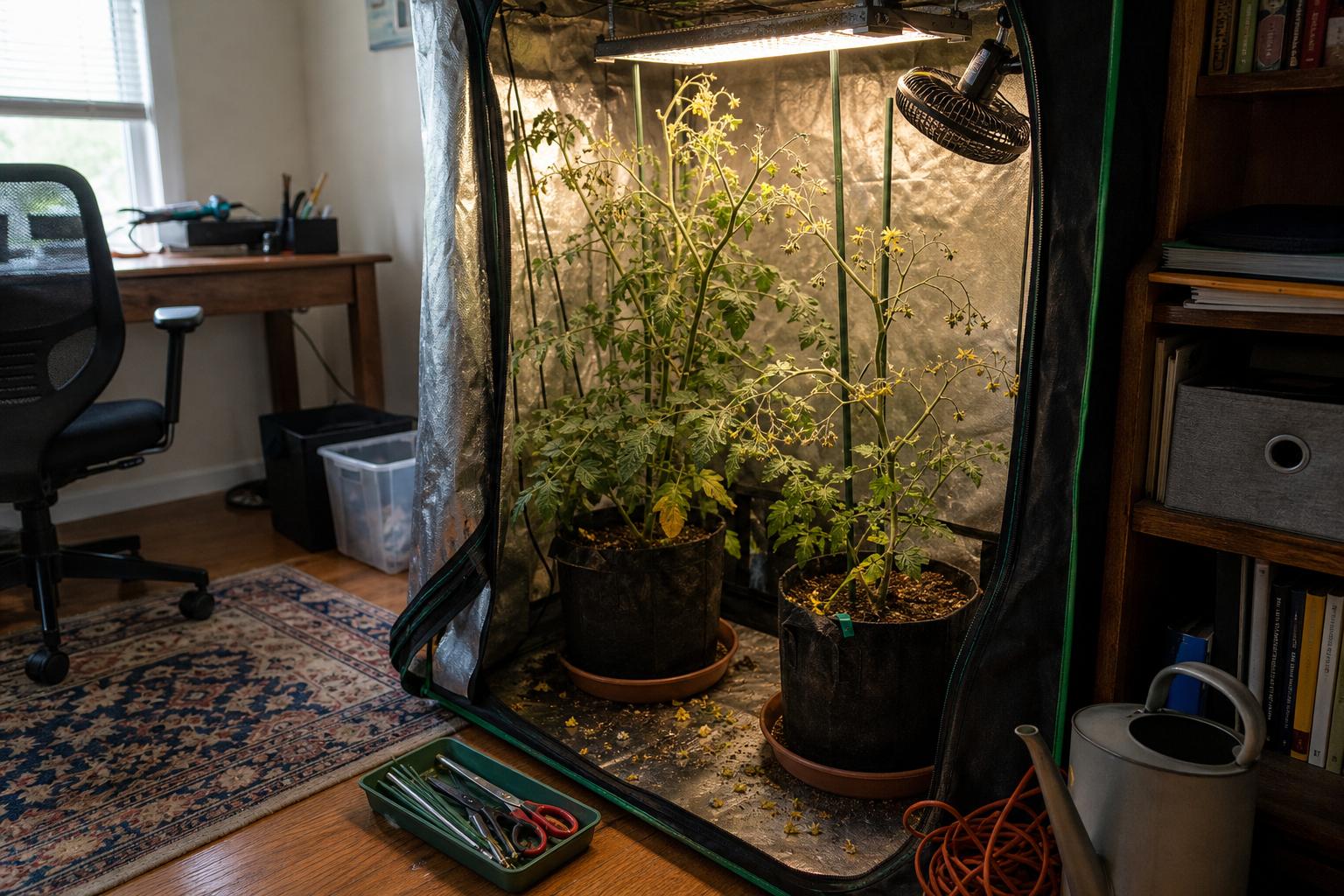
Tomato flower drop inside a grow tent is frustrating because the plant can look perfectly healthy. It may be tall, green, and covered with blooms, yet every flower dries up and falls before a tomato appears.
In a grow tent, this is rarely just a flower problem. It is usually the result of pollination, temperature, airflow, watering, or feeding conditions inside the enclosed space. The useful approach is to identify which part of the grow tent system is interfering with fruit set, then make one or two measured corrections instead of changing everything at once.
What Tomato Flower Drop Looks Like Inside a Grow Tent
A successfully pollinated tomato flower loses its petals, but the small green base behind the petals begins to swell. That swelling is the tomato. If the entire flower stem turns yellow, shrivels, and drops away, fruit set did not happen.
I have noticed two common patterns in grow tents:
- Individual older flowers dry up slowly while the rest of the plant looks normal. This often points toward weak pollination.
- Several flowers drop around the same time, including newer blooms. This usually suggests heat, watering stress, or another environmental swing.
Look at the whole flower cluster before blaming pollination. If one bloom drops but the next three are swelling, the grow tent probably does not have a serious problem. Tomato plants naturally abandon an occasional flower.
If nearly every bloom falls, however, something inside the tent is preventing reliable fruit set.
Pollination Failure or Environmental Stress?
Tomato flowers contain both the pollen and the parts needed to receive it. They do not require insects, but they do need movement. Outdoors, wind and visiting insects provide vibration. Inside a grow tent, still air can leave pollen sitting inside the flower.
Gently tap a flowering branch or vibrate the flower cluster while the grow tent lights are on. A small puff of pale pollen may come out of a mature flower. If nothing happens, the pollen may be damp, immature, or damaged by temperature.
High humidity makes tomato pollen sticky. It does not release well when the air around the flowers remains damp. Extremely dry air can also reduce pollination, but persistent moisture is the problem I see more often in enclosed grow tents, especially when leafy tomatoes share space with herbs or leafy greens.
Temperature records are more useful than a single thermometer reading. The canopy might reach 88°F during the last few hours of the light cycle even though the grow tent feels comfortable when you check it later. Warm nights can be just as disruptive because the plant gets no cooler recovery period.
For dependable flowering, I aim for roughly 72°F to 80°F with the lights on and a modest drop after the lights turn off. Brief movement outside that range is not automatically disastrous. Repeated hot periods near the flower clusters are the bigger concern.
Watering stress has a different pattern. The growing medium becomes very dry, the leaves soften or curl, and flowers fall several days later. That delay causes confusion. Growers often blame the most recent feeding when the real trigger was a dry root zone earlier in the week.
Excess nitrogen is easier to spot from the plant itself. Look for:
- Very dark green leaves
- Thick, rapidly growing stems
- Leaves curling downward at the tips
- Long growth between flower clusters
- Plenty of foliage but poor fruit development
One mistake I made early on was continuing a strong leafy growth feed because the tomato looked vigorous. It became an impressive plant that occupied half the grow tent while setting very little fruit. More green growth is not always better growth.
A Practical Correction Sequence for the Next Flowers
Flowers that have already yellowed at the stem will not recover. Focus on protecting the next cluster. Tomato plants usually keep producing flowers once conditions improve.
Check the temperature at flower height. Place the sensor beside the flowering cluster rather than on the grow tent floor. Check the warmest part of the light cycle and the period just before the lights turn on.
If the canopy is too warm, increase exhaust speed slightly, move the light farther from the top growth if intensity allows, or run the lights during the cooler part of the day. In an apartment, changing the lighting schedule is often quieter and cheaper than adding another powerful fan.
Inspect the growing medium before watering. Lift the container or push a finger into the upper layer. The goal is evenly moist roots, not a permanently soaked pot. Water thoroughly when the container has become noticeably lighter, then allow proper drainage.
I prefer judging container weight over watering on a rigid calendar. Tomato water use changes quickly as the plant fills the grow tent and begins carrying fruit.
Create gentle movement around the flowers. Leaves should tremble slightly, not whip around. Redirect an existing circulation fan before buying another one. A fan aimed directly at a cluster can dry and damage flowers while leaving the dense interior of the plant stagnant.
Vibrate open flowers once a day. Tap the support stake, flick the flower stem gently, or hold an electric toothbrush against the cluster stem for a second. Do this during the light period after humidity has settled.
I prefer tapping the support or using a toothbrush over relying entirely on a fan. It takes less than a minute, makes little noise, and gives each open cluster a useful vibration without increasing electricity use.
Review the fertilizer instead of immediately adding more. If the plant is dark, lush, and producing excessive foliage, reduce the nitrogen concentration at the next normal feeding. Use a tomato appropriate nutrient with enough potassium and other minerals, but do not overcorrect with a heavy bloom booster.
Stabilize first, then pollinate.
Hand vibration cannot rescue pollen that has been damaged by repeated heat or trapped by constantly damp air. Correct the grow tent environment before assuming the plant simply needs more shaking.
Keeping Fruit Set Reliable Without Constant Adjustments
The best grow tent setup is not the one with the most equipment. It is the one that stays reasonably steady from one light cycle to the next.
Keep the exhaust fan running at a low, consistent speed if possible. This removes moisture released by the tomato and prevents hot air from collecting above the canopy. A variable speed fan is useful in a small home because it can maintain air exchange without creating unnecessary noise.
Prune enough lower and interior foliage to keep access and airflow, but do not strip the plant bare. Tomato leaves support developing fruit and shade it from intense grow lights. In my experience, selective pruning works better than aggressive pruning inside a grow tent. I remove leaves touching the growing medium, badly shaded growth, and foliage that completely blocks the center.
Check flower clusters every few days. Successful fruit set becomes visible as a small green swelling after the petals fade. Once several flowers begin swelling, resist the urge to keep adjusting the fan, nutrients, and light.
If I found dropped flowers in my own grow tent tonight, I would first place a thermometer at flower height and lift the pot to judge moisture. Then I would improve gentle airflow and tap the open clusters during the next light period. Make those checks before buying equipment or adding fertilizer, and give the next cluster a stable environment in which to set fruit.


