
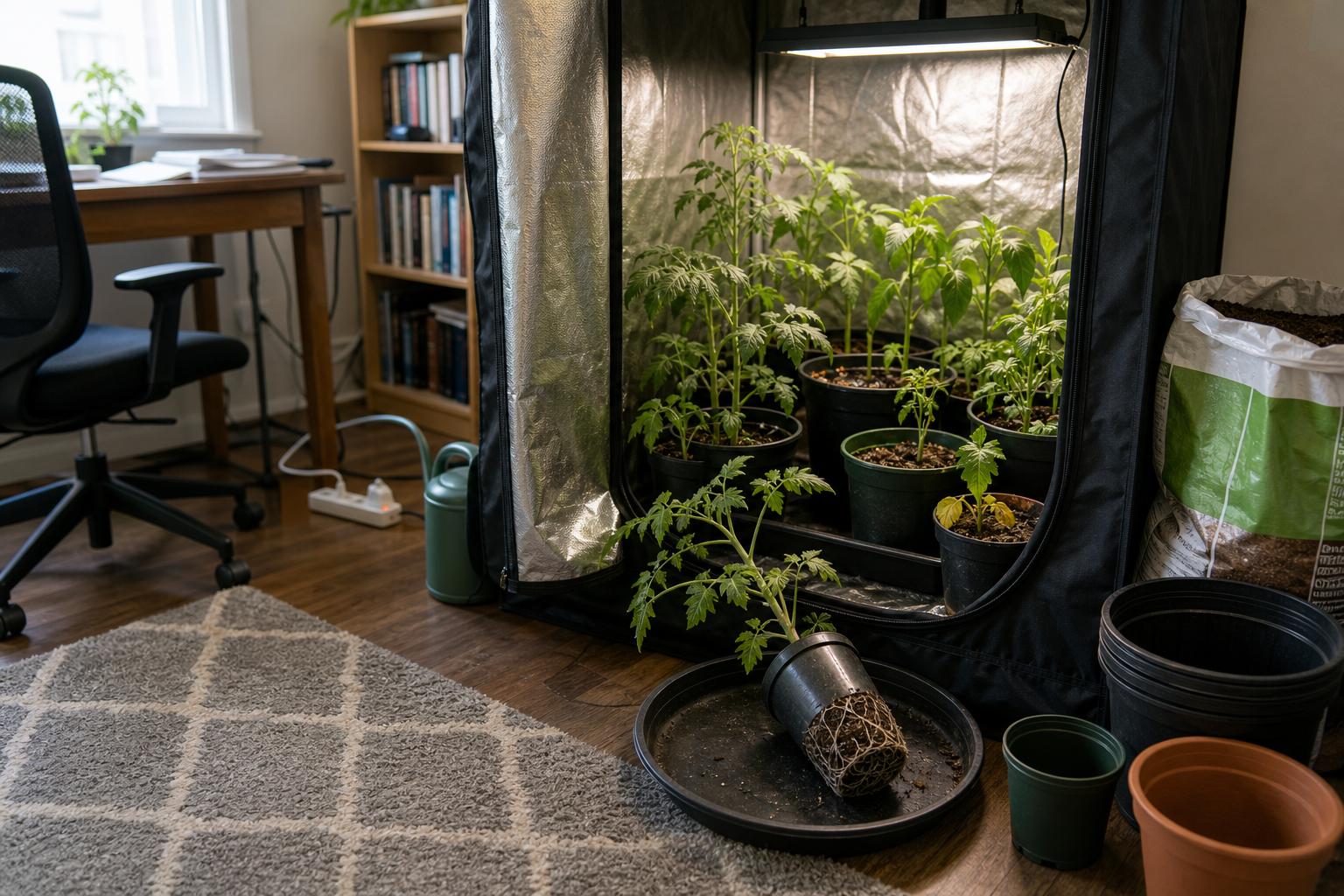
Seedling age is a poor way to decide when to move a plant into a larger container. Inside a grow tent, light intensity, temperature, pot size, and watering habits can make two seedlings of the same age develop very differently.
I have had pepper seedlings remain comfortable in small pots while fast growing tomatoes beside them were already demanding more root space. The reliable approach is to read the plant and its container, then confirm that your grow tent has room for the next pot size.
Why the Timing Matters Inside a Grow Tent
A seedling kept in a small container for too long eventually develops crowded roots. Water begins moving through the pot quickly, growth slows, and the plant may wilt between waterings. That creates extra maintenance inside a grow tent, especially when small pots need attention every day.
Moving too early causes a different problem. A tiny root system placed in a large volume of wet growing medium cannot use that moisture quickly. Under grow tent lights, the surface may look dry while the lower half of the pot remains saturated. This is a common path to weak roots, fungus gnats, and stalled growth.
I prefer moving seedlings up one practical pot size at a time. It requires another transplant later, but watering is much easier to control. For an ordinary home grower, that is usually a better tradeoff than placing a small seedling directly into its final container.
Four Signs a Seedling Needs More Root Space
1. Roots have reached the container edges
The clearest test is to inspect the root ball. Water the seedling lightly, wait until the growing medium is damp rather than soaked, and gently slide it from the pot. Tip the container while supporting the stem between your fingers.
A seedling is approaching its transplanting window when white roots are visible around the outer growing medium and the root ball holds together. You do not need to wait for a thick mat of circling roots.
- A few roots near the bottom means the plant is exploring normally.
- Roots visible along several sides mean potting up soon is sensible.
- Dense circles of roots mean the seedling has already waited too long.
Roots emerging from drainage holes are useful evidence, but they are not enough by themselves. I have seen a single tomato root race through a drainage hole while most of the pot remained unused. Check the whole root ball before deciding.
2. The pot dries much faster than it used to
Watering frequency often reveals crowding before the leaves do. If a seedling that previously needed water every few days suddenly wilts or feels light within a day, its roots may be occupying most of the available medium.
First make sure the grow tent has not become hotter or received stronger airflow. A lower light, warmer room, or fan aimed directly at the pot can also accelerate drying. If the grow tent environment is stable and several seedlings of the same type are drying quickly, limited root space is the likely reason.
Constant watering is not a good long term solution. It takes more time, increases humidity inside the grow tent, and leaves little room for error if you are away from home for a day.
3. Leaf growth has outpaced the container
There is no perfect leaf count, but several healthy true leaves combined with a sturdy stem usually indicate that a seedling can handle a larger pot. Basil, lettuce, chard, peppers, and tomatoes develop at different speeds, so I do not use one fixed schedule for all of them.
Look at the relationship between the canopy and the container. When leaves extend well beyond a tiny pot and new growth continues rapidly under the grow tent light, the roots are often close to needing more room.
Slow growth alone does not prove a pot is too small. Pale leaves, wet growing medium, or a stretched stem may point to watering, nutrition, or light problems instead. Potting up a struggling seedling into more wet medium can make the original problem worse.
4. The plant is becoming unstable
A top heavy seedling that tips when the circulation fan moves its leaves may need a wider, heavier container. This is particularly common with tomatoes and broad leaved greens growing close to a strong grow tent light.
Do not use instability as the only test. Combine it with visible root development or faster drying. Two clear signs are enough to act without waiting for the seedling to become badly root bound.
Check Grow Tent Space Before Choosing the Next Pot
Where do many indoor growers go wrong? They calculate whether one larger pot fits, but forget that every seedling needs the same upgrade.
Before transplanting, arrange empty pots on the grow tent floor or tray. Leave enough room to reach the back plants and allow air to pass between leaves. Larger pots can quickly turn an orderly seedling area into a crowded canopy that is difficult to water.
One mistake I made early on was moving seedlings into final containers too soon because I wanted to avoid handling them twice. The pots consumed most of the grow tent floor, stayed wet too long, and forced me to run stronger ventilation than the plants actually needed.
For most seedlings, I recommend a container only about two to three times the current volume. That gives roots useful space without wasting growing medium or surrendering the entire grow tent.
How to Pot Up Without Stalling Growth
- Prepare the new pot with fresh, lightly moistened growing medium.
- Make a planting hole close to the size of the existing root ball.
- Slide out the seedling while supporting the root ball rather than pulling the stem.
- Set it at the same depth and gently fill around the sides.
- Water enough to settle the medium around the roots, then allow excess water to drain.
Tomatoes are the main exception to planting at the same depth. A leggy tomato can be set deeper because its buried stem can form roots. I do not routinely bury pepper, basil, lettuce, or chard stems, since damp medium against those stems can encourage rot.
Do not tear apart healthy roots just because they are visible. If roots are tightly circling, loosen only the outer layer with your fingers. Otherwise, leave the root ball intact. In my experience, seedlings resume growth more quickly when the move is gentle and uneventful.
Managing the Grow Tent After Transplanting
Return the seedlings to similar light conditions rather than immediately lowering the fixture. If the leaves were healthy before transplanting, a sudden increase or decrease in intensity adds stress without providing much benefit.
Keep the circulation fan moving air around the plants, but do not point it directly at newly transplanted seedlings. Larger pots hold moisture longer, so stop watering by the old schedule. Lift each container and check the growing medium before watering again.
I have noticed that the most common post transplant problem inside a grow tent is not root damage. It is overwatering. The plant looks small in its new pot, so the grower repeatedly moistens all the unused medium. Give the roots air as well as water.
Also check leaf spacing after several days. A newly comfortable tomato or basil seedling can expand quickly under grow tent lighting. Rotate pots and rearrange the canopy before leaves overlap heavily and block access to smaller greens.
What I Would Check Today
Choose three representative seedlings from your grow tent and inspect their root balls. Then compare their pot weight, drying speed, leaf development, and available floor space.
If a seedling has roots around several sides plus either rapid drying or a canopy much wider than its pot, move it up one container size now. If the root ball falls apart and much of the growing medium remains unused, return it to the current pot and check again after more growth. That simple inspection is more dependable than any calendar.


