
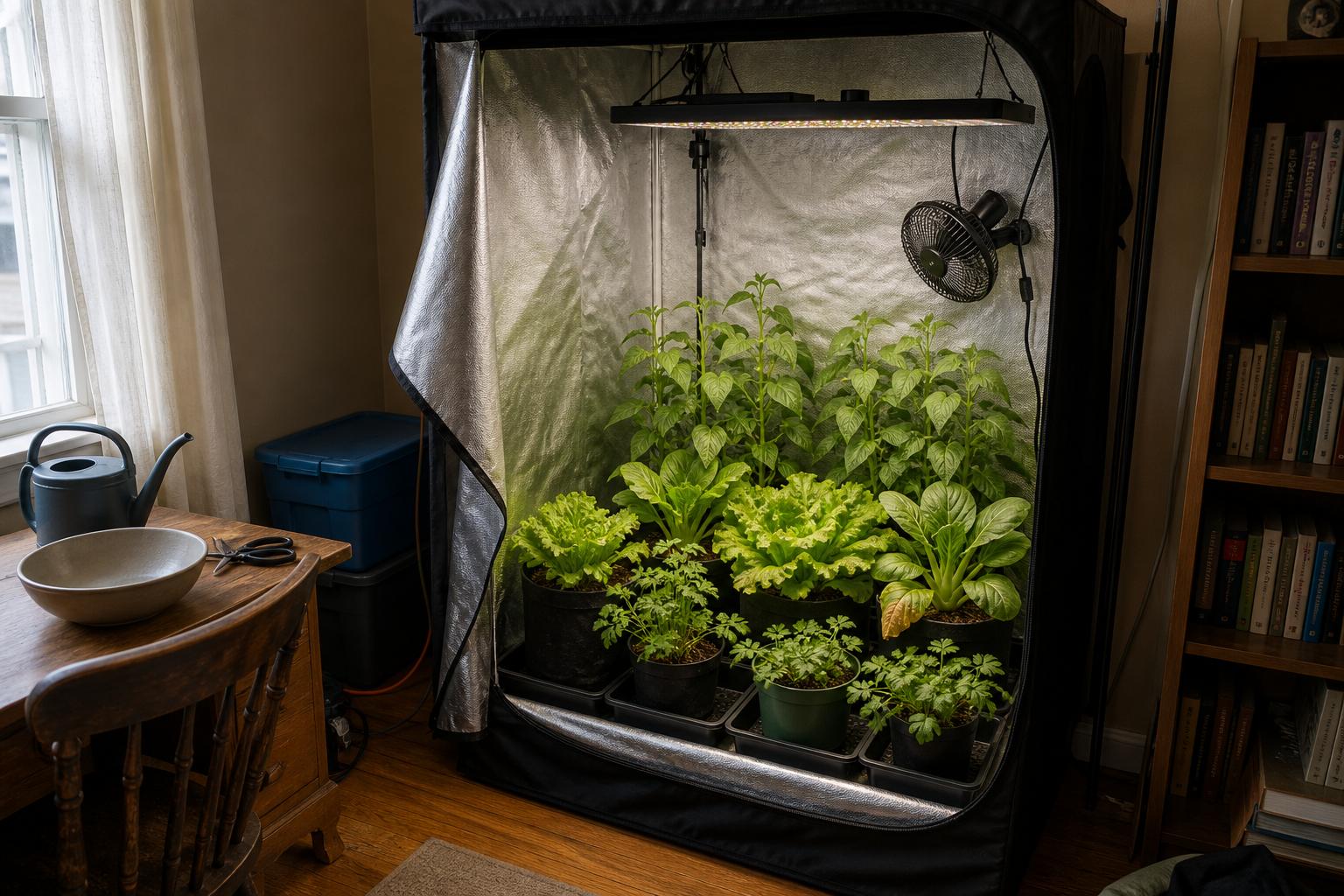
Choosing vegetables for the same grow tent is less about traditional companion planting and more about whether the plants can comfortably share one controlled environment. They need compatible light levels, temperatures, canopy heights, growth rates, and harvest schedules.
I learned this after trying combinations that looked sensible on paper but became awkward inside a grow tent. One plant would reach the light while another sat in shade. A fast growing crop would block the circulation fan. Watering one container properly meant keeping another container too wet.
Good garden companions are not always good grow tent companions.
Why Compatible Plants Can Still Clash Inside a Grow Tent
Outdoor companion planting advice often focuses on pest confusion, pollination, or how roots interact in a garden bed. Inside a grow tent, the more immediate question is whether every plant can live under the same light and climate settings.
A tomato and lettuce can technically grow near each other. In a small grow tent, however, the tomato usually wants stronger light, warmer conditions, and much more vertical room. The lettuce remains low and may become shaded just as the tomato canopy starts filling out.
One mistake I made early on was trying to fill every open patch of floor space. The grow tent looked wonderfully productive for the first few weeks. Then the leaves expanded, access disappeared, and watering the rear containers became a chore.
Empty floor space is not wasted space when it gives you room to reach plants, move air through the canopy, and inspect leaves.
The Conditions Vegetables Must Share Successfully
Before placing two crops in the same grow tent, I compare five practical traits.
- Light demand: Plants should tolerate roughly the same light intensity and daily light schedule.
- Mature height: Their leaves should form a reasonably even canopy, or shorter containers should be easy to raise.
- Temperature preference: Cool leafy greens and warm fruiting plants rarely perform their best together.
- Growth speed: A quick crop should be harvested before a slower crop spreads into its space.
- Plant size: Mature width matters just as much as height inside a grow tent.
Watering needs also matter, but I usually solve that issue with separate pots. Sharing a grow tent does not mean sharing a container. Separate containers let you water lettuce without soaking a pepper plant that is still using moisture from its larger pot.
I prefer this approach over mixed planters because it is easier to correct problems. If basil starts crowding a pepper, I can move it. If one plant develops fungus gnats or root trouble, I do not have to disturb every crop in the planter.
Reliable Vegetable Groupings for a Balanced Grow Tent
Leaf lettuce, arugula, baby kale, and radishes
This is one of the easiest combinations for a cool grow tent. These crops stay relatively short, tolerate moderate light, and can be harvested young. They also work well when you want useful food without running an intense grow light at full power.
Keep the crops in separate shallow containers. Place baby kale toward the back because it tends to become taller and broader than leaf lettuce. Radishes can go near the front where you can easily check their roots and remove them when ready.
Harvest arugula and lettuce regularly rather than waiting for every plant to form a large head. Frequent cutting keeps the canopy open and provides a steadier supply for the kitchen.
Compact peppers and basil
Compact pepper varieties and basil are a practical warm grow tent pairing. Both appreciate warmth and fairly strong light. Basil also responds well to regular trimming, so its height is easy to control beside peppers.
I have noticed that basil often grows faster than expected under a good LED fixture. If it is left alone, it can spread across a young pepper plant and steal light. Pinch it frequently and treat those trimmings as the harvest.
Use risers under shorter pots to level the canopy. A sturdy plastic crate or purpose built plant stand works better than raising light intensity for the entire tent. Increasing the light just to reach one short plant adds heat and electricity use while the taller plants may already have enough.
Choose compact peppers rather than tall varieties unless your grow tent has generous vertical space.
Dwarf tomatoes and early bush beans
This pairing can work in a taller grow tent if the tomato is genuinely dwarf and the beans are compact bush varieties. Bush beans produce quickly, while dwarf tomatoes take longer to fill their space.
The timing is what makes this combination useful. Place the beans where they will be easy to remove. As the tomato widens, harvest the beans and take their containers out of the grow tent. The tomato then receives the extra floor space and airflow it needs.
There is a tradeoff. Bush beans may not produce for as long as peppers or leafy greens. I still like them as a temporary crop because they use early open space without committing the grow tent to another large plant for months.
Parsley, cilantro, leaf lettuce, and baby spinach
This grouping suits a moderately cool grow tent with gentler light. The crops remain low and are convenient for repeated kitchen harvests. Cilantro is usually the first to object if the tent becomes too warm, so place it near the air intake rather than directly beside a warm driver or dehumidifier outlet.
Spinach can be less forgiving than lettuce. If the grow tent regularly stays warm, I would skip it and plant more leaf lettuce or parsley instead. Choose crops for the environment you can maintain easily, not the environment you hope to maintain with more equipment.
Combinations I Would Avoid
Some combinations create more work than food in a small grow tent.
- Vining cucumbers with leafy greens: Cucumbers spread quickly, shade low plants, and raise moisture around the canopy.
- Full size tomatoes with peppers: The tomato often dominates the light and makes access to the peppers difficult.
- Pole beans with compact herbs: The beans climb toward the fixture while the herbs remain far below the useful canopy.
- Warm peppers with cool spinach: Settings that keep peppers growing strongly can push spinach toward stress and early flowering.
These pairings are not impossible. They simply require more pruning, repositioning, and environmental compromise than I think an ordinary home grower should accept.
Plan the Canopy Before You Plant
Set empty pots inside the grow tent before adding soil or seedlings. This quick rehearsal reveals whether you can open the tent, reach the rear plants, and remove runoff trays without bending branches.
- Place the largest mature plants first.
- Reserve a clear path for watering and inspection.
- Put shorter crops on stable risers.
- Keep fast crops near the front for frequent harvesting.
- Leave space around the circulation fan and air intake.
Then look at the layout from the height of the light, not only from the floor. Imagine every container covered by mature leaves. If those leaves would overlap heavily, remove a pot now.
My preferred starting point is one main crop and one supporting crop. For a warm grow tent, that might mean compact peppers with trimmed basil. For a cool tent, I would choose leaf lettuce with radishes or baby kale.
If you are deciding what to plant today, first measure the usable height between your containers and grow light. Then choose either a cool leafy grouping or a warm fruiting grouping, not both. That single decision will make the grow tent easier to light, easier to cool, and far easier to maintain once the canopy fills in.


