
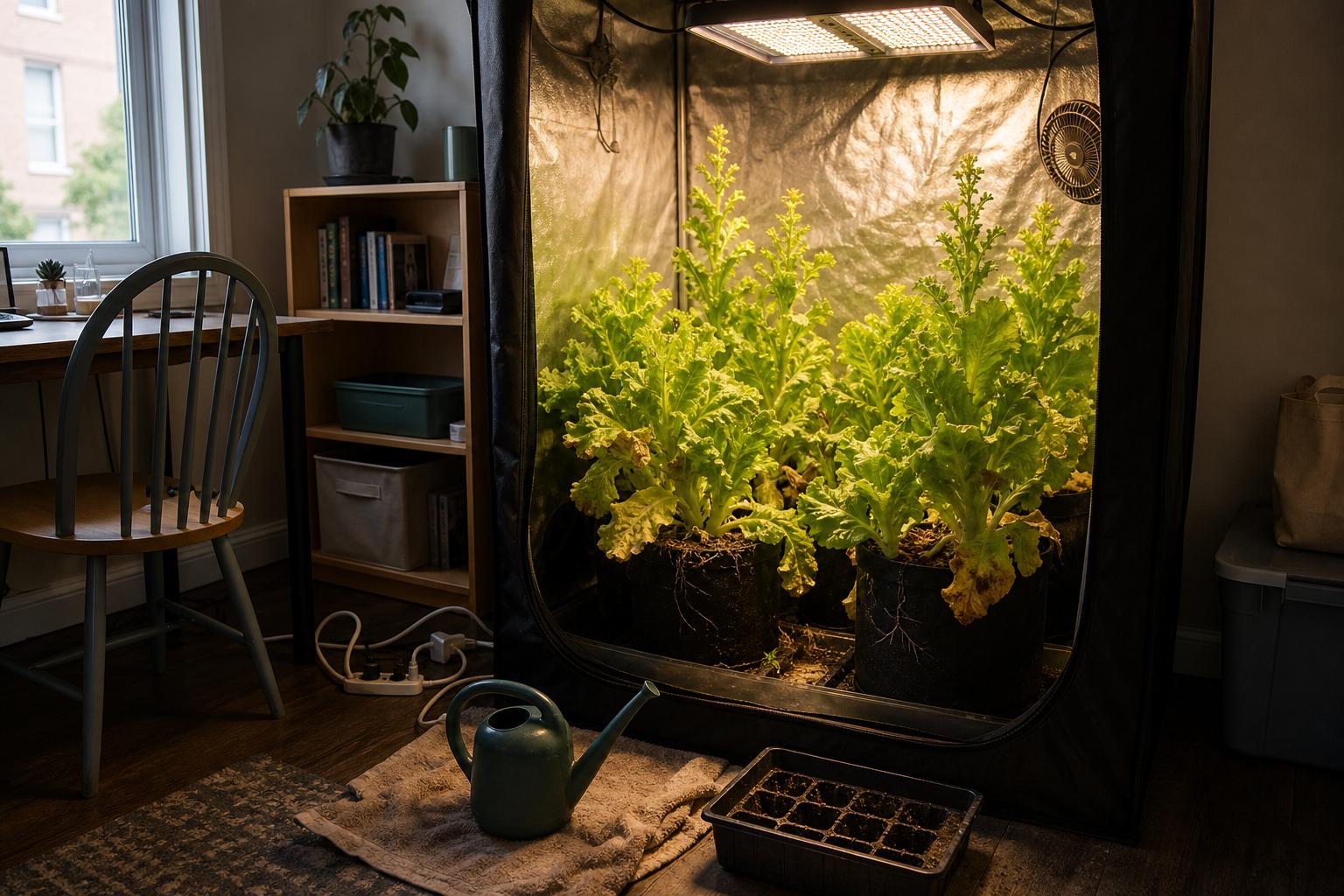
Lettuce that looks healthy but tastes bitter is one of the more frustrating grow tent problems. The leaves may be green, full, and free from obvious damage, yet one bite tells you the crop has been under more stress than it appears.
Inside a grow tent, bitterness is rarely caused by one terrible mistake. It usually develops from several smaller pressures happening together, such as warm leaves, long light exposure, uneven moisture, and a harvest that came a little too late. Treat bitterness as a system warning, not simply a problem with the lettuce variety.
I have noticed that lettuce can tolerate one imperfect condition surprisingly well. Trouble begins when warm leaves are combined with thirsty roots or intense lighting. That combination can push a tender crop toward a stronger, sharper flavor within a short period.
What Bitter Lettuce Is Telling You
Lettuce naturally produces bitter compounds as it matures and prepares to flower. Stress inside a grow tent can speed up that process even when the plant has not formed a visible flower stalk.
Look closely at the plant before changing equipment. Common clues include:
- New center growth becoming narrower or more upright
- A thickening stem beneath the leaves
- Leaves feeling tougher than they did several days earlier
- Fast water use during the warmest part of the light period
- Browning around the edges or tips
- Good looking outer leaves with unexpectedly strong flavor
Bitterness cannot always be reversed in existing leaves. Improving the grow tent may help younger growth taste better, but badly stressed mature lettuce is usually better harvested immediately. Waiting for it to become sweet again often gives the plant more time to bolt.
Check Leaf Temperature and Lighting First
The temperature shown on a grow tent controller is only the temperature around its sensor. It does not necessarily tell you how warm the lettuce leaves are under the fixture.
Place the back of your hand at canopy height. If the light feels noticeably warm after half a minute, the lettuce is probably feeling that heat for hours. An inexpensive infrared thermometer gives a clearer reading, but the hand test is useful when you need an immediate answer.
For most lettuce, I try to keep leaf temperature roughly between 60°F and 72°F. A brief rise above that is not a ruined crop. Repeated warm light periods, especially with warm roots, are more likely to affect flavor.
One mistake I made early on was assuming more light would always produce a better head. I ran lettuce under the same strong setting I used for fruiting vegetables. Growth was quick, but the leaves became firmer and more bitter than lettuce grown under gentler light.
Inside a small grow tent, I prefer to raise or dim the light before adding more cooling equipment. It costs nothing to raise an adjustable fixture, and dimming can reduce heat and electricity use. The tradeoff is slightly slower growth, which I gladly accept for tender leaves and a quieter room.
Review the light schedule
Lettuce does not need an extremely long day inside a grow tent. A schedule of 14 to 16 hours is usually plenty when the fixture provides useful light at canopy level.
If your lettuce is bitter, do not extend the schedule in an attempt to force faster growth. I would reduce excessive intensity first, then shorten a very long schedule. Plants need a dark period, and your tent needs time to release accumulated heat.
Also check whether the brightest part of the fixture is concentrated over one plant. I have seen lettuce directly under the center become bitter while plants near the tent wall remained tender. That uneven result is a strong clue that light intensity or leaf temperature is involved.
Look for Stress Around the Roots
Roots can be stressed even while the leaves still look respectable. In a grow tent, containers dry unevenly because fans, fabric pots, and concentrated light all affect water loss.
Check the growing medium before watering by schedule. Lift the container and feel its weight. Then check below the surface with a finger or wooden skewer. A dry surface does not always mean the root area is dry, and a damp surface can hide a dry lower section.
Where do most growers go wrong?
They alternate between letting lettuce wilt and soaking it heavily. Lettuce has a shallow, active root system that produces better flavor when moisture remains reasonably steady. Do not keep the medium constantly saturated, but avoid repeated wilting inside the grow tent.
For hydroponic lettuce, inspect the solution as well as the leaves. Warm nutrient solution holds less oxygen and can stress roots before obvious rot appears. Keep the reservoir away from direct fixture heat, cover openings that admit light, and make sure aeration is working.
Strong fertilizer can also contribute to harsh flavor and damaged leaf edges. Lettuce does not need the feeding strength commonly used for tomatoes or peppers. If several crops share one grow tent, do not feed lettuce like a fruiting plant. Separate containers or a milder nutrient mix are more practical than trying to make one strong solution suit everything.
Do Not Ignore Airflow and Harvest Timing
A fan should gently move the air around lettuce, not flatten the leaves. Direct, constant wind can dry the leaf surface and growing medium faster than expected. On the other hand, stagnant air allows warm pockets to form beneath broad leaves.
Aim a small circulation fan past the plants or toward a grow tent wall so the air returns as a softer current. Slight leaf movement is enough. This is quieter and usually more effective than running a powerful fan directly at the crop.
Exhaust matters too. If the grow tent becomes warmer with every hour the light is on, increase exhaust speed slightly or move the lighting period to cooler hours. In an apartment, I favor a steady moderate exhaust setting over a loud fan repeatedly switching to full power.
Harvest timing is the final piece. Loose leaf lettuce is usually sweetest when leaves are young and flexible. Full heads should be cut once they reach a useful size, not held inside the grow tent until they match supermarket dimensions.
A smaller sweet harvest is better than a large bitter one.
Taste a leaf every few days as the plant approaches maturity. Morning in the grow tent, shortly after the dark period ends, is a good time to sample and harvest because the leaves are usually cool and hydrated.
Adjust the Grow Tent Before Your Next Sowing
If the current crop is already bitter, use it as a diagnostic crop. Check conditions in this order:
- Measure or estimate leaf temperature at canopy height.
- Reduce excessive light intensity or increase fixture distance.
- Confirm that containers are staying evenly moist without remaining soaked.
- Check reservoir warmth, aeration, and nutrient strength if growing hydroponically.
- Redirect harsh fan airflow and confirm warm air is leaving the grow tent.
- Harvest mature plants rather than waiting for larger heads.
For the next sowing, I would not chase perfect readings or buy new equipment immediately. My first move would be to lower light stress, then keep the root area evenly moist and begin tasting leaves earlier. Those three changes solve more bitter lettuce problems in a grow tent than another gadget usually will.


