
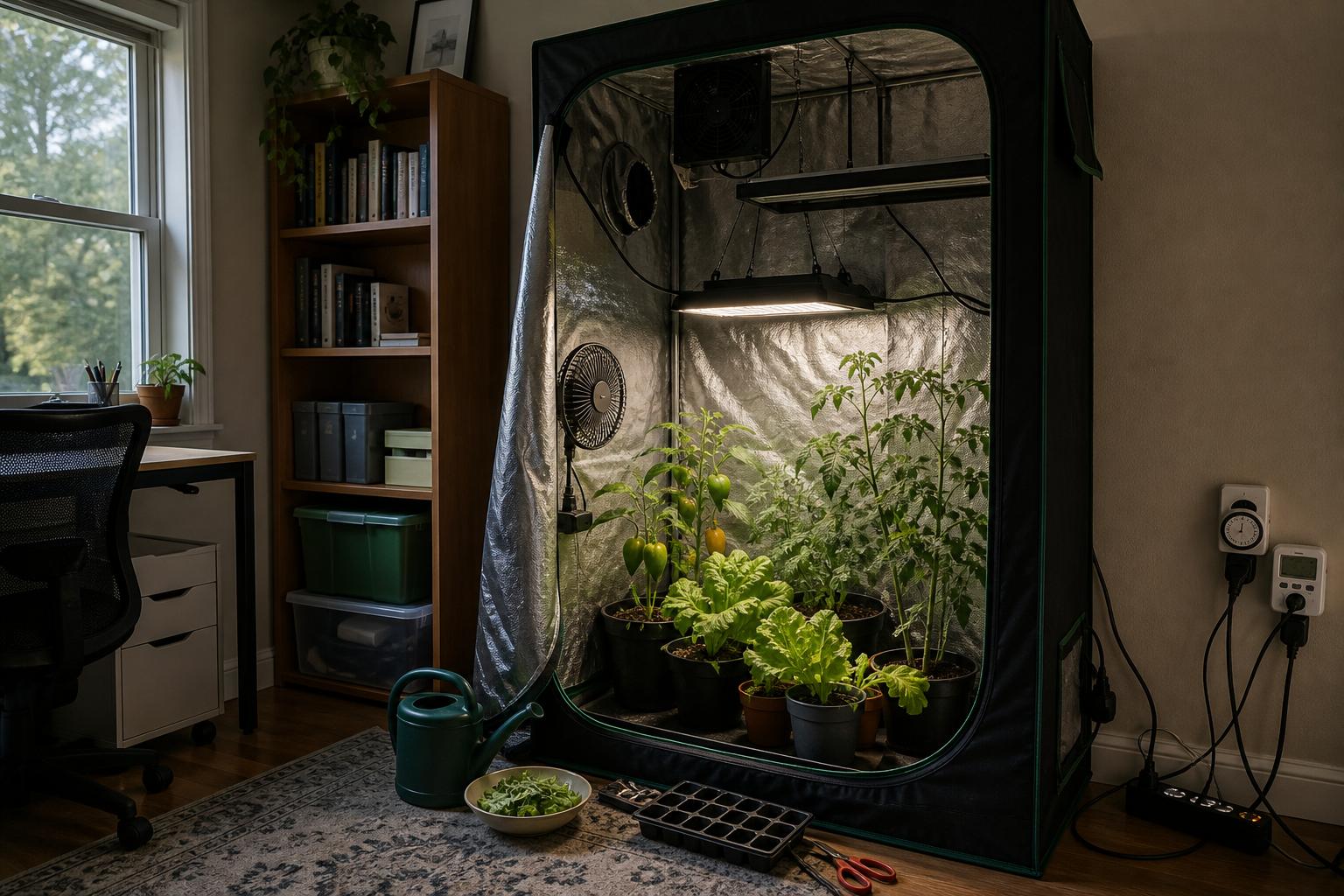
A grow tent makes year round vegetables and herbs possible in a small home, but the monthly electricity cost can creep up quietly. The light gets most of the blame, although exhaust fans, circulation fans, heaters, humidifiers, and other equipment can add a surprising amount when they run continuously.
I have found that cutting grow tent electricity use is less about switching equipment off randomly and more about matching each device to what the plants actually need. The goal is not the lowest possible power bill. It is the lowest bill that still gives you healthy leafy greens, productive herbs, and stable growing conditions.
1. Find Out What Is Actually Using the Power
Before changing anything inside a grow tent, measure the equipment. A simple plug in power meter shows how many watts a device draws and how much energy it uses over time. Check that the meter is rated for the equipment you connect to it.
Measure each major device for at least one normal operating cycle. For equipment controlled by temperature or humidity, a full day gives a much more useful result than a five minute reading.
- Grow light, including its dimmer setting
- Exhaust fan at the speed you normally use
- Circulation fans
- Heater, humidifier, or dehumidifier
- Water pumps, air pumps, and seedling mats
To estimate monthly use, multiply the device wattage by its daily operating hours and then by 30. Divide that number by 1000 to get kilowatt hours. Your electricity bill shows what each kilowatt hour costs.
What surprised me most when I first measured a complete grow tent was how quickly occasional heating could overtake several small fans. A heater may not run all day, but its wattage is high enough that a few cold nights matter.
Measure before buying replacement equipment.
2. Reduce Lighting Costs Without Shortchanging Plants
The grow light is usually the largest steady load, so it deserves attention first. However, shortening the light schedule without considering the crop can produce stretched seedlings, thin lettuce, and herbs that recover slowly after cutting.
For many leafy greens and culinary herbs inside a grow tent, I prefer starting with about 14 hours of light. Fruiting plants such as peppers and compact tomatoes often benefit from 14 to 16 hours, especially when the fixture is modest. These are starting points, not rules that replace looking at the plants.
The most practical savings usually come from improving how the light reaches the canopy:
- Keep lettuce, basil, and other short crops at a similar height
- Raise shorter pots instead of lowering the light for one plant
- Use the reflective tent walls by keeping the canopy reasonably compact
- Dim an oversized fixture rather than hanging it far above the plants
- Remove trays, containers, and plants that are no longer productive
One mistake I made early on was lighting empty floor space because I wanted room around every pot. Inside a grow tent, that comfort gap can become expensive. A tidy, even canopy makes better use of every hour the fixture is running.
If you own an older, inefficient light, replacing it may make sense. Still, I would not replace a working modern LED just to gain a tiny efficiency improvement. Improve canopy placement and scheduling first, since those changes cost nothing.
3. Match the Exhaust Fan to Actual Grow Tent Demand
Running an exhaust fan at full speed all day is common, but it is rarely necessary in a small grow tent. It also creates more noise, which matters when the tent shares a wall with a bedroom or living area.
In my experience, a speed controller is more useful than an oversized fan running wide open. Set the fan low enough to maintain gentle negative pressure, with the tent walls pulling inward slightly. Increase the speed when heat or humidity begins climbing beyond your target.
A temperature and humidity controller can automate this, but simple manual adjustments also work. I usually make two settings, one for lights on and another for lights off. The tent often needs more exhaust while the light is producing heat and less after it switches off.
Do not trade plant health for a small fan saving. If lowering the exhaust speed causes condensation, persistent high humidity, or limp plants in excessive heat, raise it again. Preventing disease and damaged crops is worth more than saving a small amount of electricity.
4. Use Only the Airflow the Canopy Needs
Circulation fans have a different job from the exhaust fan. They move air around leaves and reduce stagnant pockets inside the grow tent. They do not need to make every plant shake constantly.
One mistake I see often is several clip fans pointed directly at a small tray of lettuce. The leaf edges dry out, the growing medium needs watering more often, and power is spent creating far more airflow than the crop needs.
For a small tent, I prefer one well placed circulation fan before adding another. Aim it across the canopy or toward a tent wall so the air spreads rather than blasting one plant. Leaves should move gently and occasionally.
Add another fan only when dense pepper or tomato foliage creates a still lower section that the first fan cannot reach. This is one area where saving space, noise, and electricity all point toward the same solution: use fewer fans and position them better.
5. Stop Paying for Unnecessary Heat and Equipment
Heating is where small inefficiencies become expensive. Before adding a heater to a grow tent, check the temperature at canopy level during the coldest part of the night. Cool conditions are not automatically harmful. Lettuce, spinach, cilantro, parsley, and many other greens tolerate cooler air better than peppers and tomatoes.
If heat is genuinely needed, warm the room modestly when practical rather than placing a powerful heater in a tiny enclosed tent. A thermostatically controlled heater is safer and more economical than one running continuously. Keep heaters away from water, fabric walls, and crowded electrical connections.
Also look for equipment that no longer has a job:
- Seedling mats left on after roots are established
- Humidifiers fighting against a high exhaust setting
- Dehumidifiers running while moist air leaks into the tent
- Water pumps circulating an unused reservoir
- Extra fans left behind after a crop was removed
I once focused on reducing light hours while leaving a seedling mat warming established herb pots. The light was helping the plants. The mat was not. Remove waste before reducing useful power.
What I Would Check First
Start with one normal day of measurements. Record the light, heater, exhaust fan, and any humidity equipment. Then make one change at a time so you can see whether grow tent temperature, humidity, and plant growth remain stable.
My first move would be to check for unnecessary heating, then improve canopy placement under the light, and finally lower fan speeds carefully. That order usually finds meaningful savings without asking leafy greens, herbs, peppers, or tomatoes to grow under poor conditions.
Measure the tent tonight before buying anything tomorrow.


