
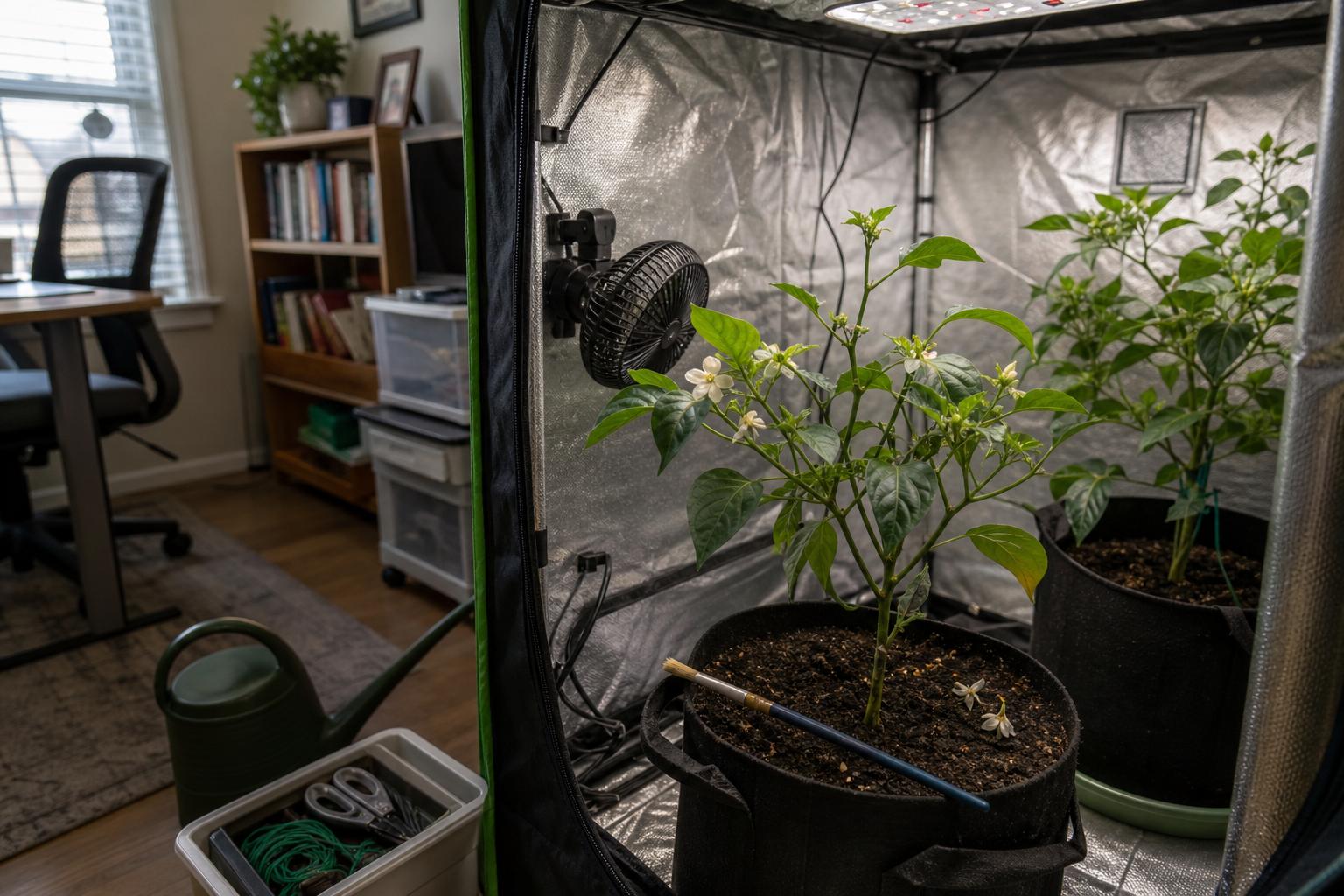
Pepper plants can grow beautifully inside a grow tent, produce dozens of flowers, and still leave you wondering where the peppers are. Without insects, rain, or natural breezes, the flowers sometimes need a little movement to release their pollen.
Hand pollinating peppers in a grow tent is simple, but it is easy to become too aggressive. Pepper flowers are small, and damaged blossoms usually drop before they can form fruit. The goal is not to scrub pollen into the flower. You only need to make the flower tremble gently.
Why Pepper Flowers Fail to Set Fruit in a Grow Tent
Pepper flowers contain both the pollen and the parts needed to receive it. This means one flower can usually pollinate itself. Inside a grow tent, however, still air can prevent enough pollen from falling where it needs to go.
I have noticed that pepper plants positioned directly in gentle fan movement often set fruit without any help. Plants tucked into a crowded corner tend to produce more flowers that open, fade, and fall. That difference is one reason I check air movement before reaching for a pollination tool.
Still air is only one possible cause. Flowers may also drop because of:
- Temperatures above about 85°F while the grow tent lights are on
- Temperatures below about 60°F during the dark period
- Humidity that keeps pollen damp and sticky
- Very dry air that dries the receptive part of the flower
- Irregular watering in containers
- Too much nitrogen producing leaves instead of fruit
- Weak lighting or a light positioned too far above the canopy
- Heat or light stress at the top of the plant
Pollination cannot correct an unhealthy grow tent environment. If every flower is dropping, the problem is probably larger than a lack of vibration.
How to Tell When a Pepper Flower Is Ready
A flower is ready when it is fully open, its petals look fresh, and the center is dry. The flower should face outward or slightly downward rather than remaining tightly closed.
In my grow tents, the easiest time to pollinate is a few hours after the lights turn on. The flowers have opened, the plant is active, and any moisture that collected during the dark period has had time to evaporate.
Look for these signs:
- Fully spread petals rather than a partially closed bud
- A dry flower center without visible condensation
- Pale pollen dust around the anthers when the flower is tapped
- A firm green flower stem without yellowing near its base
Do not spend time working on a flower with curled brown petals or a yellowing stem. It is already preparing to drop. Move to a newly opened flower instead.
The Safest Way to Hand Pollinate Pepper Flowers
For an ordinary home grower, I prefer tapping the flower stem with a fingertip. It costs nothing, makes no noise, and is less likely to bruise a flower than pushing a brush into its center.
- Wait until the grow tent has been lit for two or three hours.
- Turn the nearby circulation fan down if it makes the branch difficult to hold.
- Support the branch lightly with one hand.
- Tap the small stem directly behind the open flower several times with a fingertip.
- Stop when the petals visibly tremble.
- Repeat the process the next day if the flower remains open.
Touch the stem, not the petals.
One mistake I made early on was shaking entire pepper plants by their main stems. It certainly moved pollen, but it also disturbed the container, knocked flowers together, and made branches rub against the grow tent wall. A small vibration at each flowering branch works better and causes less damage.
When a Soft Brush Is Useful
If gentle tapping has not worked, a small soft artist brush can transfer pollen between flowers. Touch the brush lightly to the yellow anthers inside one open flower, then touch the center of another open flower on the same plant.
Do not press, twist, or repeatedly scrub the flower. One or two light touches are enough. Clean the brush and let it dry before using it again so you do not carry moisture or pests between plants.
Some growers use an electric toothbrush against the branch. It works, but I rarely think it is necessary in a small grow tent. It is easy to apply too much vibration, and the motor adds a little noise inside an apartment. Finger tapping gives me more control and is convenient enough to do while checking the plants.
What to Check When Pollinated Flowers Still Drop
If pollinated flowers continue falling, resist the urge to handle them more often. Repeated brushing will not solve heat, humidity, or root stress.
Check the Temperature at Flower Height
A thermometer near the floor can show a comfortable reading while pepper flowers near the grow light are overheating. Measure temperature beside the flowering canopy. I aim for roughly 70 to 80°F while the grow tent lights are on, with a modest drop during the dark period.
If the canopy is too warm, raise or dim the light slightly before adding more equipment. Increasing exhaust speed can help, but it also adds noise, electricity use, and heat to the surrounding room. A small light adjustment is often the simplest fix.
Look at Humidity and Air Movement
Humidity around 40 to 60 percent generally makes pollination easier inside a grow tent. When humidity stays high, pepper pollen can clump instead of falling freely. When it stays extremely low, flowers can dry quickly.
Use enough circulation to make nearby leaves move slightly. Do not point a strong fan directly at the flowers. Constant hard airflow can dry blossoms and shake them more than necessary.
Check the Container Before Watering Again
Pepper plants often drop blossoms after their root zone swings from very dry to soaked. In a grow tent, containers can dry unevenly because warm lights heat the upper canopy while the lower tent remains cooler.
Lift the pot or check the growing medium below the surface before watering. Keep moisture reasonably steady without leaving the roots saturated. Good drainage matters more than following a fixed watering calendar.
Consider the Plant’s Overall Load
A small pepper plant may drop early flowers while it builds enough roots and leaves to support fruit. It may also shed some blossoms after several peppers have already formed. This is normal resource management, not necessarily failed pollination.
Look behind each faded flower before assuming it failed. A successfully pollinated flower develops a tiny green swelling at its base. The petals may brown and fall while that small pepper remains attached.
What I Would Do First
Start with the least invasive approach. Check the temperature beside the flowers, confirm that the growing medium is not soaked, and make sure a gentle fan is moving air through the grow tent canopy.
Then, a few hours after the lights turn on, tap the stem behind each fresh flower until it trembles. Repeat once the following day and leave the flower alone. If several rounds of healthy blossoms still drop, focus on temperature and watering before buying a pollination tool or adding more equipment.


