
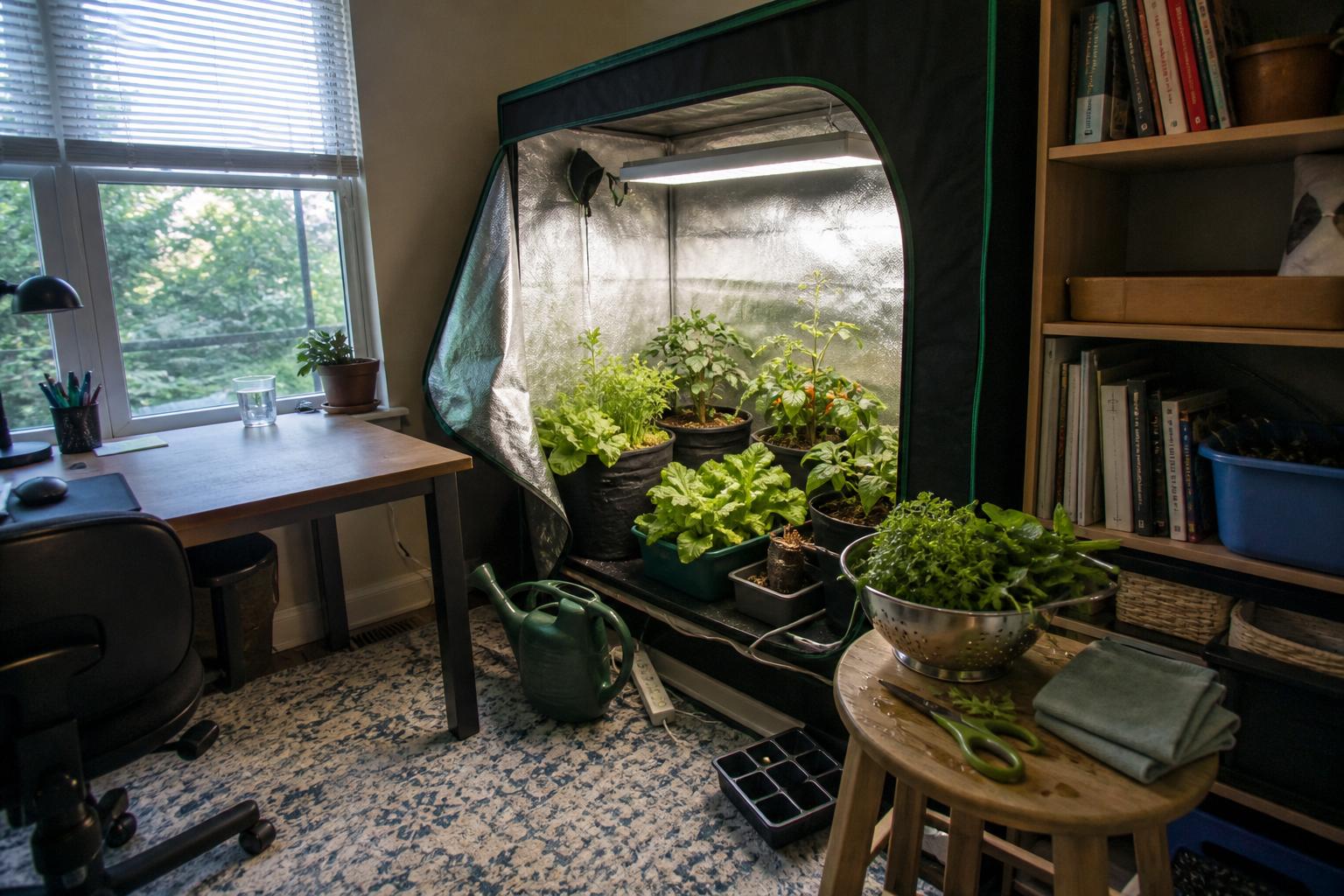
The best time to harvest most leafy greens and herbs from a grow tent is near the start of the light period. The plants have just spent several hours without intense light or excess heat, so their leaves are usually cool, firm, and well hydrated.
That recommendation is more useful than telling an indoor grower to harvest in the morning. Inside a grow tent, morning is whatever time you set on the light timer. If the lights turn on at six in the evening, that is the beginning of the plant’s day and often your best harvest window.
I have harvested lettuce at several points in the same grow tent light cycle. Leaves cut shortly after the lights came on consistently felt firmer than leaves cut late in the cycle, especially when the tent had warmed up. The difference was not always dramatic on the plate, but it became obvious when I stored the leaves for a few days.
Why Grow Tent Harvest Timing Changes Quality
A grow tent creates a daily rhythm even when the room outside it stays fairly steady. Once the grow light comes on, leaf temperature rises and the plants begin moving more water from their roots through their leaves. Exhaust fans remove some of the resulting heat and moisture, but the plants can still lose firmness as the light period continues.
Leafy crops show this change first. Lettuce, spinach, kale, chard, cilantro, parsley, and tender basil can become slightly softer near the end of a warm grow tent cycle. A thirsty plant may look acceptable while it is growing, yet wilt quickly after cutting.
One mistake I made early on was harvesting lettuce right before the lights went off simply because that was when I remembered to do it. The tent was at its warmest, the growing medium was approaching watering time, and I left the cut leaves on the kitchen counter while I finished tending the plants. That combination shortened their useful storage life.
Timing cannot rescue a dehydrated plant. If the leaves are already limp when the grow tent opens, check the root zone before reaching for the scissors. Harvesting during the ideal hour will not replace missing water or repair damaged roots.
Match the Harvest to the Grow Tent Light Cycle
For most tender crops, I prefer to harvest just before the grow light turns on or within its first hour. This gives me cool leaves without forcing me to work in complete darkness. I can switch on the room light, open the tent, make clean cuts, and finish before the grow light adds much heat.
There is no need to change the entire light schedule for harvesting. That adds inconvenience and can disrupt a routine that is already working. Use the timer as your clock and choose a practical window close to the beginning of the programmed day.
Before cutting, look at the conditions inside the grow tent:
- Leaves should feel firm, not thin or floppy.
- The growing medium should be moist enough that the plant is not stressed.
- Leaves should be dry unless you plan to wash and dry them immediately.
- The grow tent should still be near its cooler daily temperature.
If the plants need water, I usually water them and wait for their firmness to return rather than cutting immediately. Depending on the crop and growing medium, that may take an hour or longer. I do not soak the tent just before harvesting merely to make a clock based deadline.
Plant condition matters more than the exact minute.
What if the start of the light cycle falls at an inconvenient time? Harvest when you can, but avoid the hottest final hours if possible. In an apartment, it is often more practical to move the timer slightly over several days so the tent opens at a useful hour than to set alarms around the plants. I value a routine I can maintain over a theoretically perfect harvest time.
Adjust the Timing for Different Grow Tent Crops
Leafy greens
Lettuce, spinach, arugula, kale, and chard benefit most from an early light cycle harvest. Cut the outer leaves or whole plant while the grow tent is cool. If lettuce repeatedly feels soft near lights on, the issue is probably root moisture, excessive tent temperature, or unhealthy roots rather than harvest timing alone.
Tender herbs
Cilantro, parsley, mint, and dill are also best cut near the start of the grow tent day. Basil can be harvested then as well, but it dislikes very cold storage. I have noticed basil leaves can darken quickly when placed wet in a cold refrigerator. For short storage, I prefer clean stems in a glass with a little water at room temperature, away from the heat leaving the tent.
For herbs grown mainly for flavor, harvest before flowering whenever possible. In a grow tent, strong light and warmth can push mature basil toward flowering faster than expected, so crop maturity matters more than waiting for a perfect hour.
Tomatoes, peppers, and cucumbers
Fruiting vegetables are less sensitive to the grow tent clock. Ripeness should make the decision for tomatoes and peppers. A ripe tomato should not remain under warm lights for another full cycle merely because the ideal harvest window has passed.
I still prefer picking cucumbers and peppers early in the tent cycle because the fruits are cooler and the plants are less likely to be drooping. Cucumbers can grow surprisingly quickly under consistent grow tent lighting, so checking them daily is more important than choosing an exact hour.
Tomatoes usually keep their best texture and flavor at room temperature. Cucumbers and many peppers benefit from prompt cool storage if they will not be eaten soon. Do not place warm produce in a sealed container and forget it, since trapped moisture encourages condensation.
Radishes and other root crops
Harvest timing has less effect on the edible root than it does on tender leaves. Inside a grow tent, size and maturity are the main signals. If you also want to eat the tops, harvest near lights on so those leaves are crisp. Pulling overdue radishes early in the cycle will not make them less woody.
A Simple Grow Tent Harvest Routine
A short routine prevents most freshness problems without adding much work:
- Open the grow tent just before lights on or during the first hour.
- Check leaf firmness and growing medium moisture before cutting.
- Use clean scissors and place produce in a clean container immediately.
- Remove damaged leaves while standing near the tent so they do not enter storage.
- Wash only when needed, then dry the produce thoroughly.
- Move the harvest to suitable storage before watering, pruning, or cleaning the tent.
Leaving freshly cut greens beside a warm grow tent is the avoidable mistake I see most often. The exhaust may be keeping the plants comfortable while sending warm air directly across the harvest basket.
For refrigerated leafy greens, I use a container or loose bag with a clean towel to manage moisture. The leaves should not be dripping wet, but they also should not sit uncovered in moving refrigerator air. Herbs and vegetables that prefer room temperature should be moved away from direct sun, appliances, and the grow tent exhaust.
For your next harvest, check the timer and plan to open the grow tent near the beginning of its light period. Start with lettuce or herbs, feel the leaves as you cut them, and store them immediately. If they are still soft at that hour, investigate root moisture and tent heat first rather than changing the harvest clock again.


