
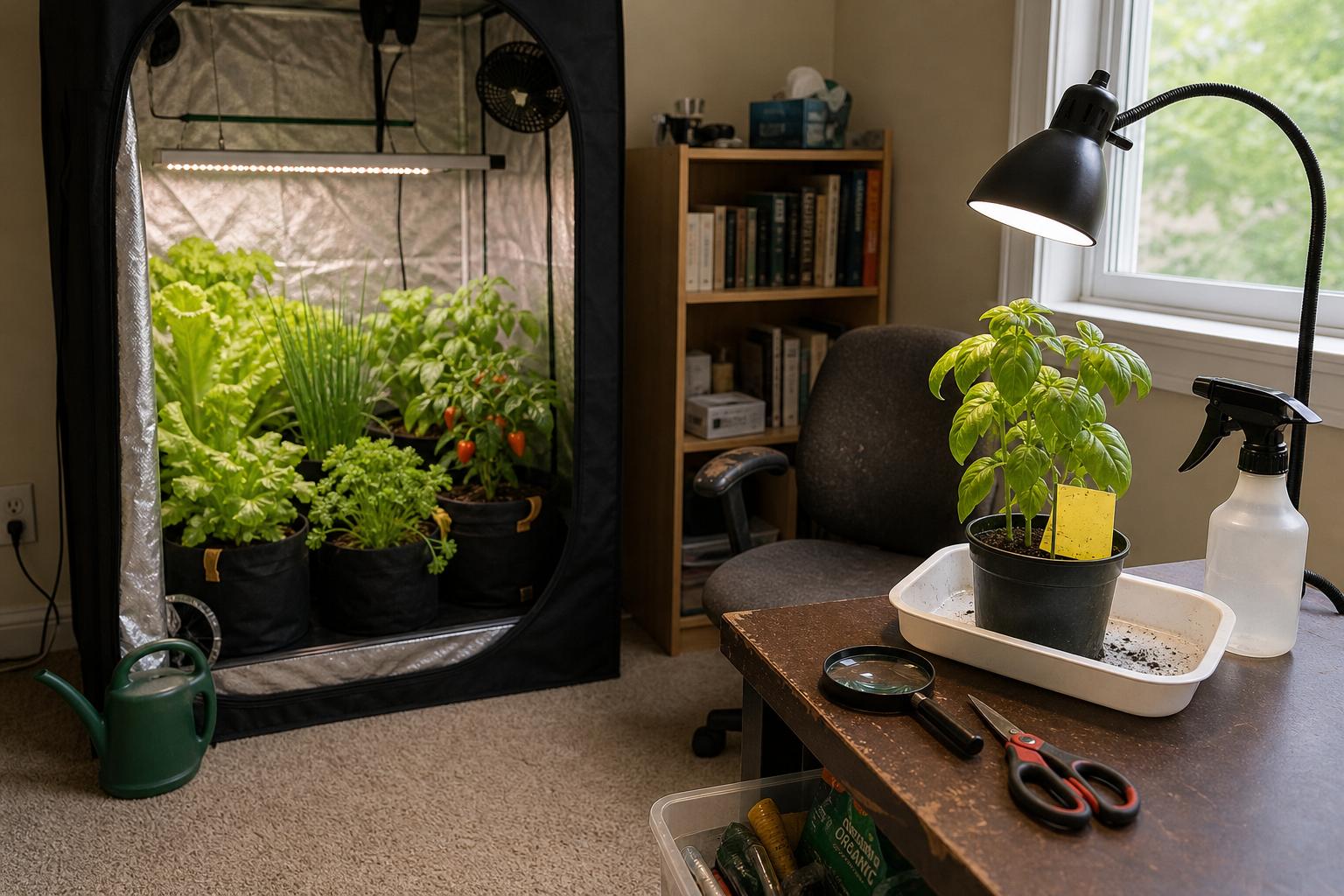
A new basil, mint, parsley, or rosemary plant can look perfectly healthy at the store and still carry enough pests to infest an entire grow tent. Aphids hide in folded leaves, mites cling to leaf undersides, and fungus gnat larvae remain out of sight in damp growing medium.
Inside a grow tent, those pests enter an unusually comfortable environment. There is steady warmth, tender new growth, few natural predators, and several edible plants packed close together. One uninspected herb can become a grow tent wide problem surprisingly quickly.
I learned this after moving a healthy looking herb directly beside my leafy greens. Within a short time, aphids appeared on plants that had previously been clean. Treating one small herb would have been easy. Inspecting and treating every plant inside the grow tent was not.
Why New Herb Plants Put the Entire Grow Tent at Risk
Plants from nurseries, grocery stores, and garden centers have usually spent time near many other plants. They may also have been watered heavily to keep them presentable. That combination makes them common carriers of insects, eggs, and overly moist growing medium.
A healthy appearance is not proof of a pest free plant. Many pest populations begin in places that are difficult to see during a quick inspection.
- Aphids gather around soft stems and fresh leaf growth.
- Spider mites often begin beneath lower leaves.
- Thrips hide in tight growth and leave pale feeding marks.
- Whiteflies rest beneath leaves and fly when disturbed.
- Fungus gnat larvae live in damp potting mix.
- Scale insects can resemble small bumps on stems.
A grow tent makes inspection more difficult once the plant is installed. Leaves overlap, circulation fans move insects around, and containers may sit close together. Crawling pests only need to reach a neighboring pot, while flying pests can cross a small tent in seconds.
Quarantine is easier than treating a full grow tent.
Set Up a Practical Quarantine Area
The best quarantine location is a separate room with a washable surface and enough light to keep the herb healthy. In an apartment, that might be a bathroom, kitchen corner, or shelf away from the grow tent. Place the plant in a saucer so runoff does not reach other plants.
I prefer a simple separate lamp rather than putting the new plant inside the grow tent with a thin divider. Aphids, mites, and flying gnats do not respect a fabric curtain or a few inches of space. If the plant shares the grow tent air and floor, I do not consider it quarantined.
A small LED lamp is usually enough for temporary quarantine. The goal is not rapid growth. You only need to maintain the herb while you watch for trouble. This keeps electricity use, heat, and equipment cost reasonable.
If a separate room is impossible, use the greatest distance available and place the herb in a large clear container with ventilation holes covered by fine insect mesh. Do not seal a wet plant inside an airtight container. Trapped moisture can encourage leaf disease and root problems.
Keep quarantine tools separate
Use a dedicated saucer and, if possible, a separate watering cup. Wash your hands after handling the quarantined herb and before reaching into the grow tent. I also avoid using the same pruning scissors unless I clean them first.
One mistake I see often is inspecting a new plant, finding nothing obvious, and then carrying it through an open grow tent while rearranging space. Inspect the new herb before opening the tent. A few disturbed whiteflies or adult fungus gnats can leave the plant during that short visit.
Inspect More Than the Leaves
Start the first inspection over a light colored sink, tray, or sheet of paper. Small insects are much easier to notice against a pale surface than against carpet or a dark countertop.
- Check the newest growth. Look for curled leaves, sticky residue, shed insect skins, or clusters of tiny insects.
- Turn over every larger leaf. Pay special attention to lower leaves and the points where leaves join stems.
- Tap the plant gently. Hold white paper underneath and watch for moving specks.
- Inspect stems and the soil line. Look for bumps, webbing, mold, or insects moving around the pot rim.
- Check the growing medium. Damp, organic potting mix is a common source of fungus gnats.
- Examine the drainage holes. Roots should not smell sour, and small insects should not be gathering underneath the pot.
Place a yellow sticky card close to the pot, not across the room. It will not eliminate an infestation, but it can reveal adult fungus gnats, whiteflies, or thrips that were missed during inspection.
I have noticed that fungus gnats often show themselves after watering. The plant may look clean for several days, then small dark flies begin walking across the potting mix. For that reason, one inspection is never enough.
How Long Should an Herb Stay in Quarantine?
I recommend at least fourteen days for a new herb plant. If it came from a crowded nursery, has very damp potting mix, or will enter a grow tent containing valuable peppers, tomatoes, or mature greens, I prefer closer to twenty one days.
That can feel excessive when grow tent space is waiting to be filled. The tradeoff is temporary inconvenience versus treating every edible plant under your lights. In my experience, the extra week is worthwhile for nursery plants because eggs and larvae may not be visible when the plant comes home.
During quarantine, inspect the plant every few days and shortly after watering. Watch the sticky card and examine new leaves. Fresh growth often reveals pest activity more clearly than older foliage.
If you find a pest, restart the quarantine clock after treatment. For a minor problem, remove badly affected leaves and use a product specifically labeled for that pest and for edible plants. Follow the label rather than mixing a stronger solution.
For a cheap herb with a heavy infestation, I usually discard it. Saving a struggling mint plant is rarely worth exposing a clean grow tent full of lettuce, basil, peppers, and parsley. That may sound wasteful, but it is often the most practical choice in a small home.
Signs the Plant Is Ready for the Grow Tent
A quarantined herb is ready to move when it has completed the observation period without producing new evidence of pests. Before moving it, perform one final inspection under bright light.
- New leaves are clean and are not curling or developing pale feeding marks.
- No webbing, sticky residue, scale bumps, or insect skins are visible.
- No insects appear when the foliage is tapped over white paper.
- The sticky card remains clear.
- No adult gnats rise from the growing medium after watering.
- The pot drains normally and does not smell sour.
Clean the outside and bottom of the pot before placing it inside the grow tent. Remove dead leaves from the soil surface, empty the saucer, and give the plant enough room that its foliage does not immediately press against neighboring herbs.
After moving it, keep the new herb near the grow tent entrance for the first week if the layout allows. That makes continued inspection easier and prevents you from reaching across tomatoes, peppers, or leafy greens every time you want to check it.
My practical next step would be to create the quarantine spot before buying another herb. Set out a saucer, a modest lamp, a sticky card, and a white inspection tray. Then every new plant has somewhere to go other than directly into the grow tent, which is the simplest way to keep one tempting purchase from becoming a pest problem across your entire indoor garden.


