
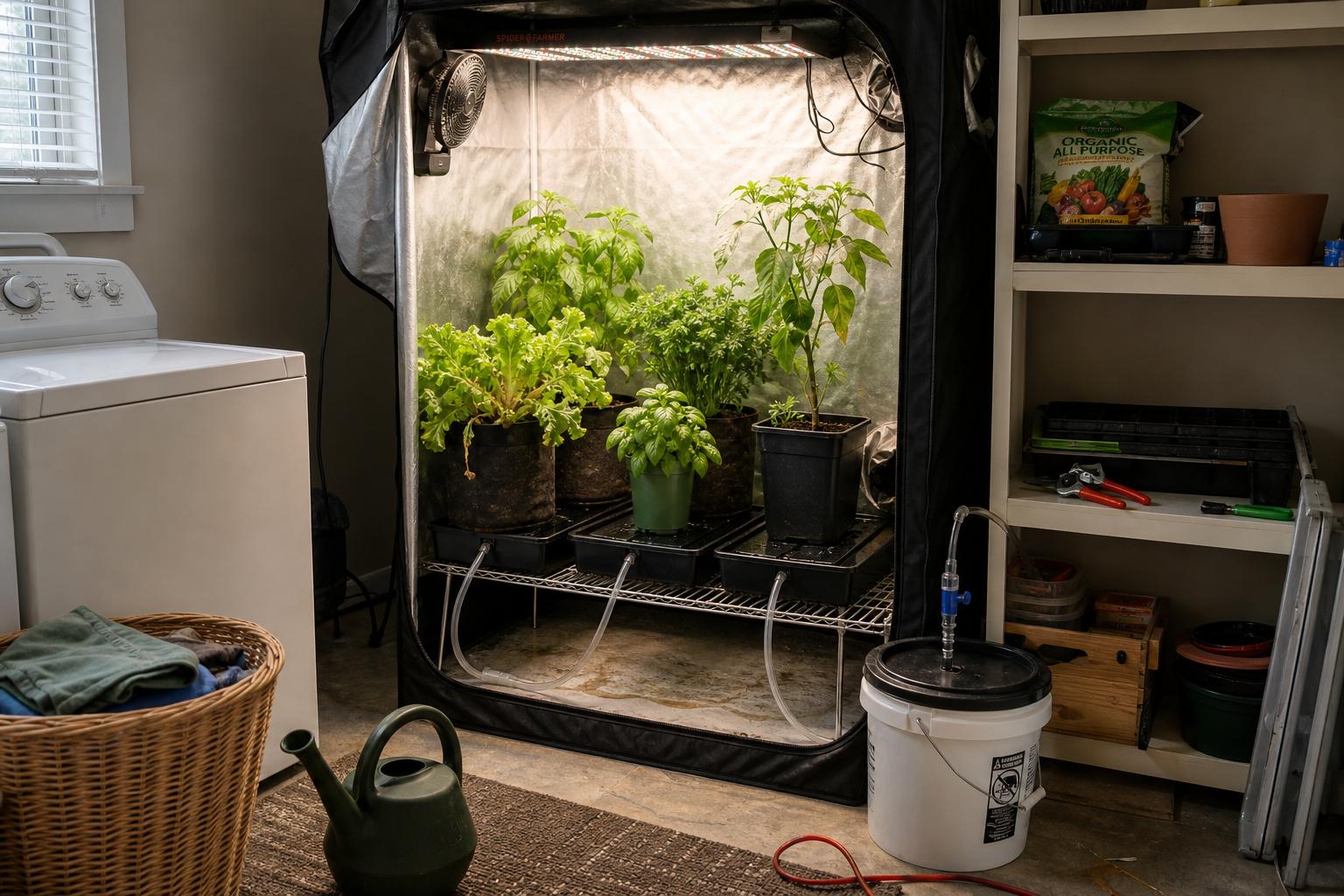
Drainage water is easy to ignore inside a grow tent. It disappears beneath the pots, the plants still look fine, and reaching the back corner feels like more trouble than it is worth. A few hours later, that harmless puddle is adding moisture to the tent and soaking the bottom of the container.
I learned early that watering is not finished until the runoff is removed. This matters even more in a small grow tent where several pots, warm lights, and limited floor space can turn a little standing water into a recurring humidity and root problem.
Why Standing Runoff Causes Problems Inside a Grow Tent
Most containers have drainage holes for a reason. Water should move through the growing medium, carry excess dissolved minerals with it, and then leave the root zone. When the pot sits in that runoff, some of the water can be pulled back into the container.
This keeps the bottom of the growing medium wet longer than expected. Roots need moisture, but they also need oxygen. A constantly saturated pot base can create unhealthy roots even while the top few centimeters look reasonably dry.
This is especially noticeable with peppers, tomatoes, and larger herbs grown in deep containers. I have lifted pots that felt normal near the rim but were still heavy and soggy at the bottom because runoff had remained in the saucer overnight.
Standing drainage water also affects the grow tent environment:
- It raises humidity as warm tent air evaporates the water.
- It encourages algae and fungus gnats around damp saucers.
- It can leave fertilizer residue and unpleasant odors.
- It makes spills more likely when pots are moved.
- It complicates watering because the container dries unevenly.
Runoff should be collected, not stored beneath the plant.
In an apartment or condo, there is another concern. Water that escapes the grow tent liner can reach flooring, baseboards, or the room below. I would rather spend two minutes removing runoff than discover moisture trapped under the tent several weeks later.
Signs Your Pots Are Too Close to Drainage Water
You do not have to wait for root damage before changing the setup. Open the grow tent shortly after watering and look around the base of each container.
Common warning signs include:
- The pot remains in contact with visible water for more than a few minutes.
- The bottom of a fabric pot feels wet long after watering.
- Roots are growing through drainage holes and into the saucer.
- Humidity rises noticeably after every watering.
- Green algae or slippery residue appears in the catch trays.
- The tent has a damp or sour smell near floor level.
- Plants droop even though the containers still feel heavy.
One mistake I see often is placing fabric pots directly in flat saucers. Fabric containers drain well, but they also wick water efficiently. If the fabric remains in contact with runoff, the pot can pull that moisture back into the growing medium.
I made a similar mistake by assuming a thin layer of water was too shallow to matter. What surprised me was how long the bottom of the pot stayed wet. Once I raised the container above the runoff, the growing medium began drying much more evenly.
The Raised Saucer Setup I Prefer
For most home growers, I recommend a simple arrangement: one sturdy saucer for each pot, with a rigid pot elevator inside it. The elevator holds the container above the collected runoff while allowing water to drain freely.
This setup is not complicated, expensive, or dependent on electricity. It also works with soil mixes, coco based media, plastic nursery pots, and fabric containers.
What to Use
- A saucer wide enough to extend beyond the pot base
- A rigid pot elevator that fits securely inside the saucer
- A large irrigation syringe or small manual transfer pump
- A dedicated bucket for collected runoff
- A shallow waterproof tray beneath the entire arrangement
The larger waterproof tray is backup protection. It should not become the regular runoff collector. If water is routinely spreading across the grow tent floor, the individual saucers are too small or watering is happening too quickly.
I prefer a large syringe with flexible tubing for two or three plants. It is quiet, inexpensive, and easy to store beside the grow tent. The tubing can reach into the saucer without moving a heavy tomato or pepper plant.
A manual transfer pump is more convenient when the grow tent contains several containers. An electric wet vacuum is faster, but it takes up room, makes noise, and must be cleaned. For an ordinary home grower, I think it is more equipment than this job usually requires.
There is one tradeoff with elevators and raised trays. They use some vertical space. In a short grow tent, even a few extra centimeters matter. Choose the lowest elevator that keeps the drainage holes above the expected water level. You need separation from the runoff, not a tall platform.
A Simple Runoff Routine
The easiest system is the one you will actually use after every watering. Mine follows the same basic sequence.
- Check that the saucer is empty before adding water. Old runoff should never be mixed with the next watering.
- Water the container slowly so the growing medium absorbs moisture instead of sending it immediately down the sides.
- Wait several minutes for drainage to finish.
- Remove the collected runoff with a syringe or transfer pump.
- Check the saucer again before closing the grow tent.
Do not assume every pot will produce the same amount of runoff. A thirsty tomato may absorb water differently from basil or lettuce, even when the containers look similar.
The amount of runoff also depends on the growing medium. Coco growers often water to runoff as part of nutrient management. Potting mixes may not need deliberate runoff at every watering. Do not pour in extra water merely to create a puddle unless your growing method calls for it.
I also wipe fertilizer residue from the saucers before it becomes a hard crust. This takes very little time when done regularly. Left alone, the residue becomes sticky, holds moisture, and makes it difficult to see whether fresh runoff is clear, cloudy, or unusually dark.
If Runoff Keeps Becoming Unmanageable
Frequent overflowing usually points to a setup or watering problem rather than a need for a larger cleanup machine.
- If water rushes out immediately, apply it more slowly and in two or three passes.
- If the saucer overflows, replace it with a wider and deeper model.
- If the back pots are unreachable, add longer tubing rather than dragging plants forward.
- If humidity stays elevated, confirm that no water is hiding beneath trays or in wrinkles in the tent liner.
- If a pot remains heavy for days, inspect the root zone and reconsider the watering frequency.
Start with the container that stays wet the longest. Inside my own grow tent, I would lift that pot onto a low elevator, empty its saucer completely, and check it again the next day. That small change usually reveals whether standing runoff has been extending the drying time and gives the roots a cleaner, healthier place to grow.


