
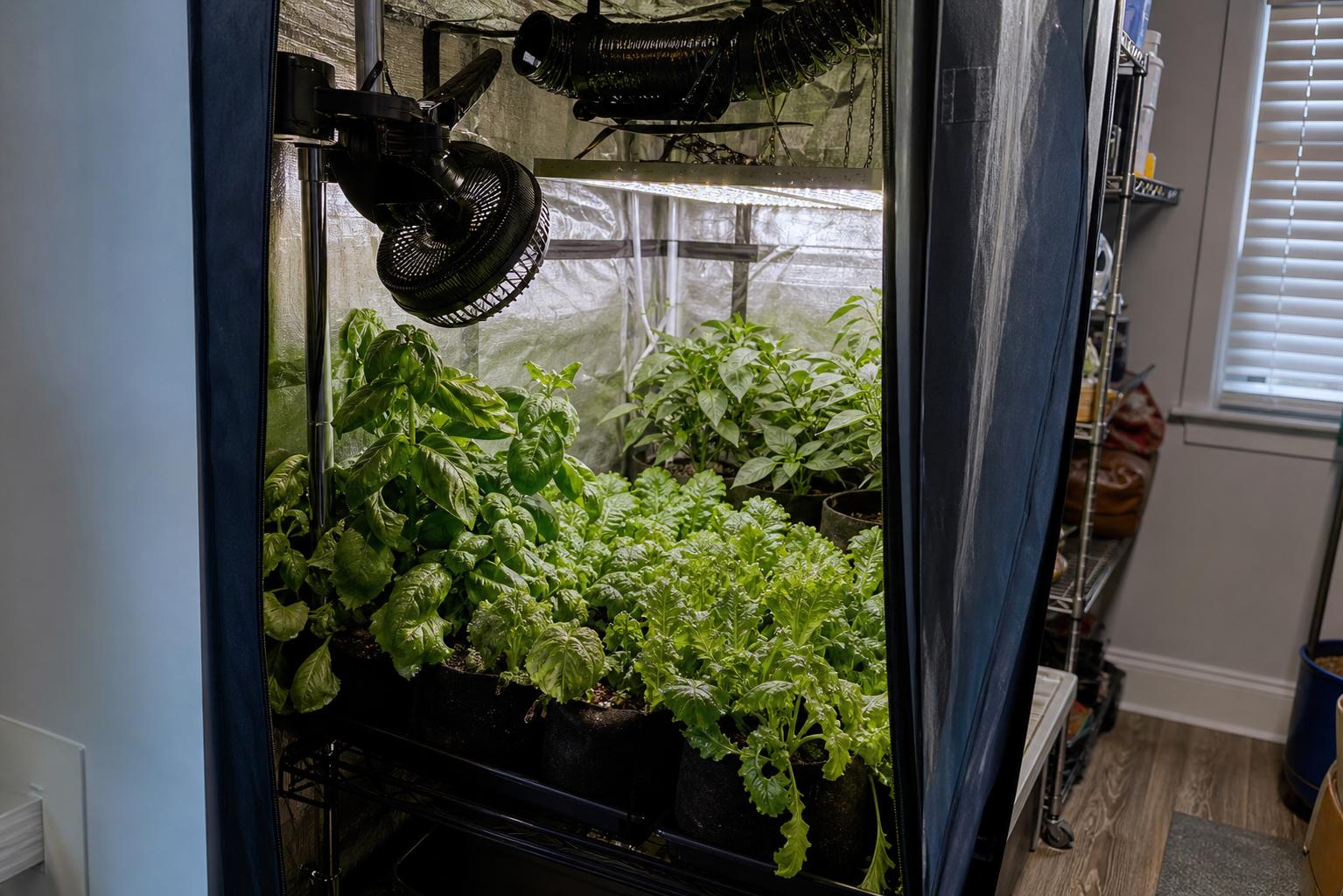
A strong breeze inside a grow tent can look like good airflow. The basil is swaying, the lettuce leaves are moving, and the fan is clearly doing something. Yet the back corner can still remain damp and stale.
This is one of the most common grow tent airflow mistakes I see. A grower aims one powerful fan directly at the plants, turns it up until the whole canopy shakes, and assumes the air is circulating everywhere. Usually, the fan is only pushing a narrow stream through one part of the tent.
Balanced airflow is quieter and less dramatic. It combines gentle movement around the plants with steady air exchange through the grow tent. The goal is not to make every leaf flap. The goal is to prevent still pockets around crowded leaves, containers, corners, and the space below the canopy.
Why Strong Fan Movement Can Still Leave a Grow Tent Stagnant
A circulation fan moves air that is already inside the grow tent. An exhaust fan removes warm, humid air and draws replacement air through an intake opening. Those are separate jobs, and a circulation fan cannot fully replace an exhaust system.
One mistake I made early on was placing a small desk fan in front of my herbs and running it at high speed. The leaves closest to the fan moved constantly, so I thought the setup was working. When I reached behind the containers, the air felt warmer and the tent wall was damp near the corner. The fan had created a windy lane rather than circulating air through the entire space.
Air follows the easiest path. A strong fan can send air across the top of a lettuce canopy while leaving the space beneath it almost untouched. Large pepper leaves can also block airflow from reaching smaller herbs behind them. Containers packed tightly against the grow tent wall create another sheltered area where moisture lingers.
Direct airflow can cause problems of its own. Tender lettuce edges may become dry and crisp. Basil leaves can curl or develop papery patches on the side facing the fan. Young tomato and pepper plants may lean away from the constant pressure. These symptoms are sometimes mistaken for watering or nutrient problems.
In my experience, two gentle air paths work better than one forceful blast. They also create less noise in an apartment and place less stress on leafy greens.
How to Recognize Poor Airflow Around the Canopy and Containers
Do not judge grow tent airflow by looking only at the leaves nearest the fan. Check the places where air is most likely to become trapped.
Leaves move strongly on one side of the grow tent but remain completely still at the back.
The space below a dense canopy feels warmer or more humid than the air above it.
Water remains on lower leaves long after the rest of the plant has dried.
Condensation appears on one wall, corner, tray, or container.
Pot surfaces stay wet much longer in one section of the grow tent.
Lower leaves develop spotting or decay where they touch each other.
The tent smells earthy or stale when it is opened, even though the visible plants look healthy.
I often notice poor airflow first around crowded lettuce or bushy basil. The upper leaves look fine because they sit near the light and circulation fan. Underneath, older leaves may stay damp and pressed together. That hidden layer is where stagnant conditions usually begin.
Plant spacing matters, but I would not sacrifice half of a small grow tent just to create large empty gaps. For ordinary home food production, it is more practical to leave narrow channels between containers, remove damaged lower leaves, and direct gentle air through those channels.
The Fan Placement Approach That Works Best
For a small grow tent, I prefer a modest exhaust fan near the top and one or two small circulation fans running at low speed. This arrangement is usually more effective than one oversized circulation fan. It is also easier to adjust and often quieter in a room where people live or sleep.
Let the exhaust fan handle air exchange
Warm, humid air collects near the upper part of a grow tent, especially around the light. Place the exhaust connection high in the tent and open a lower intake vent on the opposite side when the setup allows it.
With the grow tent closed, its fabric walls should pull inward slightly. That shows the exhaust fan is drawing air through the tent. If the walls collapse heavily, the fan may be stronger than necessary or the intake opening may be too restricted. More exhaust is not always better because it can increase noise, electricity use, and heat released into the surrounding room.
Move air across the canopy instead of into it
Place the main circulation fan slightly above or beside the canopy. Aim it across the tops of the plants or toward a grow tent wall so the air spreads after it hits the fabric.
The leaves should tremble occasionally rather than bend continuously. I use the soft movement of small basil leaves as a useful guide. If those leaves are folding, rattling, or pointing away from the fan, the airflow is too direct.
Do not ignore the lower half of the grow tent
If containers fill most of the floor, add a second small fan low in the grow tent. Aim it through the gaps between pots, not directly at seedling stems or wet growing media.
A low fan does not need much power. Its job is simply to prevent air from settling around trays and lower leaves. If floor space is tight, clip it to a vertical support pole. Keep cords secured and make sure the fan cannot fall into a water tray.
An oscillating fan can work, but I do not consider it essential in a small grow tent. Oscillating models use more space, may produce extra mechanical noise, and still miss areas blocked by dense plants. Two carefully aimed fans on low settings are usually simpler and more dependable.
A Simple Airflow Check Before You Adjust Anything Else
Close the grow tent and run the light, exhaust fan, and circulation fans as you normally would. Wait several minutes so the air settles into its usual pattern.
Hold a narrow strip of lightweight paper near the front corners, back corners, canopy surface, and gaps between containers. You are not looking for strong movement. A slight, consistent pull or flutter is enough. Completely motionless paper points to a stagnant pocket.
Then place the paper near the lower intake opening. It should pull gently toward the grow tent. If it does not, check whether the exhaust fan is running correctly, the duct is restricted, or another opening is allowing air to take a shorter path.
Avoid using smoke to trace airflow inside a grow tent. Smoke can settle on edible leaves, trigger alarms, and create an unnecessary problem in an apartment or condo. Paper and your hand are usually enough.
Before buying a larger fan, I would first move the existing circulation fan above the canopy, aim it across the grow tent wall, and clear a few narrow channels between containers. Then I would test the back corners and the space below the leaves. If those areas still feel still, I would add one quiet, low speed fan near the containers rather than turning the main fan up. That small change usually creates better airflow without battering the plants or making the grow tent noticeably louder.


