
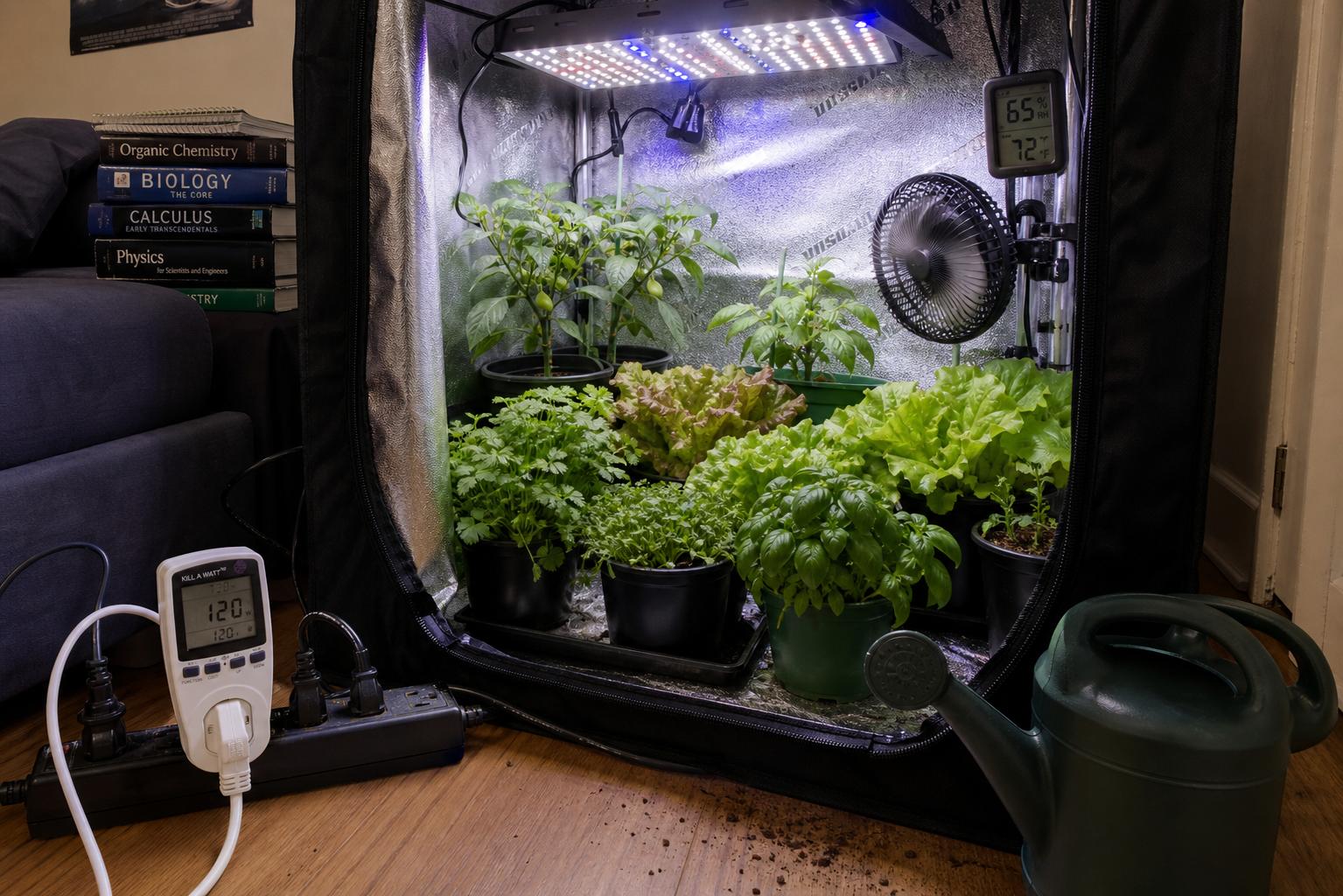
One of the first questions I get from people setting up grow tents for vegetables is simple. How much is this actually going to cost me every month?
If you are growing tomatoes, peppers, lettuce, or herbs inside a grow tent in an apartment or smaller home, the costs feel very real. Your lights run every day. Your inline fan hums in the background. The electric bill shows up whether your basil thrived or struggled.
After years of running different grow tents in small spaces, I have learned that the real cost is not just the light. It is electricity, equipment wear, and a handful of small expenses that add up quietly. Let’s break it down in a practical way so you know what to expect.
The Real Monthly Electricity Cost of Running Grow Tents
Electricity is the main ongoing cost inside a grow tent. Everything revolves around your light, and the light is what pulls the most power.
Grow Lights
If you are using a modern LED in a small or medium grow tent, you are probably running something between 200 and 400 watts. Most vegetable growers run lights 14 to 18 hours per day depending on the crop. Leafy greens usually stay on the longer end. Fruiting plants like tomatoes and peppers often settle around 14 to 16 hours.
To estimate cost, take your light wattage, multiply by the hours per day, then by 30 days, and convert to kilowatt hours. Then multiply by your local electricity rate.
In my experience, a typical three by three foot grow tent running a 300 watt LED for 16 hours per day often lands somewhere between 20 and 40 dollars per month in electricity depending on local rates.
One mistake I made early on was oversizing my light. I bought more wattage than my tent space really needed. The plants did not grow twice as fast, but my power bill definitely went up. Matching the light to your grow tent size makes a noticeable difference over a full year.
Fans and Ventilation
Your inline fan and circulation fans also draw power, but far less than the light. A typical inline fan in a small grow tent might use 30 to 100 watts depending on speed.
I run my inline fan on a speed controller most of the time. Full power is rarely necessary unless I am dealing with extra heat from fruiting plants. Slowing the fan down reduces noise in a small apartment and trims a bit off the electric use.
Together, fans usually add a smaller but steady amount to the monthly total. It is not dramatic, but it is always running.
Small Equipment
Timers, humidifiers, and small pumps use very little individually. But if you are running a humidifier daily in a dry apartment, that can add noticeable electricity over winter.
What surprised me most was how much a small space heater outside the grow tent added when I tried to keep winter temperatures perfect. That drove costs up far more than adjusting my light schedule ever did. Now I prefer choosing cool tolerant greens in winter rather than fighting the room temperature.
Upfront Equipment Costs Versus Long Term Use
The upfront cost of a grow tent setup can feel heavy. Tent, light, inline fan, carbon filter, timer, pots, trays. It adds up fast.
But here is how I look at it.
A good LED light and sturdy grow tent should last several years if you treat them well. I have lights that have been running leafy greens for years without issue. When you spread that cost over multiple seasons, it becomes more reasonable.
If your full setup costs several hundred dollars and you use it continuously for three to five years, the yearly equipment cost drops significantly. Compare that to buying fresh herbs weekly or high quality greens off season. In many cases the numbers are closer than people expect, especially if you are growing crops that are expensive in stores like fresh basil or specialty lettuce.
My personal opinion is that it is worth spending more on the light and less on fancy accessories. A reliable, efficient light gives better growth and lower long term electricity use. Cheap lights often mean poor plant performance and wasted power.
The Hidden Expenses Most Indoor Growers Overlook
The real surprises are not usually the big items. They are the small repeating costs inside a grow tent.
Nutrients and Growing Media
If you are growing tomatoes or peppers in containers inside a grow tent, you will go through potting mix and nutrients regularly. Leafy greens in smaller containers are cheaper per cycle, but fruiting crops consume more.
I underestimated how quickly larger tomato plants would use nutrients in a contained grow tent environment. Indoor plants grow faster with stable conditions, which means more feeding. Budgeting for fertilizer is wise.
Replacement Parts
Carbon filters eventually lose effectiveness. Clip fans wear out. Zippers on cheaper grow tents can fail over time.
These are not monthly costs, but over a few years they matter. I now factor in that I will likely replace a couple of small fans every few seasons. It is easier to accept when I expect it.
Water and Humidity Control
Water itself is inexpensive, but managing it inside a grow tent can lead to indirect costs. If your tent is in a small apartment bedroom and humidity climbs too high, you may run a small dehumidifier in the room. That adds to both purchase cost and electricity use.
This is why I prefer sizing my grow tent appropriately for the space. Overpacking a small room with a large grow tent full of mature vegetables can create humidity issues that cost more in the long run.
How to Lower Grow Tent Costs Without Hurting Your Harvest
I have tested different ways to save money inside grow tents. Some are worth it. Some are not.
Right Size Your Light
This is the biggest lever. Match the wattage to your tent footprint. More light is not always more productive for leafy greens. Lettuce, spinach, and many herbs grow extremely well under moderate LED power. Running excessive wattage is just paying for unused light.
Grow What Makes Financial Sense
If you are trying to offset grocery costs, focus on crops that are expensive or perishable in stores. Fresh basil, specialty greens, and compact pepper plants can justify the electricity inside a grow tent better than something like bulk potatoes.
In my experience, fast turnover crops like lettuce make the tent feel productive. You harvest regularly, which makes the monthly electric cost easier to justify.
Avoid Constant Climate Perfection
Chasing perfect temperature and humidity numbers can drive up costs. Inside a grow tent, slightly imperfect but stable conditions often grow vegetables just fine.
I stopped trying to maintain textbook humidity and instead aim for reasonable ranges. The plants adapted. My equipment ran less aggressively. My costs dropped.
Use Timers and Simple Automation
Lights should never run longer than necessary. A basic timer keeps your schedule consistent. Running lights even one extra hour per day over a year adds up inside grow tents.
So What Should You Expect?
Most small to medium vegetable grow tents land in a range where electricity is the main steady cost, followed by nutrients and occasional equipment replacement. The exact number depends heavily on local power rates and how aggressively you run your environment.
If you are considering starting, I would first calculate the monthly cost of running the specific light you plan to buy. That gives you a realistic baseline. Then decide which crops you want to grow and ask yourself if having them fresh year round inside your grow tent is worth that steady monthly expense.
If I were setting up a new tent today to keep costs controlled, I would choose a properly sized LED, focus on leafy greens and herbs for quick turnover, run the fan only as strong as needed, and avoid overcomplicating climate control. That combination has consistently given me healthy harvests without unpleasant surprises on the electric bill.
Start with accurate light sizing. That one decision shapes almost every other cost inside your grow tent.


