
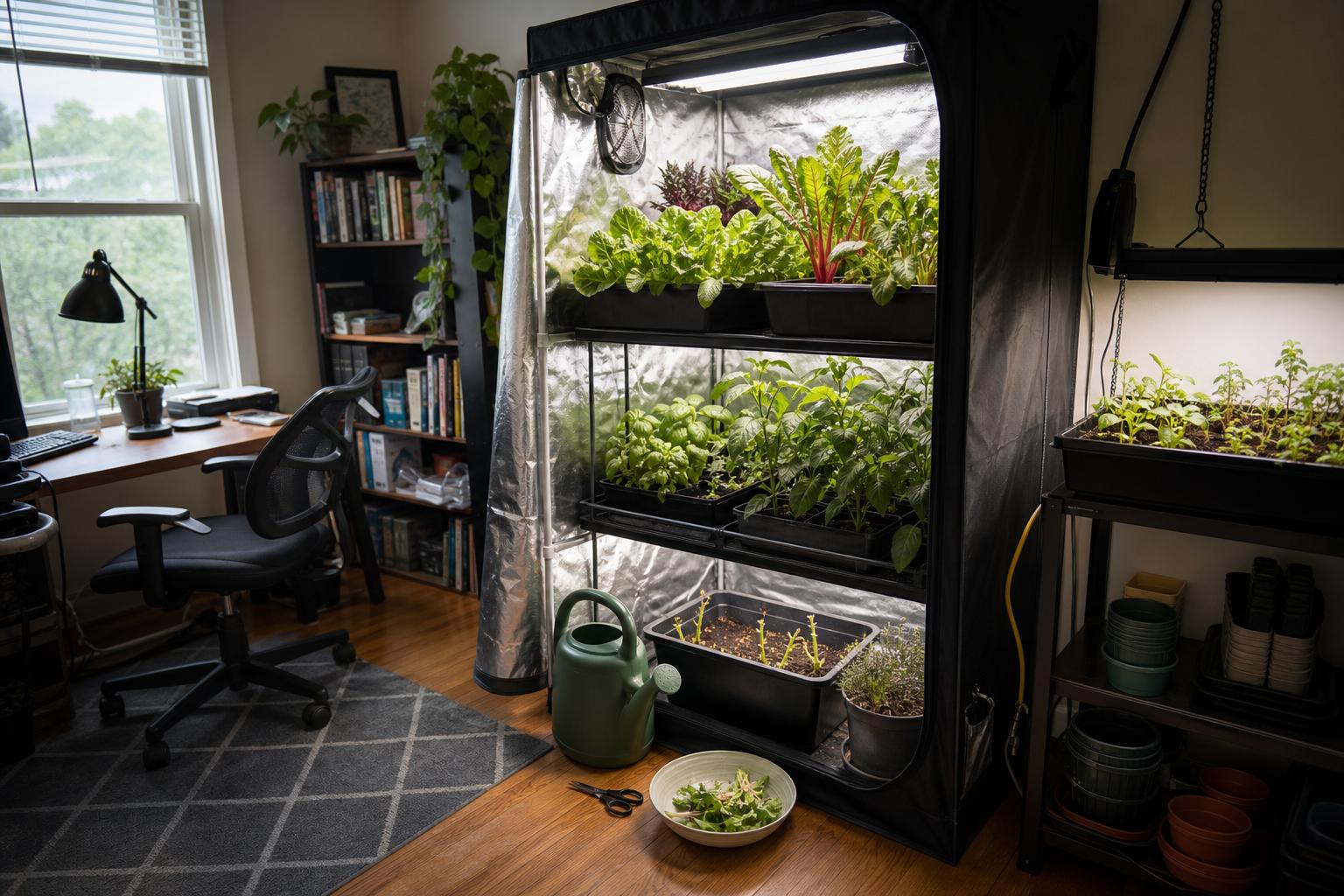
A grow tent can produce fresh vegetables, herbs, and leafy greens throughout the year, but continuous harvests do not happen automatically. Without a little planning, the grow tent tends to swing between being completely packed and strangely empty.
I have experienced both extremes. I have waited too long to start replacement plants, then spent weeks lighting an almost empty grow tent. I have also sown far too much at once and ended up squeezing lettuce between pepper pots where neither crop had enough room. The goal is not to keep every inch occupied. It is to keep plants moving through the tent at a steady, manageable pace.
Why Grow Tent Harvests Stop Between Crops
Most harvest gaps begin several weeks before they become obvious. A mature lettuce is removed, basil starts flowering, or a tomato plant finally reaches the end of its productive period. Only then does the grower think about planting a replacement.
Seeds still need time to germinate and develop useful roots. Even quick leafy greens cannot instantly replace a mature plant. Peppers and tomatoes need considerably longer.
Start the replacement before the current crop is finished.
Another common problem is treating every open patch of grow tent floor as permanent growing space. A small tomato seedling may fit beside six lettuce plants today, but its canopy can soon cover all of them. The plants technically fit in the tent when they are young, yet the layout fails when they mature.
In my experience, this is the main difference between a busy grow tent and a productive one. A busy tent is full of containers. A productive tent has enough open space for leaves, airflow, watering, and access.
Plan Around Mature Plant Size
Before sowing another tray, look at what each plant will become inside the grow tent. Think about final canopy width rather than current pot width.
I find it useful to divide edible crops into three practical groups.
- Long residents: peppers, compact tomatoes, eggplants, and other fruiting plants that occupy the grow tent for months.
- Repeat harvest crops: basil, parsley, chives, kale, chard, and loose leaf lettuce that can be cut several times.
- Quick replacements: radishes, baby greens, cilantro, arugula, and small heads of lettuce that move through the grow tent relatively quickly.
Give the long residents their permanent positions first. Place repeat harvest crops where they will still receive useful light after the larger plants spread. Use quick replacements to fill genuinely temporary openings.
One mistake I made early on was using lettuce as filler around young pepper plants. It worked briefly, so I kept sowing more. Once the pepper leaves widened, the lettuce stretched toward the light and stayed damp beneath the canopy. What worked better was reserving one shallow tray for lettuce rather than scattering lettuce pots throughout the grow tent.
Dedicated crop zones are easier to manage than random open spaces.
Create a Simple Sowing and Replacement Schedule
You do not need a complicated spreadsheet. For an ordinary home grower, I prefer a repeating weekly check because it is easy to maintain. Elaborate calendars look impressive, but they stop helping when you forget to update them.
Once a week, open the grow tent and follow this sequence:
- Identify which plants are likely to leave the grow tent next.
- Estimate when their floor or shelf space will become available.
- Start only enough seedlings to fill that expected space.
- Check whether existing seedlings need larger containers before the space opens.
- Write the sowing date on a label that stays with the tray.
Labels matter more indoors than many people expect. Under grow tent lighting, several young herbs and leafy greens can look surprisingly similar. The sowing date also tells you whether slow growth is normal or whether the seedlings need attention.
Use Small Batches for Leafy Greens
For lettuce, arugula, cilantro, and baby greens, sowing small batches is usually more useful than planting an entire grow tent tray at once. A modest batch can replace the greens you harvest without creating a sudden wave of produce that must be eaten immediately.
Several small sowings beat one large sowing when the goal is a steady kitchen supply.
The exact interval depends on how quickly your household eats greens and how quickly they grow under your light. Start a small batch, observe when it becomes harvestable, and adjust the next sowing. Your own grow tent temperature, light strength, and available shelf space are more useful than a schedule copied from someone else.
Replace Fruiting Plants More Carefully
Starting replacement peppers or tomatoes too frequently creates a different problem. Young plants soon need stronger light, larger pots, and more root space. If the mature plant is still productive, the replacement may have nowhere suitable to go.
I prefer to start fruiting replacements only when I can see a realistic end point for the older plant. This may be declining production, persistent pest damage, or a plant becoming too large for the grow tent. Do not raise a replacement tomato without reserving its future footprint.
Make Room for Seedlings Without Sacrificing the Main Crop
Replacement seedlings need surprisingly little room at first, but they still need a defined place inside the grow tent. A compact tray near the edge of the light can work for germination and early growth, provided it is not shaded by mature leaves.
A shelf can increase capacity, although it also creates practical tradeoffs. Another light adds electricity use and heat, while a fan near a shelf can add noise in an apartment. I would rather keep one small, accessible seedling area than install multiple crowded levels that are awkward to water.
Seedlings and mature fruiting plants also have different lighting needs. If small seedlings sit directly under a powerful light set for peppers, they can dry quickly or become stressed. Raise the seedling tray on a stable platform at the edge of the canopy, or dim the light if the whole grow tent contains young plants.
Keep the Grow Tent Productive Without Overcrowding
A continuous system needs spare capacity. That can feel wasteful when grow tent space is expensive, but a little open canopy makes watering, pruning, inspection, and harvesting much easier.
Watch for these signs that the schedule has outrun the available space:
- Leaves from unrelated plants remain pressed together.
- Seedling trays stay shaded for most of the light period.
- You cannot remove a pot without moving several others.
- Lower leaves remain damp or yellow from poor access to light.
- Replacement plants need larger pots before permanent space is ready.
If these problems appear, sow less rather than adding another fan or light. More equipment cannot fully correct a grow tent that contains too many mature plants. It can also increase heat, noise, electricity use, and moisture released into the room.
Leave one planting position intentionally flexible. Use it for a lettuce tray, young herbs, or a replacement plant, but avoid promising that space to several crops at once.
My practical recommendation is to inspect your grow tent today and choose the next plant that will be removed. Reserve its mature footprint, then sow only the replacement crop that will fit there. That single habit is the simplest way I know to turn separate indoor crops into a reliable year round harvest.


