
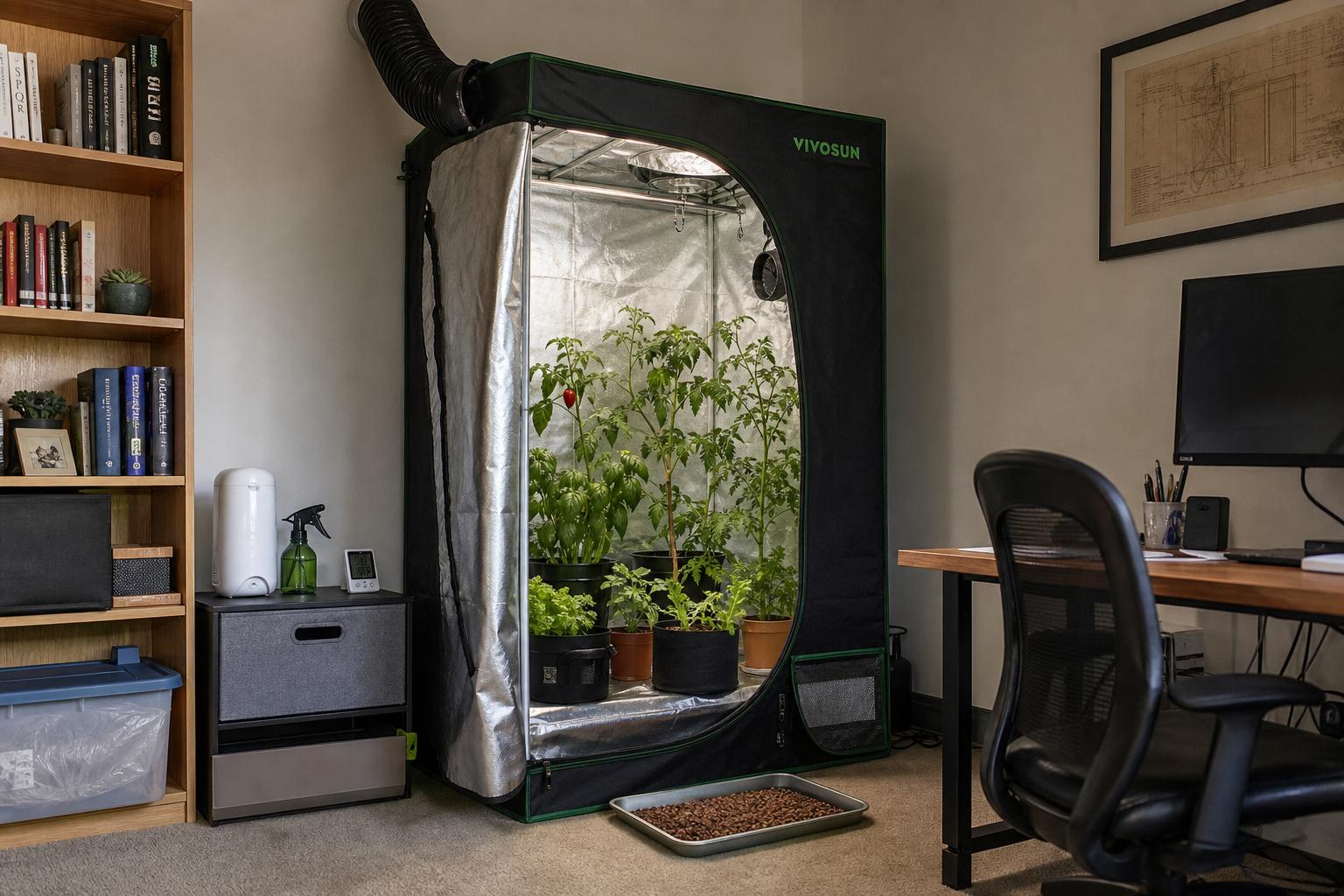
Low humidity inside a grow tent can show up as curled leaf edges, fast drying pots, and seedlings that seem to pause between waterings. The first instinct is often to add a humidifier, but most growers can improve the situation before spending money.
In a small grow tent, humidity is usually not low because there is no moisture available. It is low because warm air and exhaust airflow are removing moisture faster than the plants can replace it. That makes this a ventilation and moisture retention problem first.
I prefer to make one small adjustment at a time. Grow tents respond quickly, and changing the fan, vents, watering, and containers all at once makes it difficult to know what actually worked.
Why Humidity Escapes From a Grow Tent
Plants release water through their leaves, while damp growing medium releases moisture from its surface. That moisture mixes into the grow tent air and is then pulled out by the exhaust fan.
This is necessary. Vegetables and herbs need fresh air, and the grow lights create heat that has to go somewhere. The problem begins when the exhaust fan is moving far more air than the grow tent needs.
Strong negative pressure is an important clue. A slight inward pull on the tent walls is normal. If the walls are being sucked inward dramatically and the door feels difficult to unzip, the fan may be exchanging the air too aggressively.
Other common causes include:
- Unused duct ports that have been left open
- Several passive intake flaps open at the same time
- A fan running at full speed regardless of temperature
- Warm lights causing rapid evaporation and exhaust
- A grow tent placed in a room with very dry air
- Small plants that are not yet releasing much moisture
I have noticed that newly planted lettuce and herb tents often stay much drier than the same tents a few weeks later. Once the leaves fill out, humidity can rise surprisingly fast without any other change.
Account for plant size before changing everything.
Use Existing Ventilation Controls Before Adding Moisture
Start by checking humidity at plant height. A sensor on the floor may read differently from one placed among the leaves, while a sensor directly in the path of an intake can make the grow tent look drier than it really is.
Once the reading is trustworthy, work through this sequence:
- Close unused duct openings. Pull their drawstrings tight so dry room air is not entering from several directions.
- Reduce the number of open intake flaps. Keep enough intake area for the tent walls to pull inward gently.
- Lower exhaust speed if possible. Use the controller that came with the fan rather than switching the fan off completely.
- Watch temperature for several hours. Restore some fan speed if heat begins to build around the leaves.
One mistake I made early on was turning the exhaust fan off for long stretches to hold humidity. The number on the humidity meter improved, but the air around the plants became warm and still. Basil developed soft growth, and condensation appeared near the cooler tent wall.
Gentle continuous exhaust is usually better than alternating between stale air and a powerful blast. It is quieter in an apartment, easier on temperatures, and less likely to produce sudden humidity swings.
If your fan has no speed control, avoid covering the exhaust outlet or crushing the duct. Restricting a fan can add noise and reduce its efficiency. Instead, close unnecessary intake openings and use the tent layout to retain moisture.
Safe Ways to Raise Humidity With What You Already Have
Water the growing medium properly
Very dry growing medium provides little moisture to the grow tent air. Check pots with a finger or lift them to judge their weight. If plants genuinely need water, water thoroughly and let excess drain.
This does not mean keeping roots constantly wet. Do not overwater plants just to change an air reading. Peppers, tomatoes, and many herbs would rather have healthy roots than artificially high humidity.
What worked better for me was watering at the beginning of the light period. The warmth and airflow then moved some of that moisture into the grow tent while the plants were active. It also gave wet leaf stems and tray surfaces time to dry before the dark period.
Group plants without crowding them
Moving pots closer together creates a slightly more humid pocket around the leaves. This is particularly useful for young lettuce, cilantro, parsley, and basil when the grow tent is not yet full.
Leave visible gaps between plants so your circulation fan can move air through the canopy. Grouping is helpful. Packing wet leaves tightly together is not.
Use a shallow water container carefully
A clean tray, bowl, or food container filled with water can add a modest amount of moisture. Place it where moving air passes across the surface, but keep it away from plugs, power strips, and electrical connections.
A wider shallow container works better than a narrow jar because more water is exposed to the air. Clean it regularly. Stagnant water that collects algae or spilled growing medium is not worth the small humidity gain.
Never leave plant pots sitting in the water. Use an overturned saucer, rack, or another stable riser if the water container must sit beneath plants.
Hang a damp towel as a temporary measure
A clean damp towel hung from an existing support can raise humidity faster than an open bowl because it exposes more wet surface. Keep it clear of lights, fans, duct openings, and electrical equipment.
I consider this a short term fix for seedlings or an unusually dry day, not a permanent grow tent system. Towels need washing, can develop a stale smell, and may drip when they are too wet. In a condo or small home, that maintenance quickly becomes annoying.
Cover seedlings instead of humidifying the whole tent
If only seedlings need more humidity, use a clear food container or existing propagation cover over their tray. Leave a small opening and remove the cover gradually once true leaves appear.
This is often the most practical option because mature peppers or tomatoes may not benefit from the same humidity that young leafy green seedlings prefer. Treat the small sensitive area instead of changing the entire grow tent.
Signs You Have Raised Humidity Too Far
Higher is not automatically healthier. Once a grow tent fills with mature leaves, yesterday’s useful adjustment can become today’s moisture problem.
Watch for these warnings:
- Condensation on tent walls, ducting, or light covers
- Leaves that stay wet after watering
- A musty smell when the tent is opened
- White or gray growth on leaves or growing medium
- Soft swollen patches on leaves
- Water dripping from the ceiling or corners
Fruiting tomatoes and peppers also need moving air around their flowers. Persistently heavy humidity can interfere with pollen movement and encourage leaf disease in a dense canopy.
If any warning appears, remove the water container or towel first, spread crowded pots apart, and increase exhaust slightly. Do not respond by pointing a strong fan directly at tender leaves. The goal is steady air exchange, not wind stress.
What I Would Change First
Begin with the exhaust system rather than adding more water. Confirm the humidity reading at leaf height, seal unused ports, and reduce fan speed until the grow tent walls show only a gentle inward pull. Then wait several hours and check both temperature and humidity again.
If humidity is still low, place one clean shallow water container near the circulation airflow. That is inexpensive, easy to remove, and less likely to soak leaves or create a maintenance problem.
Make the smallest change that solves the problem. Inside a grow tent, stable conditions are more valuable than chasing a perfect humidity number with wet towels, constant misting, or restricted airflow.


