
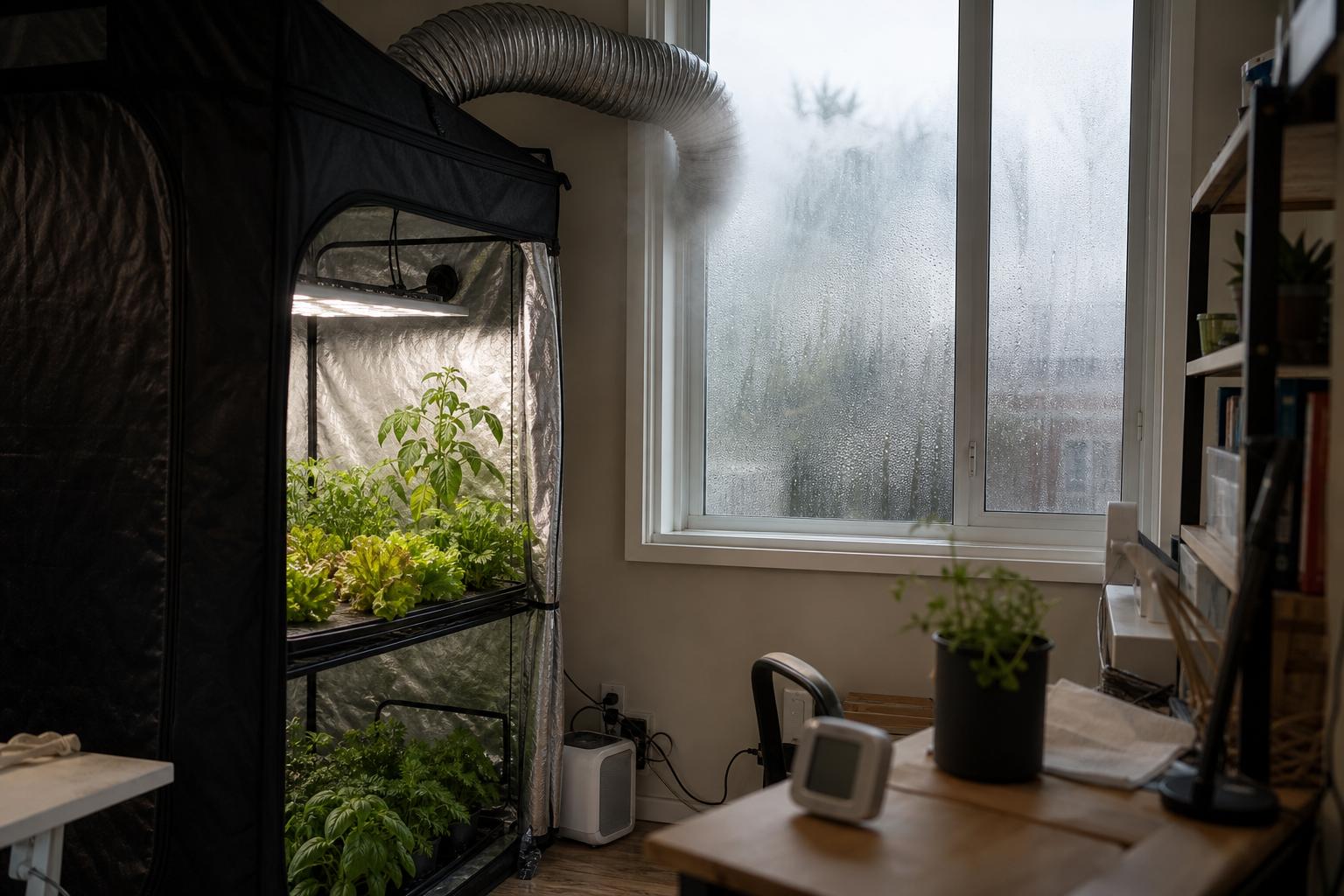
A grow tent can look like a sealed growing space, but it is really part of the room around it. Your tomatoes, peppers, basil, and leafy greens release moisture inside the grow tent, then the exhaust fan carries that moisture straight into the spare room.
If the room has limited ventilation, the moisture has nowhere else to go. The tent may show a reasonable humidity reading while the spare room slowly starts feeling damp, warm, or stuffy. I have seen this happen most often after a plant canopy fills out or after several containers are watered at once.
How Moisture Leaves the Grow Tent
Plants constantly pull water through their roots and release much of it through their leaves. This is transpiration, but the important part for a home grower is simple: most of the water you pour into a productive grow tent eventually enters the air.
A few young lettuce plants may not release enough moisture to notice. A mature tomato, cucumber, or pepper canopy is different. The amount of leaf surface can increase quickly, even though the number of containers has not changed. I have noticed rooms stay manageable during early growth, then become noticeably humid once the plants begin touching each other.
Wet growing media adds more moisture. Fabric pots, exposed potting mix, seedling trays, and water sitting in saucers all allow evaporation inside the grow tent. Open hydroponic reservoirs and uncovered nutrient containers can contribute as well.
The exhaust fan then moves this damp air out of the grow tent. If the duct ends in the same spare room, the fan has not removed moisture from the home. It has only moved moisture from the tent into a larger space.
Meanwhile, the grow tent intake pulls air from that same room. This creates a loop. Room air enters the tent, collects more moisture, and returns to the room through the exhaust.
Signs the Spare Room Is Being Overloaded
You do not need an expensive environmental controller to confirm what is happening. Place one basic humidity meter inside the grow tent and another in the spare room, away from the exhaust outlet. Compare both readings for several days.
Look for these patterns:
- The room humidity climbs within a few hours after watering the grow tent.
- The room feels worse when the door and windows stay closed.
- Humidity rises as the vegetable canopy becomes larger.
- The tent reading improves when the exhaust fan speeds up, but the room reading gets worse.
- Condensation appears on a cool window, wall, or air conditioning vent.
- The room stays humid after the grow lights turn off and the temperature drops.
That fourth pattern causes a lot of confusion. One mistake I made early on was increasing exhaust speed whenever the tent humidity rose. The tent reading dropped, so I assumed the problem was solved. In reality, I was dumping damp air into the room faster. A stronger exhaust fan cannot dry a closed spare room.
What to Check Before Buying a Dehumidifier
Confirm where the exhaust air goes
If possible, vent the grow tent exhaust outside through a properly fitted window panel. This removes both moisture and some of the heat produced by the grow lights. For a small home grower, this is usually the cleanest solution.
Do not send damp grow tent air into a wall cavity, ceiling space, closet, or attic. Hidden moisture is harder to notice and can create a much more expensive problem.
Renters may not be able to make permanent changes. A removable window panel is often more practical than modifying a wall. If outside venting is not allowed, leaving the spare room door open and using a quiet circulation fan can help mix the damp air with the rest of the home. It is not as effective as outside venting, but it may be enough for a modest herb or lettuce tent.
Look for avoidable water inside the tent
Check saucers, trays, reservoirs, and the floor of the grow tent after watering. Runoff that remains under pots can evaporate for hours. I frequently see growers focus on exhaust equipment while a shallow tray of nutrient water sits unnoticed behind the plants.
Remove runoff when practical. Cover reservoirs and unused openings. Avoid keeping the entire growing medium soaked when the roots only need even moisture. These steps will not stop plant transpiration, but they reduce moisture that provides no benefit.
Test the room before sizing new equipment
Record the room humidity before watering, a few hours after watering, and near the end of the grow light period. Also test one day with the room door open and one day with it closed. Keep the tent exhaust running normally during these tests so the plants still receive airflow.
If opening the door keeps the room under control, better room air exchange may be all you need. If humidity remains high throughout the home, a dehumidifier becomes a more reasonable purchase.
A Simple Humidity Control Plan
I prefer solving grow tent humidity in this order because it avoids unnecessary noise, heat, electricity use, and equipment cost.
- Use separate humidity meters in the grow tent and the surrounding room.
- Remove standing runoff and cover exposed water containers.
- Send the grow tent exhaust outside if the building and window arrangement allow it.
- If outside venting is not possible, improve air exchange between the spare room and the rest of the home.
- Add a dehumidifier only when ventilation cannot keep room humidity at a sensible level.
For a mixed grow tent containing herbs, greens, peppers, or tomatoes, I generally aim to keep the surrounding room near 50 to 55 percent relative humidity. The tent can run somewhat higher depending on plant age and crop type. Mature flowering tomatoes and peppers usually benefit from drier air than young leafy greens.
If a dehumidifier is needed, I normally place it in the spare room rather than inside the grow tent. A dehumidifier gives off heat, occupies valuable tent floor space, and can blow dry air directly across nearby leaves. In the room, it treats the air entering the tent and is easier to empty, clean, and adjust.
Choose a model with a humidistat so it does not run constantly. A continuous drain is convenient if there is a safe place for the collected water to go. Otherwise, check the tank daily at first. Dehumidifiers can fill surprisingly quickly when mature vegetable plants are being watered heavily.
My first move would be to place a second humidity meter in the spare room and inspect where the grow tent exhaust ends. If the duct simply blows into a closed room, fix that air path before increasing fan speed or buying a larger dehumidifier. Once the moisture has somewhere to leave, both the room and the grow tent become much easier to manage.


