
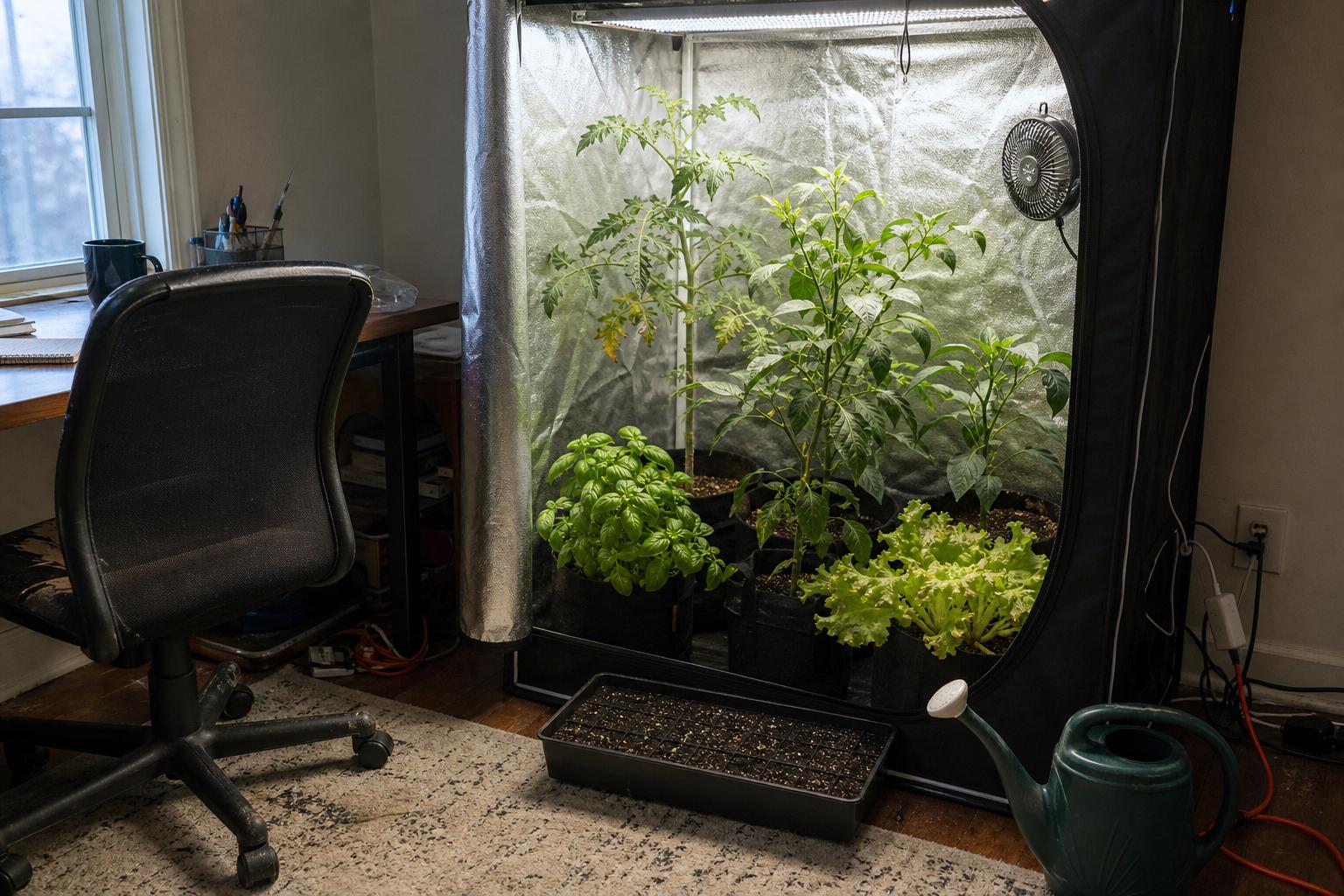
Curled leaves can make a healthy grow tent feel like an emergency. The natural reaction is to water, add nutrients, move the light, and adjust the fan all at once. I have done exactly that, and it usually makes the original problem harder to identify.
Inside a grow tent, curling leaves are best treated as clues rather than a diagnosis. Direction, location, and timing tell you much more than the curl alone. Before changing anything, look at which leaves are affected, which way they are moving, and when the change appeared.
Start With the Direction and Location of the Curl
First, step back and look at the whole plant under the grow tent light. Do not begin with the ugliest individual leaf. An older lettuce leaf near the growing medium may curl for a completely different reason than the newest basil leaves directly beneath the fixture.
- Upper leaves curling upward usually point toward strong light, excess canopy heat, or dry air moving across the leaves.
- Leaves curling downward often suggest a wet root zone, although dark color and burned tips can indicate excessive feeding.
- Curling on one side commonly leads back to a circulation fan or a hot pocket inside the grow tent.
- Lower leaf curl deserves a root and watering check before you touch the light.
I have noticed basil leaves form shallow cups when they sit too close to a bright fixture, while leaves only a few inches lower remain flat. That pattern matters. If the entire plant were reacting, I would look beyond light intensity. When only the exposed top growth changes, the fixture becomes the stronger suspect.
The pattern across the plant matters more than one damaged leaf.
Pay Attention to When It Happens
Timing can separate problems that look nearly identical. Curling that becomes obvious several hours after the grow tent light turns on points toward light, heat, or airflow. Curling that appears after watering points toward root stress, especially when the container stays heavy for days.
If the curl started soon after you repositioned a fan, trust that timing. If peppers look tired just before their usual watering but recover after the root zone is moistened, thirst is more likely than disease or nutrient trouble.
Check Grow Tent Conditions Before Adding Water or Nutrients
Where do most growers go wrong? They respond to leaf curl by adding something. In a grow tent, the better first move is usually to measure and observe before feeding or watering.
- Check the temperature at canopy height, not on a shelf outside the grow tent.
- Feel the weight of the container and check moisture below the surface.
- Place your hand beside the affected leaves and notice whether the fan stream feels constant or harsh.
- Compare the distance between the fixture and the curled leaves with the distance above healthy growth.
- Look for dark color, pale color, burned tips, spots, or limp stems that provide another clue.
One mistake I made early on was assuming every downward curl meant a thirsty plant. I watered again because the surface looked dry, even though the lower root zone was still saturated. The leaves curled further because the roots needed oxygen, not more moisture. Pot weight became a much more reliable guide than the color of the surface.
A grow tent sensor is useful, but it does not show everything. Leaves close to a powerful fixture can become stressed even when the displayed air temperature looks acceptable. Your hand at canopy level, the leaf pattern, and the sensor reading should be considered together.
Match the Curling Pattern to the Most Likely Cause
Upward Edges Near the Light
When tomato, pepper, basil, or lettuce leaves turn their edges upward near the top of the grow tent, check light intensity and canopy heat first. The leaves may still feel firm and look normally colored. This is often an early protective response rather than permanent damage.
In a short grow tent, I prefer dimming the fixture slightly instead of immediately raising it. Raising the light uses valuable headroom and can create a wider spill of light. Dimming also reduces heat and electricity use. The tradeoff is slightly slower growth, but that is better than repeatedly stressing tender greens.
Downward Curl With a Heavy Container
Leaves that hook downward while the growing medium remains wet usually point toward poor root aeration. This is especially common when a small plant is placed in a large container inside a humid grow tent. The plant simply cannot use water as quickly as expected.
Do not water again to test the theory. Allow the container to become noticeably lighter while keeping normal grow tent airflow around it. Empty runoff trays so the pot is not sitting in water. If leaves are also unusually dark and glossy with burned tips, pause feeding as well.
Dry or Rolled Edges Facing a Fan
I once had lettuce with crisp curling on one side of the tray while the opposite side looked excellent. The circulation fan was not especially powerful, but it was aimed at the same leaves all day. Small grow tents concentrate airflow, so even a modest fan can dry one area faster than expected.
Leaves should flutter gently, not remain pushed sideways. Aim the fan toward a grow tent wall or above the canopy so the air mixes before reaching the plants. This may provide less aggressive movement, but it is quieter and prevents tender herbs and leafy greens from losing moisture too quickly.
Limp Curling Across the Whole Plant
If the entire plant looks limp and curled, lift the container. A very light pot and dry medium support a thirst diagnosis. A heavy pot with the same symptoms suggests stressed roots. These two situations can look surprisingly similar, which is why watering based only on the leaves causes so many problems inside grow tents.
If only one branch or a few distorted new leaves are affected, inspect the leaf undersides and growing tips closely. Localized damage does not fit a whole tent environmental problem as neatly. Rule out insects before changing the light, exhaust fan, or watering schedule.
Change One Variable and Watch the New Growth
Once you have a likely cause, make the smallest useful correction. Do not adjust the light, fan, nutrients, and watering on the same day. You will not know what worked, and several corrections together can create a new problem.
- For suspected light stress, dim the fixture one setting.
- For direct airflow, redirect the fan without increasing its speed.
- For a wet root zone, delay watering and clear standing runoff.
- For genuine dryness, water the medium evenly and let excess water drain.
Then watch the newest leaves over the next few light cycles. Older curled leaves may never become completely flat, even after the grow tent condition improves. New growth is the better scorecard. It should emerge flatter, expand normally, and avoid the same damaged edges.
If I found curled leaves in my grow tent today, I would first lift the container, inspect the upper canopy, and feel the airflow beside the affected leaves. I would choose the strongest clue, change one variable, and leave everything else alone long enough for the plant to answer.


