
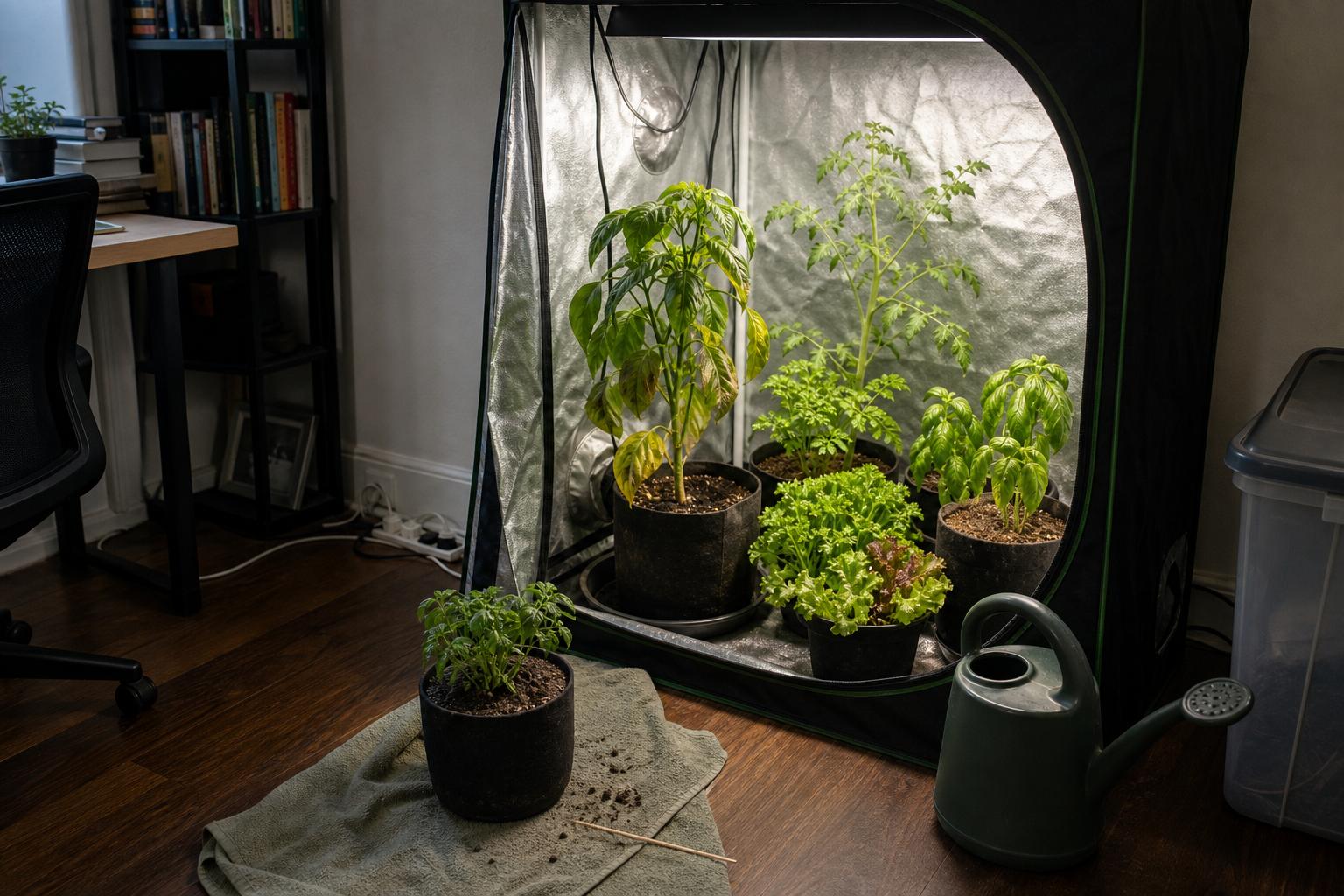
Watering inside a grow tent looks simple until two pots stay wet for days while the tomato beside them dries out overnight. New growers often respond by adding more water, changing the schedule, or blaming the light. That usually creates even more confusion.
A grow tent is a small controlled environment, but it is not perfectly uniform. Light intensity, fan placement, container size, plant size, and growing medium all affect how quickly each pot uses water. The goal is not to find one perfect schedule. The goal is to recognize when a particular plant is ready to be watered.
Why Watering Problems Develop Differently Inside a Grow Tent
Inside a grow tent, the environment can change faster than many new growers expect. Turning up the exhaust fan may lower humidity and make pots dry sooner. Raising the light can slow water use if plants receive less energy. A warm light fixture can dry the top of a pot while the lower root zone remains soaked.
I have noticed that pots near an active intake often dry faster than identical pots at the back of the grow tent. I have also seen large leafy greens shade smaller herb containers so heavily that the herb pots stayed wet several days longer.
Dry soil on top does not prove the whole container is dry.
This is why calendar based watering performs poorly inside grow tents. The environment and plants keep changing, even when the equipment settings appear unchanged.
The Most Common Grow Tent Watering Mistakes
Watering on fixed days
One mistake I see often is watering every two or three days because that interval worked during the previous week. A young pepper under moderate grow tent lighting may use very little water. The same pepper can become thirsty much faster after it develops a larger canopy or begins producing fruit.
A schedule can remind you to check the pots, but it should not automatically tell you to water them. This distinction prevents many grow tent watering problems.
Giving small sips too often
One mistake I made early on was adding a little water whenever the surface looked dry. The upper growing mix stayed damp while parts of the root ball received very little water. Roots remained shallow, and dry pockets became harder to wet later.
For an established vegetable or herb in a suitable container, I prefer to water slowly and evenly across the surface. I stop after the root ball is thoroughly moistened and a modest amount reaches the saucer. Then I empty the saucer rather than leaving the pot standing in runoff.
The exception is a tiny seedling sitting in an oversized container. Saturating all that unused growing mix can keep a small grow tent plant wet for far too long. Using smaller starter pots and transplanting later is more forgiving.
Assuming wilt always means thirst
Both dry and waterlogged grow tent plants can wilt. Dry plants usually sit in a light container, and their growing mix feels dry below the surface. Waterlogged plants sit in a heavy pot, often with soft leaves that remain droopy even though the mix is wet.
- Dry wilt: Light pot, dry root zone, leaves may feel thin or limp
- Wet wilt: Heavy pot, damp root zone, slow growth, possible yellowing
- Heat stress: Wilt appears mainly while the grow tent light is strongest, even when root moisture is reasonable
When a grow tent plant droops, check the growing medium before reaching for the watering can.
Ignoring drainage and runoff
A decorative pot without drainage is risky inside a grow tent because excess water has nowhere to go. The lower root zone can remain saturated while the visible surface looks normal. Trays are useful for protecting a tent floor, but they should collect runoff rather than store it around the roots.
I prefer containers with several open drainage holes placed on sturdy saucers or shallow trays. Fabric pots dry faster and provide plenty of root aeration, but they also release more moisture into the grow tent and can require more frequent watering. In a small apartment, plastic nursery pots are often cleaner and easier to manage.
How Grow Tent Conditions Change Water Use
Container size matters more than many beginners expect. A small basil plant in a large pot may stay wet for a week, while a fruiting tomato in a cramped pot may need attention almost daily. Matching the container to the current root system makes moisture easier to judge.
Light also changes water demand. Plants under stronger grow tent lighting generally use water faster, provided the temperature is reasonable. If a light is dimmed or raised, water use may decrease before the grower notices much visual change.
Airflow adds another variable. A circulation fan aimed directly at one container can dry its surface and leaves faster than neighboring plants. I prefer gentle air movement around the grow tent canopy instead of a strong stream blasting one pot. This is quieter in a small home and creates more even drying.
Humidity affects the pace as well. Constantly increasing exhaust speed can dry the grow tent faster, but it adds noise and may release more heat into the room. I would rather use moderate ventilation and adjust watering through observation than run loud equipment solely to force pots to dry.
A Simple Grow Tent Watering Routine
This routine works well for vegetables, herbs, and leafy greens grown in ordinary container mixes. Coco based systems usually need more frequent irrigation and should not be allowed to dry as deeply.
- Lift each container. Learn how it feels after watering and again when it is approaching dry. Weight is more reliable than judging the surface.
- Check below the surface. Push a finger or plain wooden skewer into the mix. If the lower root zone is still damp and the pot feels heavy, wait.
- Look at the plant. Notice leaf firmness, growth rate, and whether the plant has recently become larger, warmer, or more heavily lit inside the grow tent.
- Water slowly. Apply water in passes so it soaks into the root ball rather than rushing down the sides. Water established plants thoroughly.
- Remove collected runoff. Empty grow tent saucers after drainage finishes so roots are not left standing in water.
- Record what happened. Note the date and how the pot felt. Use the record to predict when to check again, not as an automatic watering command.
Moisture meters can help, but inexpensive probes often give inconsistent readings in chunky mixes or near fertilizer deposits. For an ordinary home grower, pot weight plus a finger or wooden skewer is cheaper, faster, and easier to trust.
What to Check When a Pot Will Not Dry
If a grow tent container remains wet much longer than its neighbors, do not immediately add another fan. First check the likely causes:
- Drainage holes are blocked by compacted mix or a flat tray
- The container is too large for the current plant
- The growing mix has collapsed and holds too much water
- The plant receives less grow tent light than its neighbors
- Roots are damaged, cold, or too limited to use the available moisture
More airflow cannot fix a container with poor drainage. Correct the pot, mix, or plant size first. A fan may dry the surface while leaving the bottom wet.
Make Your Next Watering a Check, Not a Habit
The next time you open your grow tent, lift every pot before adding water. Compare the lightest container with the heaviest one, then check moisture below the surface. I would personally start there before changing fans, lights, or watering products. Water the plant that is ready, not the entire grow tent by default.


