
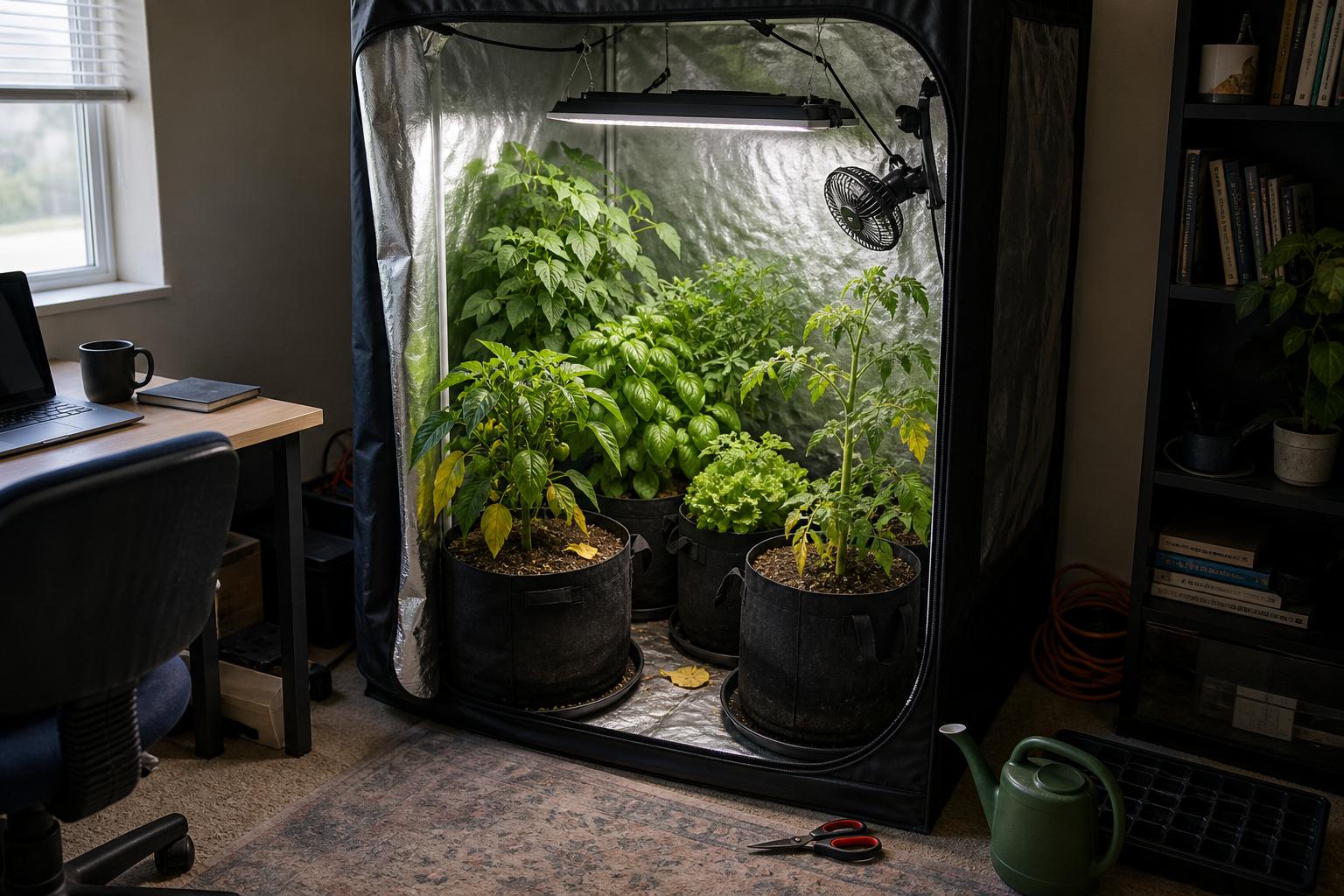
Yellow leaves inside a grow tent can be surprisingly difficult to diagnose. The light is running, the fan is moving air, and the plants may still be growing, yet one or two leaves suddenly lose their color. That often leads growers to reach for fertilizer before they know whether the plant is actually hungry.
I have learned to treat yellow leaves in a grow tent as a clue rather than a diagnosis. Sometimes they signal a root or nutrient problem. Other times, the plant is simply retiring an old leaf that no longer receives enough light to be useful.
Start With Where the Yellowing Appears
Leaf position is the first useful clue. Before changing anything inside the grow tent, look at where the yellow leaves sit on the plant.
A single lower leaf on a mature tomato, pepper, basil, or cucumber is not automatically a problem. Lower leaves are often shaded by the canopy and receive little direct light. Plants eventually stop investing energy in those leaves.
I see this regularly with basil inside compact grow tents. The top growth can be green and vigorous while two older leaves near the growing medium slowly turn pale. Removing those leaves and improving access to the lower plant is usually more sensible than adding nutrients.
Yellowing deserves more attention when you see one of these patterns:
- Several lower leaves yellowing together, especially while growth slows
- New leaves emerging pale rather than becoming green as they open
- Yellowing between green veins across multiple leaves
- Bleached upper leaves directly beneath the grow light
- Yellow leaves with brown edges, curling, spots, or soft tissue
If the oldest shaded leaf is yellow but the new growth looks healthy, I usually watch rather than react.
Check the Grow Tent Before Adding Nutrients
One mistake I made early on was feeding first and investigating later. The plant looked pale, so fertilizer seemed like the obvious answer. In reality, the growing medium was staying wet too long. Adding more nutrients increased the salt concentration around already stressed roots and made recovery slower.
Open the grow tent and check the conditions around the plant, not just the display on a controller. Small tents can contain several different environments. The canopy may feel warm and dry while the bottom of a crowded pot stays cool and damp.
Work through these checks:
- Lift the container and judge its weight. A heavy pot several days after watering suggests the roots are using water slowly.
- Push a finger into the upper growing medium, then check moisture deeper through a drainage hole if possible.
- Look for standing runoff in the grow tent tray or saucer.
- Compare the temperature near the canopy with the temperature around the containers.
- Confirm that leaves are moving slightly rather than sitting in a pocket of still air.
Do not add fertilizer to a root zone that is already wet and struggling.
Airflow can also be misleading. A powerful circulation fan aimed directly at one pepper plant may dry and curl the leaves closest to it while the back corner of the grow tent remains stagnant. I prefer gentle, continuous air movement across the canopy instead of a strong blast. It is quieter in an apartment, uses less electricity, and creates fewer dry patches.
Light is another common suspect. Upper leaves that fade directly under the fixture may be receiving more light than the plant can use. This is especially common after raising seedlings onto a crate or moving a light closer without gradually adjusting intensity.
Before buying a meter, compare affected plants with those near the grow tent walls. If the yellowing is strongest in the center beneath the fixture, raise or dim the light slightly and watch the newest growth.
Read the Roots, Leaves, and New Growth Together
A leaf alone rarely tells the full story. I get a much clearer answer when I compare three things: the roots, the affected leaves, and the newest growth.
What the roots are saying
Healthy roots need both moisture and oxygen. Inside a grow tent, drainage can be compromised by something as simple as a container sitting flat in collected runoff. Raise pots on small stands so excess water can escape and air can reach the drainage holes.
If it is safe to inspect the root ball, healthy roots are generally firm and light colored. Roots that are brown, slimy, or sour smelling point toward excess moisture, poor oxygen, or decay. In that situation, stronger fertilizer is not the solution.
I have noticed peppers often show root stress as dull lower leaves before the whole plant wilts. The container may still look normal from above. Lifting the pot usually reveals that it has remained heavy much longer than expected.
What the new growth is saying
New growth is your best progress report. Damaged leaves do not always become green again after a correction. Waiting for an old leaf to recover can convince you that the adjustment failed, even while healthy new leaves are forming.
If new leaves emerge at a normal size and deepen in color, the plant is probably recovering. If new leaves remain pale, twisted, or unusually small, investigate root zone acidity, nutrient strength, and watering practices.
Acidity matters because roots absorb different nutrients within a workable range. A plant can sit in nutrient rich growing medium and still appear deficient when the root zone acidity is unsuitable. Test the water and runoff with a properly calibrated meter before adding another supplement.
More nutrients cannot correct nutrients the roots cannot access.
Separate Normal Aging From a Developing Problem
Inside a dense grow tent, normal leaf aging usually moves slowly and stays limited to older, shaded growth. A developing problem tends to spread, repeat, or affect plant performance.
- One shaded lower leaf turns yellow while the plant keeps growing: usually normal aging
- Lower leaves yellow one after another: check watering, nitrogen supply, and root health
- Upper leaves become pale beneath the light: check light intensity and canopy heat
- New growth is yellow while older leaves remain greener: check root zone acidity and nutrient availability
- Several plants change at once: check the shared grow tent environment, water source, or feeding mixture
The last pattern is especially useful. If every tray of lettuce becomes pale at the same time, a shared condition is more likely than an isolated root problem. If only one basil plant changes, inspect its container before adjusting the whole grow tent.
Change One Thing and Watch the Response
Where do most growers go wrong? They dim the light, add fertilizer, increase the exhaust fan, and change the watering schedule on the same day. The plant may improve, but they never learn which change helped.
Make the smallest reasonable correction first. If the pot is staying wet, allow more drying time and improve drainage. If the canopy center is bleaching, reduce light intensity modestly. If testing confirms unsuitable acidity, correct that before increasing nutrients.
Then mark the affected leaves with a small piece of string or take a clear photo. Check the plant over the next few days under the same grow tent lighting. Focus on whether yellowing spreads and how the new growth develops.
My practical preference is to start with the container. Lift it, inspect the runoff tray, check the drainage holes, and look at the newest leaves. Root zone trouble is common inside small grow tents, easy to overlook, and often made worse by unnecessary feeding.
Your next step is simple: photograph the plant, check the pot weight, and make only one correction today. Let the next set of leaves tell you whether you chose correctly.


