
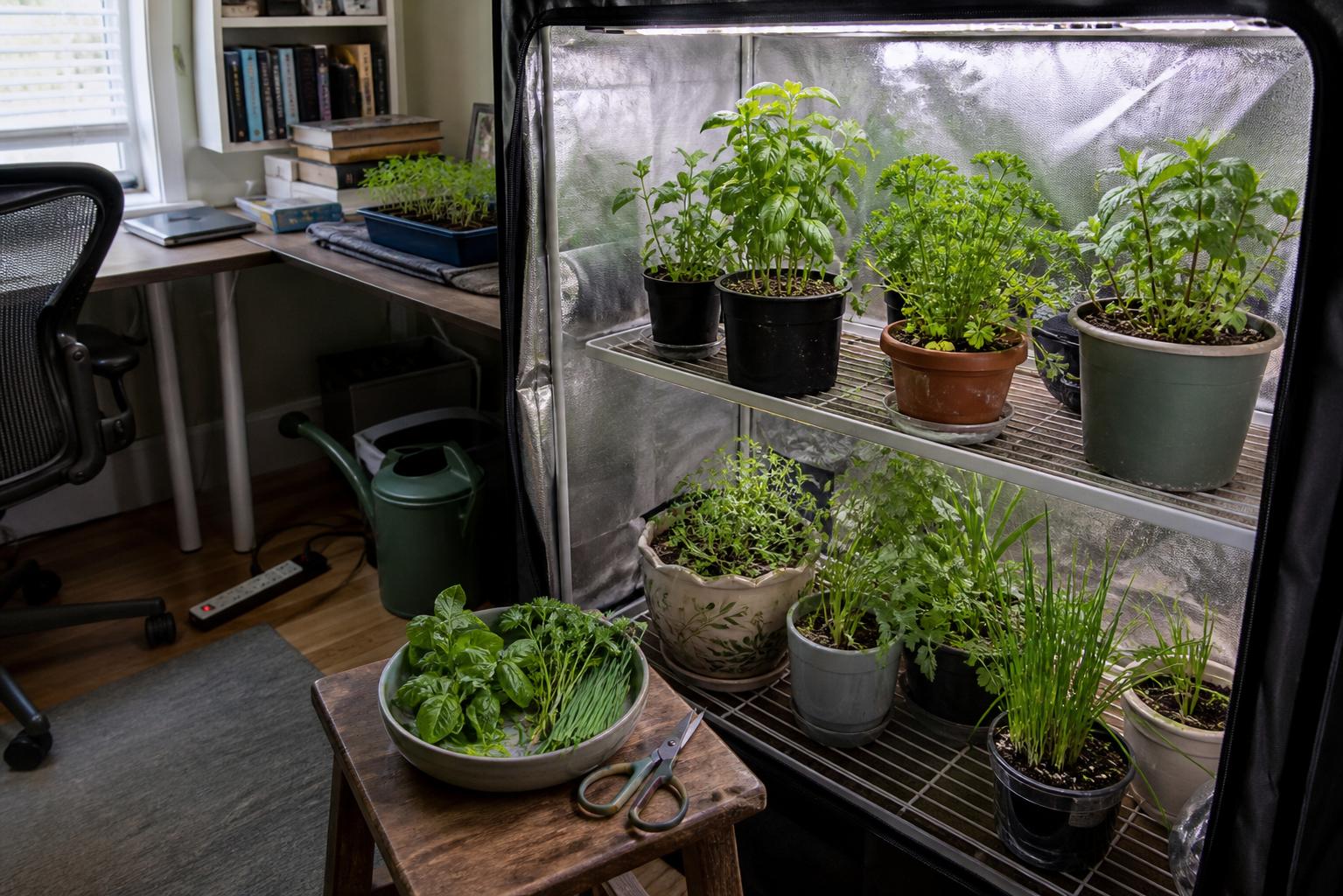
Harvesting herbs inside a grow tent should make the plants fuller and more productive. Yet it is common to make one large cut, enjoy the harvest, and then wonder why the plants take weeks to recover.
A grow tent changes how herbs respond to cutting. Light comes from one direction, airflow is concentrated, and every plant competes for a limited patch of canopy space. A good harvest is therefore not just about removing leaves. It is also a chance to shape the canopy so fresh growth receives light without weakening the plant.
My preference is frequent, selective harvesting rather than occasional heavy cutting. It produces slightly smaller harvests on any single day, but it keeps useful herbs coming from the grow tent more consistently. For an apartment grower who wants basil for dinner rather than a large crop all at once, that tradeoff makes sense.
Why Herbs Sometimes Stall After a Harvest
The most common problem is removing too much active growth at once. Leaves are the plant’s working surface. If most of them disappear, the roots still need moisture and oxygen, but the plant has much less leaf area available to power new growth.
One mistake I made early on was cutting basil to the height I wanted without paying enough attention to the nodes below each cut. Some stems had healthy leaf pairs ready to grow. Others were left as nearly bare sticks under the grow tent light. The first stems branched quickly, while the bare ones sat there doing very little.
Crowding creates another problem. A tall basil plant can shade parsley, thyme, and young seedlings underneath it. When the basil is finally cut back, those shaded leaves are suddenly exposed to much stronger light. I have noticed that pale inner leaves sometimes curl or develop dry patches after a major canopy opening, especially when the fixture is already close.
Harvesting can also expose weak stems that had been leaning on neighboring plants. Inside a packed grow tent, the canopy can look sturdy while the plants are actually supporting one another. Once a large handful is removed, remaining stems may fall toward the fan or into another pot.
Make the Cut According to How the Herb Grows
Not every herb should be harvested the same way. Before cutting, look for where new growth naturally emerges.
Basil and Mint
Basil and mint produce pairs of leaves along their stems. Cut just above a healthy pair, leaving that pair attached to the plant. Small shoots in the leaf joints will usually become two new branches.
Do not remove random individual basil leaves from every part of the plant unless you only need one or two. Repeatedly stripping large leaves while leaving tall bare stems creates an awkward, top heavy plant that wastes vertical space inside the grow tent. Taking a stem tip above a leaf pair gives you a useful harvest and improves the canopy shape at the same time.
Oregano, Thyme, and Sage
Take the soft leafy ends from oregano and thyme, cutting above a leafy junction. Avoid cutting deeply into old, bare, woody growth. That section may regrow slowly, particularly under moderate grow tent lighting.
Sage can be treated similarly, although I harvest it more conservatively. Its larger leaves make each cut more significant. Leave several healthy leaves on every stem you expect to keep.
Parsley and Cilantro
Parsley and cilantro grow differently from basil. Remove the oldest outer stems close to the base while leaving the younger center growth intact. Cutting halfway along a parsley stem leaves an unproductive stub and does not encourage useful branching.
Cilantro deserves realistic expectations. Harvesting outer stems can extend its useful period, but it will eventually try to flower, especially in a warm grow tent. Cutting flowers may delay the process, but it will not turn mature cilantro back into a young leafy plant. I would start replacement cilantro regularly rather than devote valuable tent space to a struggling old plant.
Chives
Cut chive leaves a few centimeters above the growing medium. I prefer taking a section of the clump rather than flattening the whole plant at once. The untouched leaves keep working while the cut section returns.
Choose a Sensible Harvest Time
I usually harvest near the beginning of the grow tent light cycle, once the lights are on and I can inspect the plants properly. The leaves are generally firm, and I can spot pests, damaged growth, or damp foliage before anything goes into the kitchen.
Use clean scissors for thicker or crowded stems. Fingers are convenient for tender basil tips, but pulling at a stubborn stem can loosen roots in a small container. Clean cuts also matter when many plants share the humid air inside a grow tent.
As a practical limit, remove no more than about one third of a healthy established plant at one time. Small plants, recently transplanted herbs, and anything recovering from heat or root trouble should lose much less. The exact percentage matters less than leaving multiple healthy growing points and enough leaves to support recovery.
If the grow tent canopy is badly overgrown, resist the temptation to correct everything in one session. Thin it in stages over several light cycles. This is slower, but it reduces stress and prevents shaded leaves from receiving a sudden blast of light.
Use Harvesting to Manage the Canopy
Before cutting, look across the canopy at fixture height. Remove growth that is reaching into the light, blocking shorter herbs, pressing against the tent wall, or restricting air movement between pots.
I prioritize access as well as maximum leaf production. A grow tent packed so tightly that the rear pots cannot be inspected will eventually cost more herbs than the extra foliage is worth. Leave enough space to reach the growing medium, lift a pot, and check the back corners without crushing another plant.
Mixed herb tents need compromise. Basil and mint often recover faster than parsley, thyme, or sage. I keep the aggressive herbs trimmed to the height of their slower neighbors rather than raising the light to suit one tall plant. This maintains a more even canopy and makes better use of electricity.
Adjust Care After a Large Harvest
A freshly reduced plant usually uses water more slowly because it has fewer leaves releasing moisture. Check the growing medium before watering instead of following the old schedule. I have seen growers harvest heavily and then soak the pot on schedule, which leaves the roots sitting wet while regrowth is still slow.
Do not add extra fertilizer just because the plant looks smaller. If nutrition was adequate before harvest, normal feeding is enough. Excess fertilizer will not replace missing leaf area and can create salt buildup in small grow tent containers.
Keep the light at its existing height for the first day or two unless the remaining canopy is clearly too close. Do not immediately lower the fixture to chase faster regrowth. Newly exposed leaves may need time to adjust.
Check the circulation fan after reshaping the canopy. Air that previously hit a wall of foliage may now blow directly onto tender shoots. Reposition the existing fan before buying another one. In a small home, that avoids extra noise, electricity use, and heat while still keeping gentle movement through the grow tent.
What I Would Do at the Next Harvest
Start with the tallest healthy herb in your grow tent. Find a strong node below the height you want, make one clean cut, and then step back to inspect the canopy before cutting again. Leave at least two useful growing points on each harvested stem and stop well before the plant looks stripped.
Afterward, remove fallen leaves, check that no stem is leaning into the fan, and test the growing medium before adding water. That short routine turns harvesting into canopy maintenance, which is what keeps a small grow tent producing useful herbs week after week.


