
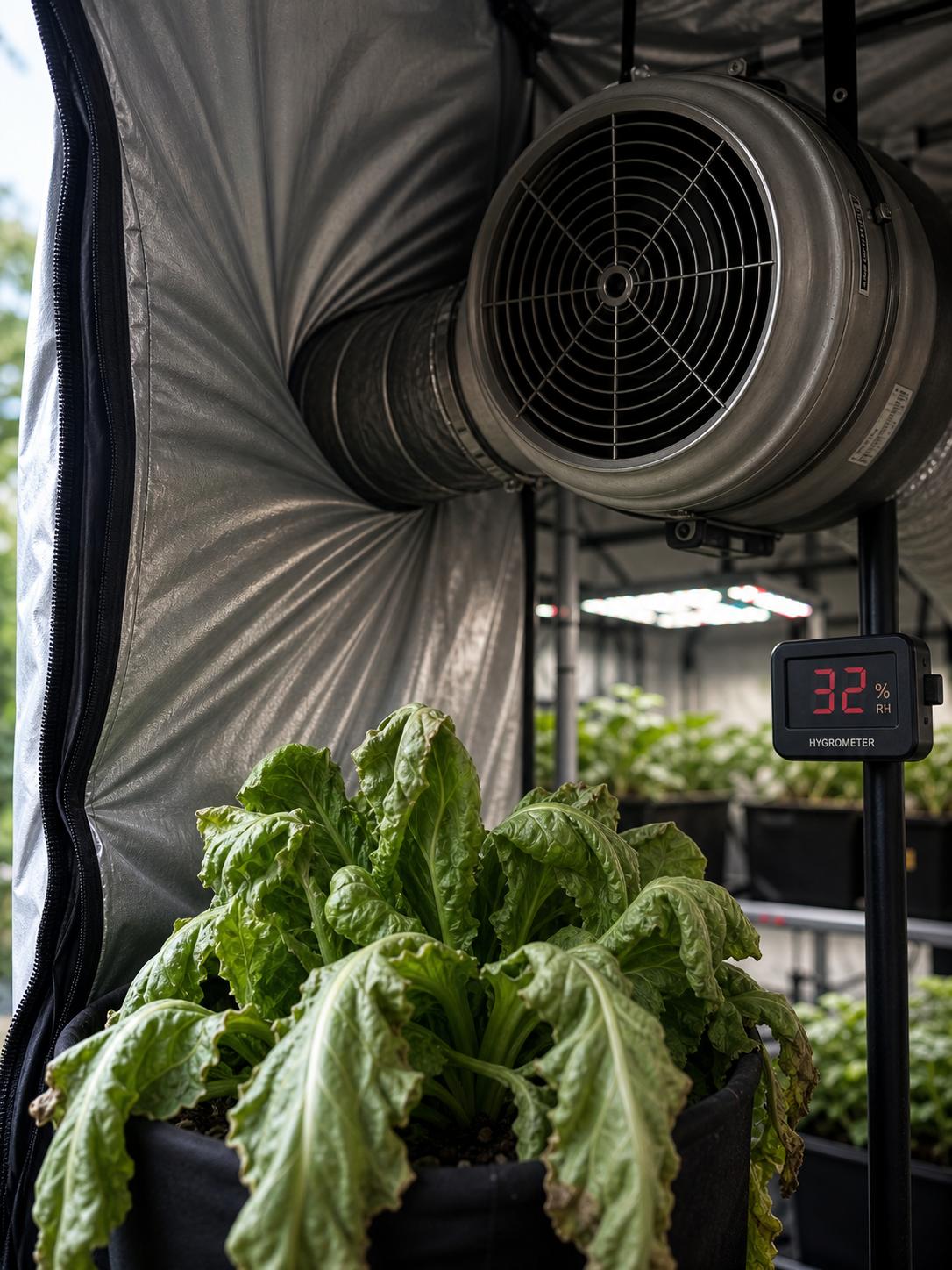
Most growers assume stronger ventilation is always better inside a grow tent. I used to think the same. If a little airflow keeps things fresh, then a powerful inline fan must be even safer. Right?
In reality, an oversized inline fan inside a grow tent can quietly throw your entire environment off balance. Too much airflow changes pressure, strips humidity, stresses plant structure, and makes stable dialing almost impossible. I have seen more tents struggle from overpowering exhaust than from weak ventilation.
This is not about airflow in general. This is specifically about what happens inside a sealed grow tent environment when your inline fan is simply too powerful for the space.
The Subtle Signs Your Grow Tent Is Over Ventilated
Over ventilation rarely looks dramatic at first. It usually feels like something just will not stabilize.
Your Tent Walls Are Sucked In Aggressively
Some negative pressure is good in a grow tent. It keeps odors filtered and airflow directional. But if your tent walls are pulled inward so tightly that the frame bows or the door is difficult to zip, your fan is likely overpowering the intake capacity.
I once ran a high CFM inline fan in a small four by four grow tent because it was on sale. The walls pulled in so hard that my passive intake flaps collapsed completely. I thought that meant great air exchange. What it really meant was imbalance.
Humidity Refuses to Stay Up
If you are constantly running a humidifier inside your grow tent and humidity drops the moment the fan ramps up, the fan may be exchanging air faster than your humidifier can compensate.
What surprised me most is how easily this can happen in mid sized grow tents. Even with healthy transpiration from plants, excessive exhaust strips moisture out faster than it can accumulate.
Plants Show Wind Stress Without Strong Circulation Fans
Inline exhaust fans are not supposed to act like leaf beating wind. But inside a small grow tent, a powerful exhaust can create a pressure pulled airflow pattern that bends stems in one direction constantly.
If your oscillating fans are set low but your plants still lean toward the filter side of the grow tent, that is a sign the overall airflow volume is too high.
Temperature Swings Are Worse, Not Better
One counterintuitive effect inside grow tents is that too much exhaust can exaggerate temperature swings. If your lung room fluctuates, a powerful inline fan pulls those fluctuations directly into the tent environment.
I have noticed that slightly slower air exchange often produces more stable canopy temperatures, especially during lights off.
What Excessive Negative Pressure Really Does Inside a Grow Tent
Grow tents are flexible structures. That is part of their advantage. But that flexibility makes them sensitive to air imbalance.
Structural Strain
Constant high negative pressure puts ongoing stress on tent zippers, seams, and poles. Over time, this can cause small light leaks or warped frames. It does not happen overnight, but I have replaced more than one zipper on a grow tent that was chronically over exhausted.
Humidity Instability
Inside grow tents, humidity depends on a balance between plant transpiration, humidification, and air exchange. If your inline fan cycles at full speed frequently, humidity will spike and crash in rhythm with the fan.
This instability is often mistaken for a weak humidifier, when the real problem is excessive air exchange.
CO2 Dilution Faster Than Necessary
Even without supplemental CO2, plants in a grow tent benefit from allowing some air to linger briefly. When an inline fan replaces the entire tent air volume extremely quickly, the system becomes less efficient and harder to control.
I eventually realized that maximum airflow is not the same as optimal airflow.
How to Diagnose Fan Oversizing Step by Step
If you suspect your inline fan is too powerful for your grow tent, work through this simple sequence.
Step 1: Check Wall Deflection
Close all passive intakes except the intended ones. Turn your inline fan to its usual setting. Observe how far the tent walls pull inward. Mild inward movement is correct. Deep bowing or collapsing intake flaps suggest excessive negative pressure.
Step 2: Measure Air Exchange Behavior
Watch how quickly temperature and humidity change when the fan ramps from low to high. Inside a properly balanced grow tent, readings should adjust gradually. Sharp drops within seconds usually mean air is being exchanged too aggressively.
Step 3: Temporarily Reduce Speed
If you have a fan controller, drop the inline fan speed by twenty to thirty percent for several hours. Monitor humidity stability, wall tension, and plant posture. In many cases, conditions actually improve.
I learned this after fighting low humidity for weeks. The solution was not a bigger humidifier. It was less fan speed.
Step 4: Inspect Intake Capacity
Inside grow tents that rely on passive intake, the exhaust fan can only pull as much air as openings allow. If your inline fan rating greatly exceeds the intake area, you create extreme suction. Either add controlled intake openings or reduce fan output.
Right Sizing and Tuning Your Inline Fan for Stable Performance
Right sizing is not about buying the weakest fan possible. It is about building overhead into the system without running at maximum power daily.
Avoid Running Full Speed as a Baseline
One mistake I see often is growers buying a powerful inline fan and letting it run at full speed because they assume that is safest. A better approach inside a grow tent is to buy slightly above your calculated needs, then run it at moderated speed with a controller.
The tradeoff is cost. Larger fans with controllers cost more upfront. But they offer quieter operation, better control, and longer lifespan when not pushed constantly.
Use a Fan Controller With Environmental Triggers
In my experience, the most stable grow tent setups rely on temperature and humidity triggered fan control. Instead of blasting air continuously, the inline fan increases gradually only when thresholds are crossed. This prevents constant over ventilation.
I prefer this approach over fixed timer cycling because it reacts to real conditions inside the grow tent rather than the clock.
Match Carbon Filter and Ducting Properly
An oversized inline fan paired with restrictive ducting can create uneven performance. The fan works harder, negative pressure increases, yet airflow remains turbulent. Inside grow tents, smooth short duct runs with matched diameter components allow lower speeds to perform efficiently.
Consider Adding Controlled Intake
If you truly need high airflow during flowering in a dense canopy, adding a small intake fan can balance pressure inside the grow tent. This reduces structural strain and smooths humidity shifts.
However, I only recommend active intake after attempting to tune the exhaust speed down. Simpler systems are easier to stabilize.
Troubleshooting Quick Questions
Is stronger negative pressure better for odor control?
Within reason, yes. But extreme suction does not improve filtration once air is already moving efficiently through the carbon filter. It only strains the grow tent structure.
Can I just open more passive intake flaps?
Sometimes. But if your inline fan is massively oversized, opening every flap may still result in aggressive wall deflection. Speed control is usually the cleaner fix inside grow tents.
My humidity is low during early growth. Is the fan always the cause?
Not always. But if humidity rises quickly when you lower exhaust speed, that is a clear sign your grow tent was being over ventilated.
The Balanced Approach
After years of running different grow tents, I have come to value balance over brute force. A calm steady airflow keeps temperatures even, humidity stable, and plant structure upright. An oversized inline fan running too hard makes the entire system feel reactive and unstable.
If your grow tent feels like it is fighting you, do not assume you need more equipment. Sometimes the solution is less power, not more.


