
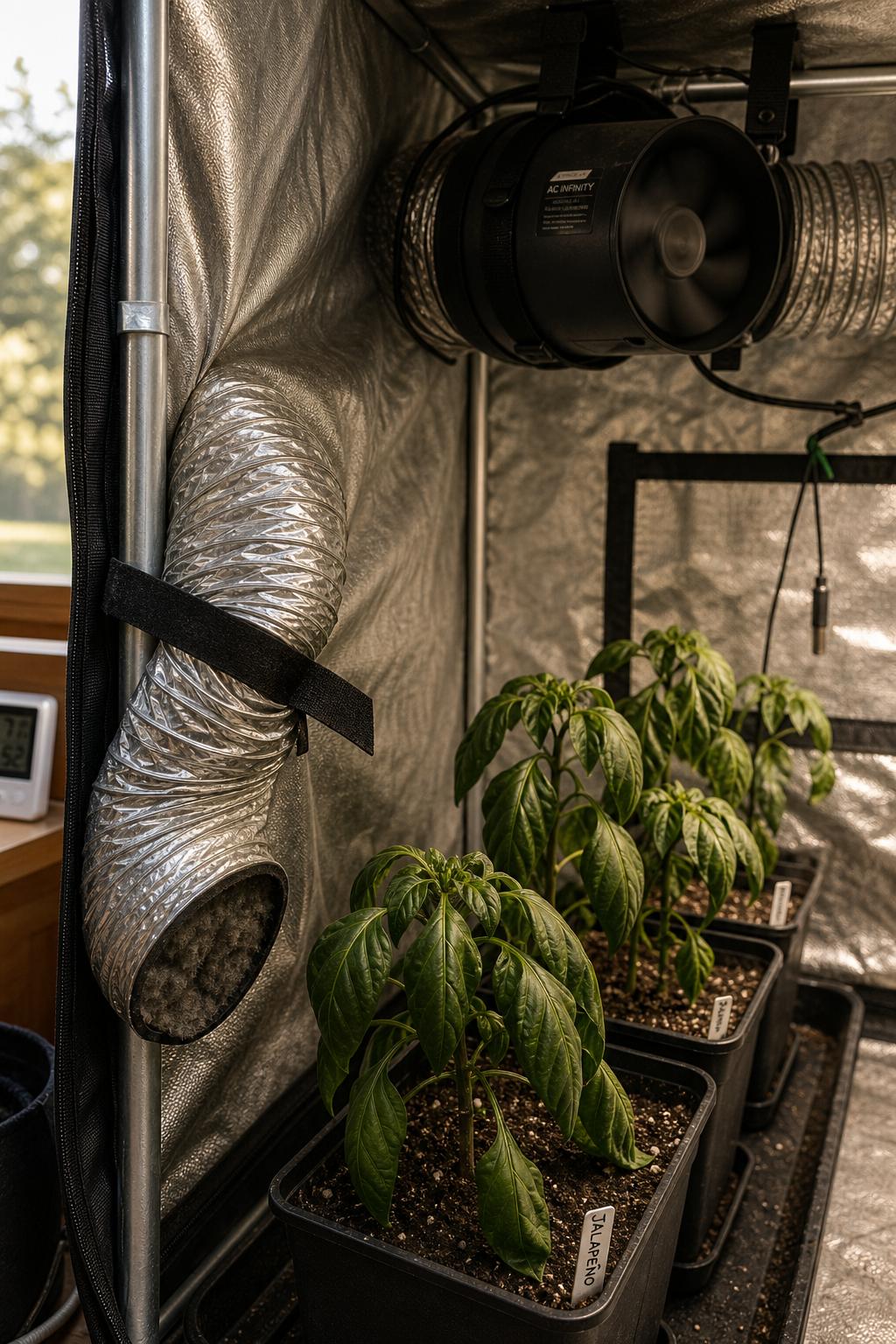
Inside a grow tent, airflow is not just about moving air around. It is about pressure balance, fan efficiency, and structural stability. When your grow tent intake is too restricted, the entire system starts compensating in ways that are easy to overlook but harmful over time.
I have seen many grow tents struggle with subtle intake restriction. The exhaust fan works harder, the tent walls suck inward, circulation becomes uneven, and plants develop weak structure. The problem is rarely obvious at first, but once you understand the mechanics inside a closed grow tent system, the signs become clear.
The early signs your grow tent is starving for intake air
The first visible clue is excessive negative pressure. Some inward pull on the tent walls is normal inside grow tents. That is how carbon filter systems stay sealed. But when intake airflow is restricted, the tent walls pull inward dramatically. Zippers strain. Support poles bend slightly. Doors feel harder to open.
The second sign is loud or strained exhaust fan noise. When your exhaust fan cannot get enough intake air, it begins pulling against resistance. The motor ramps up. You may notice a higher pitch sound or vibration through the ducting. Inside a grow tent, this means the fan is trying to move more air than the intake can supply.
Another early indicator is inconsistent airflow across the canopy level inside the grow tent. Your circulation fans may still be running, but the air feels stagnant in certain pockets. You might notice leaves that barely move while other areas receive too much direct airflow.
Finally, plants reveal structural stress. In a properly balanced grow tent, fresh air enters passively through intake ports and replaces exhausted air smoothly. When intake is restricted, air enters through gaps around zippers or seams instead. This creates uneven drafts. Plants develop lopsided stem strength because airflow direction is inconsistent.
How restricted intake throws off pressure, airflow patterns, and fan performance
Grow tents are controlled pressure environments. Your exhaust fan creates negative pressure to pull air through a carbon filter and out of the tent. Fresh air must replace that volume through intake ports. If it cannot, the system destabilizes.
Pressure imbalance inside the grow tent
When intake surface area is too small, the exhaust fan pulls harder than intended. The grow tent becomes over pressurized negatively. Instead of steady air exchange, you get air fighting to enter wherever it can. This creates micro turbulence near seams and duct ports.
Excessive negative pressure also reduces the true airflow rating of your exhaust fan. Inline fans are rated under ideal conditions. Inside a restricted grow tent, static pressure increases and actual cubic foot movement drops. You think your fan is moving 400 cubic feet per minute, but it may be delivering far less.
Airflow pattern distortion
Inside grow tents, air should ideally enter low, travel across the root zone and canopy, then exit high through the carbon filter. Restricted intake disrupts this path. Air jets in aggressively through any small gap available. Instead of broad smooth movement, you get concentrated streams.
This affects how oscillating fans interact with fresh intake air. Rather than assisting circulation, they sometimes push against incoming jets, creating chaotic movement. That turbulence weakens consistent stem stimulation and can create dry pockets in the canopy even if overall humidity appears acceptable.
Equipment stress
Your exhaust fan is the most affected component inside the grow tent. It works under higher load for longer periods. Motors run warmer. Bearings wear faster. Carbon filters become less efficient because airflow through the filter media is inconsistent and forceful rather than smooth.
Over time, restricted intake reduces the lifespan of your ventilation equipment. Many growers replace fans without realizing the root issue is intake limitation, not fan quality.
Simple diagnostic checks to confirm an intake bottleneck
You can confirm restricted intake inside your grow tent with a few controlled checks.
Step 1 Open an intake panel temporarily
Run your grow tent as usual with all vents in their normal configuration. Observe wall deflection and fan sound. Then open an additional intake flap fully. If the tent walls relax noticeably and fan noise drops within thirty seconds, you have confirmed an intake bottleneck.
Step 2 Compare airflow at the exhaust
Place your hand near the exhaust duct outlet. Note the airflow intensity. Now open more intake area. If exhaust airflow becomes stronger and more stable, the previous restriction was limiting fan performance.
Step 3 Inspect intake path obstructions
Inside grow tents, intake vents often have mesh screens. These collect dust quickly. Check for dust accumulation. Also inspect if ducting is kinked or if you are pulling intake air through long flexible duct runs. Every bend increases resistance.
Step 4 Observe tent structure under full fan speed
Turn your exhaust fan to maximum speed. If the grow tent frame visibly bows inward or doors become difficult to unzip, your intake area is insufficient for the fan capacity installed.
How to fix restricted intake without oversizing your system
The goal is not to eliminate negative pressure. Grow tents require slight negative pressure for odor control. The goal is balanced negative pressure, not aggressive collapse.
Increase passive intake area
The simplest fix inside a grow tent is opening additional lower intake vents. Multiple smaller openings are better than a single narrow one. This distributes incoming airflow evenly across floor level.
If your tent only has small mesh windows, consider removing inner flaps completely while keeping outer screening secured. Increasing surface area reduces resistance without altering your exhaust system.
Shorten or simplify intake ducting
If you are routing intake air from another room into your grow tent, reduce duct length. Avoid sharp bends. Keep runs as straight as possible. Every unnecessary curve adds static pressure.
Add a controlled intake fan if needed
If passive intake area is maxed out and negative pressure is still extreme, install a small inline fan as an active intake. Choose a fan rated lower than your exhaust fan. The exhaust must still dominate to maintain odor control inside the grow tent.
Run the intake fan at a speed that allows gentle wall deflection rather than tight inward pull. The tent should look firm but not stressed.
Match intake area to exhaust capacity
A practical guideline inside grow tents is to provide at least two to three times as much open intake surface area as the cross sectional area of your exhaust duct. This ensures the exhaust fan is not starved for air.
Troubleshooting questions
Is strong negative pressure always bad in a grow tent
No. Mild inward pull is correct and desirable. Problems begin when the tent structure visibly strains, airflow sounds harsh, or opening a vent dramatically improves fan performance.
Can restricted intake cause temperature instability inside grow tents
Yes, but indirectly. When fans underperform due to intake starvation, air exchange slows. This can cause uneven heat layering near lights. The root issue is airflow resistance, not the lighting system itself.
Will upgrading to a bigger exhaust fan solve intake restriction
No. A larger exhaust fan without increased intake area will intensify negative pressure and worsen equipment strain. Always address intake capacity first inside a grow tent ventilation system.
Restricted intake is one of the most underestimated issues in grow tents. It quietly reduces fan efficiency, distorts airflow patterns, and stresses both plants and equipment. Once intake area matches exhaust demand, the grow tent stabilizes. Air moves smoothly, fans run quieter, and plant structure improves because airflow becomes consistent rather than chaotic.
Balanced airflow inside a grow tent is not about power. It is about proportion.


