
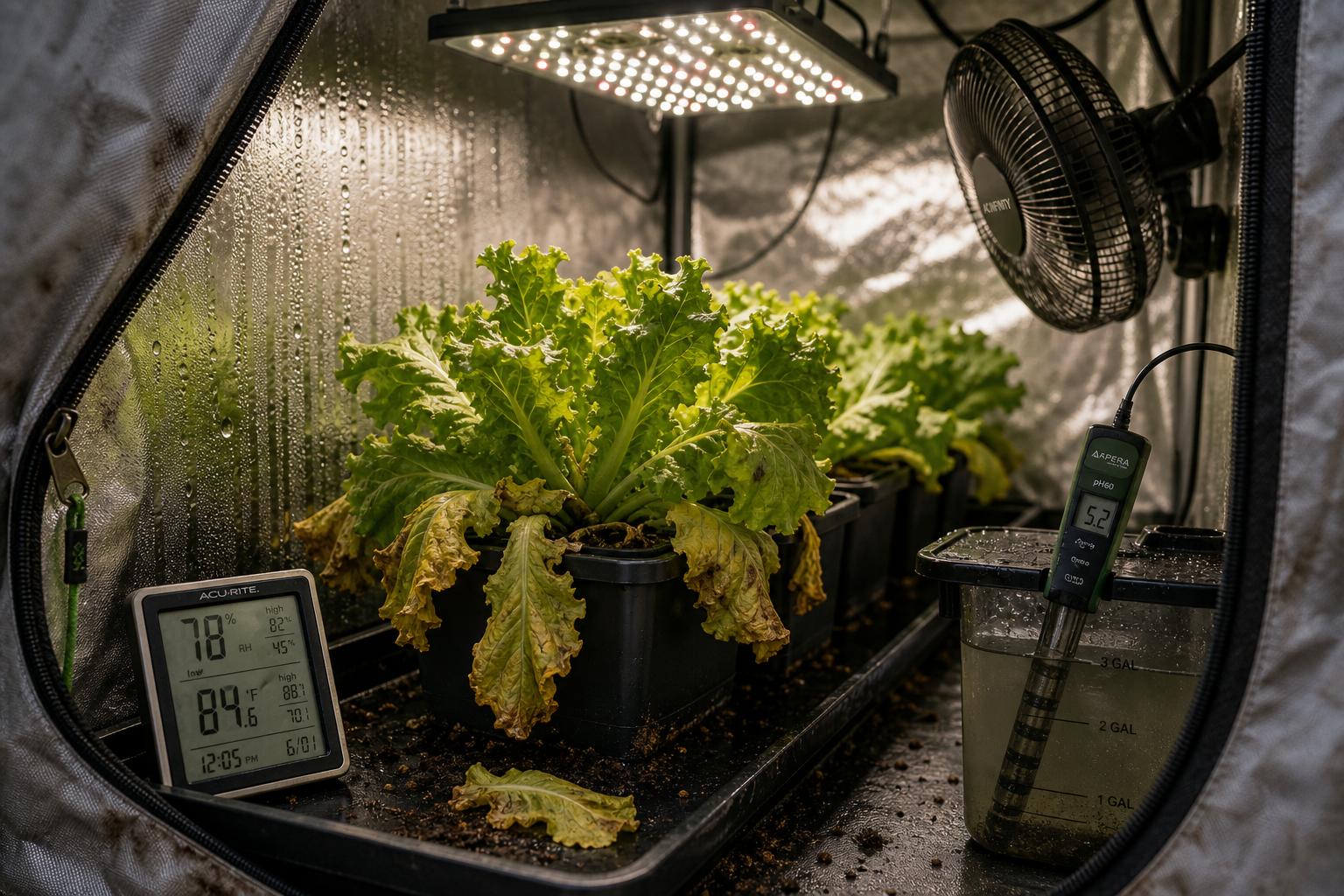
You dial in a grow tent once, get great results, and assume it will keep performing the same way forever. Then one run later, yields drop, leaves taco under the same light, humidity spikes at night, or growth just feels slower. Nothing major changed, yet everything feels off.
I have seen this happen in my own grow tents more times than I want to admit. What looks like a stable system is often just a balanced system drifting slowly out of alignment. A grow tent is a closed environment, and small shifts compound. The real problem usually is not the plant. It is the system quietly changing underneath you.
The Illusion of Stability in a Grow Tent
A grow tent feels controlled. You set the light height, fan speed, intake vents, and nutrient routine. After one successful cycle, it is tempting to treat the setup as solved.
What surprised me most over the years is how often a grow tent that worked perfectly last round fails the next round without any dramatic change. In almost every case, it was not bad genetics or mysterious stress. It was drift.
Inside a grow tent, stability depends on balance between:
- Light intensity and canopy density
- Exhaust rate and passive intake flow
- Humidity production and dehumidification
- Root mass and container volume
- Equipment cleanliness and airflow resistance
When one of these shifts slightly, the whole environment responds. The problem is that the change is gradual, so we blame everything else first.
What Quietly Changes Inside a Controlled Grow Tent Environment
1. Carbon Filters and Airflow Resistance
One mistake I see often is assuming airflow remains constant. In a grow tent, your inline fan might be set to the same speed, but the carbon filter slowly clogs over cycles. Airflow drops. Negative pressure weakens. Humidity rises at night.
I learned this after chasing a late flower humidity spike in one of my grow tents. My settings were identical to the previous run. The only difference was a filter that had seen two heavy cycles. Replacing it restored airflow instantly.
Air resistance creeps up slowly. You do not notice until problems show.
2. Light Output Degradation
Even quality LED fixtures lose output over time, and drivers can run hotter in a dusty grow tent. If you do not clean heat sinks and check actual canopy intensity occasionally, plants may receive less light than your dimmer suggests.
In my experience, when a grow tent suddenly produces smaller buds without obvious stress, light drift is often involved. Dust buildup alone can reduce effective output enough to impact density.
3. Seasonal Room Changes Outside the Grow Tent
Your grow tent does not exist in a vacuum. The room around it changes with seasons. If the surrounding room gets more humid in summer or drier in winter, your tent ventilation system responds differently.
I eventually realized one of my grow tents only struggled in late summer. The issue was not inside the tent. The intake air entering the grow tent carried more humidity than my exhaust system could handle at the same fan speed.
4. Canopy Mass and Transpiration Differences
Even if you grow the same strain inside the same grow tent, plant size can change. A more vigorous phenotype or heavier training leads to increased transpiration. That means more moisture load in the tent.
Many growers forget that a fuller canopy changes airflow patterns. Dead zones form. Leaf surface area increases humidity spikes during lights off.
5. Minor Hardware Fatigue
Oscillating fans slow down. Fan bearings collect dust. Ducting connections loosen slightly. Zippers warp. These are small changes, but inside a grow tent, small air leaks or reduced circulation create measurable differences over time.
A Step by Step Diagnostic Reset for a Grow Tent That Drifted
When a grow tent that used to perform well begins underperforming, I do not guess anymore. I reset methodically. This is the process I follow.
Step 1: Empty the Grow Tent Completely
Take everything out. Lights, fans where possible, trays, containers. Run the inline fan alone. Feel the airflow at the exhaust. Compare it to what you remember from earlier cycles.
If airflow feels weak, disconnect the carbon filter temporarily and test again. If airflow jumps noticeably, the filter is restricting your grow tent.
Step 2: Inspect and Clean Air Paths
Wipe down fan blades. Vacuum heat sinks on LED fixtures. Check ducting for bends or internal dust buildup. Make sure intake flaps fully open under negative pressure.
In a grow tent, airflow is the backbone. Any restriction multiplies environmental instability.
Step 3: Recalibrate Environmental Sensors
Digital hygrometers drift. I cross check mine once per cycle inside the grow tent using a known reference meter. I have found differences of five percent humidity or more between cheap sensors and calibrated ones.
If your grow tent feels wrong but the numbers look fine, verify the numbers.
Step 4: Measure Actual Light at Canopy Level
Do not rely on dimmer settings. Use a light meter or a reliable phone based measurement app to check consistency across the canopy. Confirm that hanging height and intensity match your original successful run.
If light levels are lower, compensate or service the fixture.
Step 5: Evaluate External Room Conditions
Stand in the room where the grow tent sits. Check temperature and humidity outside the tent during lights on and lights off. If the surrounding air changed seasonally, your tent system may need a stronger dehumidifier or higher fan speed.
Step 6: Rebalance Rather Than Patch
Do not just turn one thing up randomly. Rebalance the grow tent as a system. If humidity is climbing, increase exhaust slightly and verify intake flow. If leaves taco under the same light, confirm temperature at canopy after airflow adjustments.
A drifted grow tent needs recalibration, not guesswork.
Common Mistakes When a Grow Tent Stops Performing
- Changing nutrients before checking airflow
- Lowering lights without measuring actual intensity
- Adding more fans instead of fixing blocked exhaust
- Blaming genetics for environmental inconsistency
I have made the mistake of adjusting feeding schedules when the real issue was poor air exchange inside my grow tent. Environmental instability often impersonates nutrient problems.
How to Build a Grow Tent System That Stays Reliable Long Term
No grow tent stays perfect without maintenance. The goal is not to lock in numbers forever. The goal is to slow drift and catch it early.
Schedule Equipment Rotation
Carbon filters have a lifespan. Oscillating fans wear down. Replace critical airflow components on a schedule rather than waiting for failure. In my opinion, proactive replacement is better than pushing equipment to its limit inside a grow tent. The alternative is unstable late flower conditions when density matters most.
Log Environmental Data Across Runs
I keep simple notes for each grow tent cycle. Average day temperature. Average night humidity. Fan speed setting. Light height. When a run underperforms, I compare it to previous logs. Patterns become obvious.
Clean Between Every Cycle
Dust and residue accumulate faster than most growers expect inside grow tents. I wipe walls, clean equipment, and vacuum intake areas after every harvest. Clean tents hold stable conditions better because airflow remains predictable.
Overspec Key Components
This is one tradeoff where I lean toward stronger equipment. A slightly oversized inline fan running at lower speed is more stable than a fan constantly near maximum output. Headroom prevents drift when environmental load increases.
The same applies to dehumidification in humid climates. Marginal capacity systems fail first when seasons change.
FAQ: When a Stable Grow Tent Feels Off
Can a grow tent really change that much if I did not adjust anything?
Yes. Filters clog, sensors drift, seasons shift, and plant mass varies. In a closed grow tent system, small changes accumulate.
Should I completely tear down the setup every time?
Not every cycle, but a partial diagnostic reset when performance drops is worth the effort. It is faster than chasing imaginary deficiencies.
Is it usually one big cause or several small ones?
In my experience, it is usually several small shifts stacking together. Restoring one weak link often stabilizes the entire grow tent.
If your grow tent worked before, the blueprint is already proven. The key is understanding that controlled environments are not static. They drift. When you treat your grow tent like a dynamic system and recalibrate it deliberately, performance comes back without guesswork.


