
Mold inside a grow tent rarely starts with visible spots. By the time you see fuzzy growth on soil or leaves, the conditions that allowed it have already been stable for days. In my experience, grow tents always give off quiet signals before mold becomes obvious. The problem is most growers are watching the plants but not watching the system.
After years of running different grow tents in tight indoor spaces, I learned to pay attention to airflow behavior, surface moisture patterns, and subtle humidity shifts. Most mold outbreaks are predictable if you know what to look for. This article focuses on those early signs and what to adjust inside your grow tent before mold ever shows itself.
The Quiet Signals Your Grow Tent Gives Off Before Mold Becomes Visible
The first warning sign is usually a change in how your grow tent breathes. I have noticed that right before mold appears, the tent feels heavier when I unzip it. The air does not feel stagnant exactly, but it lacks crisp movement. That almost imperceptible stillness is often the first system level clue.
Another early signal is uneven fabric dampness. Run your hand along the inside walls of your grow tent shortly after lights off. If some areas feel noticeably cooler or slightly damp compared to others, you likely have microclimates forming. Mold thrives in these small pockets long before it spreads.
Pay attention to your carbon filter smell as well. One mistake I see often is assuming any earthy smell is just healthy soil. Inside a sealed grow tent, a faint musty scent that lingers even with good ventilation can mean spores are beginning to colonize somewhere hidden.
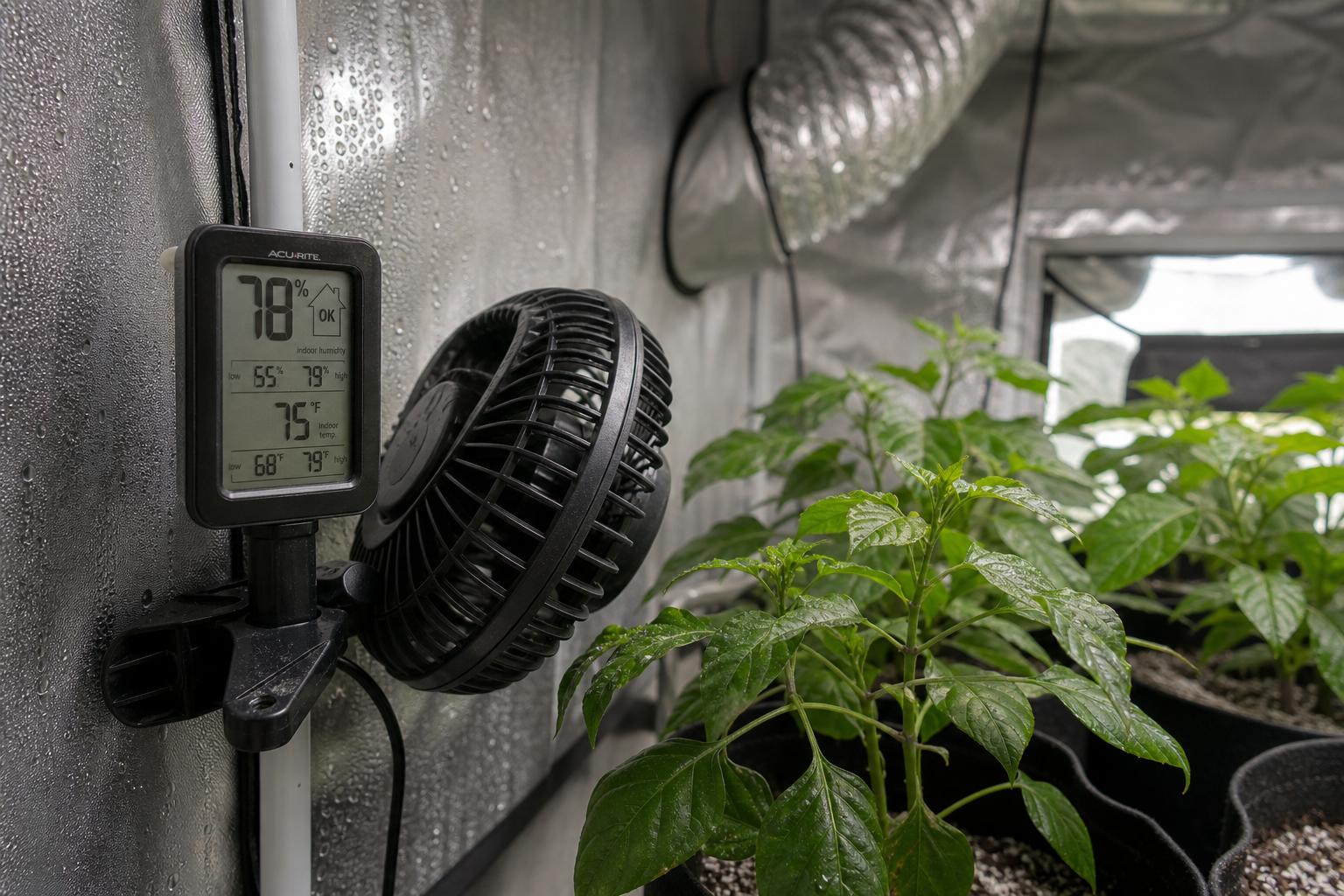
What surprised me most over the years is how often humidity readings look acceptable while mold is quietly establishing itself in one corner. A single hygrometer in the center of a grow tent does not tell the full story.
How Airflow Patterns and Microclimates Create Hidden Moisture Pockets
Every grow tent develops airflow patterns based on fan placement, duct routing, and plant density. If your oscillating fan sweeps mostly across the canopy but barely disturbs the lower corners, you are creating moisture reservoirs near the soil surface.
I learned this the hard way after losing a full canopy to powdery mildew in one of my earlier grow tents. My top ventilation looked perfect. Leaves were gently moving. Humidity averaged in range. But the back left floor corner had almost no airflow. That is where mold first appeared on the fabric base and eventually spread upward.
Inside a grow tent, light cycles also contribute to these pockets. When lights go off, temperature drops quickly. If your exhaust fan slows at night to reduce noise, humidity can spike locally even if the controller average looks stable. Those nightly spikes create condensation on lower leaves and tent poles.
In my experience, dense plant walls are one of the biggest contributors. Grow tents encourage tight spacing for yield. But packed canopies trap transpiration moisture. If you cannot see slight leaf movement in the interior of your canopy, that area is at risk.
A common suggestion is to simply lower overall humidity. I disagree with relying only on that approach. Dropping humidity too far stresses plants and increases VPD beyond ideal ranges. I prefer optimizing airflow distribution inside the grow tent instead of chasing lower numbers.
A Step by Step Checklist to Confirm Early Mold Risk Inside Your Grow Tent
When I suspect mold risk in a grow tent, I run through this checklist before touching anything major.
Step 1: Inspect After Lights Off
Open your grow tent thirty to sixty minutes after lights off. Shine a flashlight across lower leaves and tent walls at an angle. Look for subtle moisture sheen. If you see reflective damp patches, humidity is condensing somewhere.
Step 2: Check Airflow at Floor Level
Place your hand near each bottom corner of your grow tent. You should feel gentle air movement everywhere. If one corner feels still compared to the area near your intake or fan, that zone is vulnerable.
Step 3: Compare Multiple Hygrometer Readings
Move a small hygrometer to different parts of your grow tent for a day at a time. I keep two cheap units and rotate them. Variations of more than five percent between canopy center and lower corners tell me airflow needs adjusting.
Step 4: Inspect Fabric and Zippers
Mold in grow tents often starts on fabric seams or near zippers where condensation collects. Gently inspect stitching lines for faint discoloration. Do this before every new growth stage, especially when plant mass increases.
Step 5: Observe Runoff Drying Time
After watering inside your grow tent, note how long the top layer of soil takes to lose its surface sheen. If certain pots stay damp significantly longer, air distribution across the floor is uneven.
This checklist takes less than fifteen minutes and catches most problems before visible mold forms.
Small System Adjustments That Stop Mold Without Overhauling Your Setup
You do not need to rebuild your grow tent to prevent mold. Small directional changes often solve the issue.
First, reposition oscillating fans so at least one fan disrupts air below the canopy. I prefer one fan angled slightly downward rather than parallel to the canopy. Alternatives like adding a dehumidifier inside the grow tent are less preferred for me because they add heat and reduce space. Air redistribution is usually enough.
Second, increase exhaust consistency at night. Instead of letting your grow tent exhaust cycle down drastically, maintain a steady low setting to prevent humidity pooling during lights off. I eventually realized that nighttime stability matters more than daytime numbers.
Third, adjust plant spacing within the constraints of your grow tent. I know yield optimization is tempting. But if leaves are physically layered with no gaps, you are building a moisture trap. Slight defoliation in interior zones often solves recurring mold signals.
Fourth, elevate pots slightly off the floor of the grow tent. Even a small riser improves airflow under containers and shortens surface drying time. Since making this change, I rarely see condensation collecting at the tent base.
Troubleshooting Early Mold Risk in Your Grow Tent
If humidity readings look normal but the tent smells musty
Check for dead airflow zones. Add or redirect a fan before lowering humidity targets. Smell without high readings usually means microclimates, not overall humidity excess.
If only one corner of the grow tent shows condensation
Inspect duct routing. Sharp bends or partially blocked passive intake flaps can create imbalanced suction, starving one side of airflow.
If mold keeps appearing on soil surface only
Increase cross flow near the pot tops and slightly reduce watering volume. In grow tents, stagnant moist air just above the soil surface is often the trigger.
If problems begin after adding more plants
Your original airflow design was sized for a smaller canopy. Add an additional oscillating fan or increase exhaust speed gradually. Grow tents become different environments as biomass increases.
The key insight is this: mold inside a grow tent is almost always a system imbalance before it is a visible contamination problem. When you train yourself to read airflow behavior, surface drying patterns, and nighttime humidity consistency, you will intervene days earlier.
I have stopped more mold issues by adjusting fan angles than by buying new equipment. Watch how your grow tent behaves, not just what your screen says. The early signs are always there if you pay attention.


