
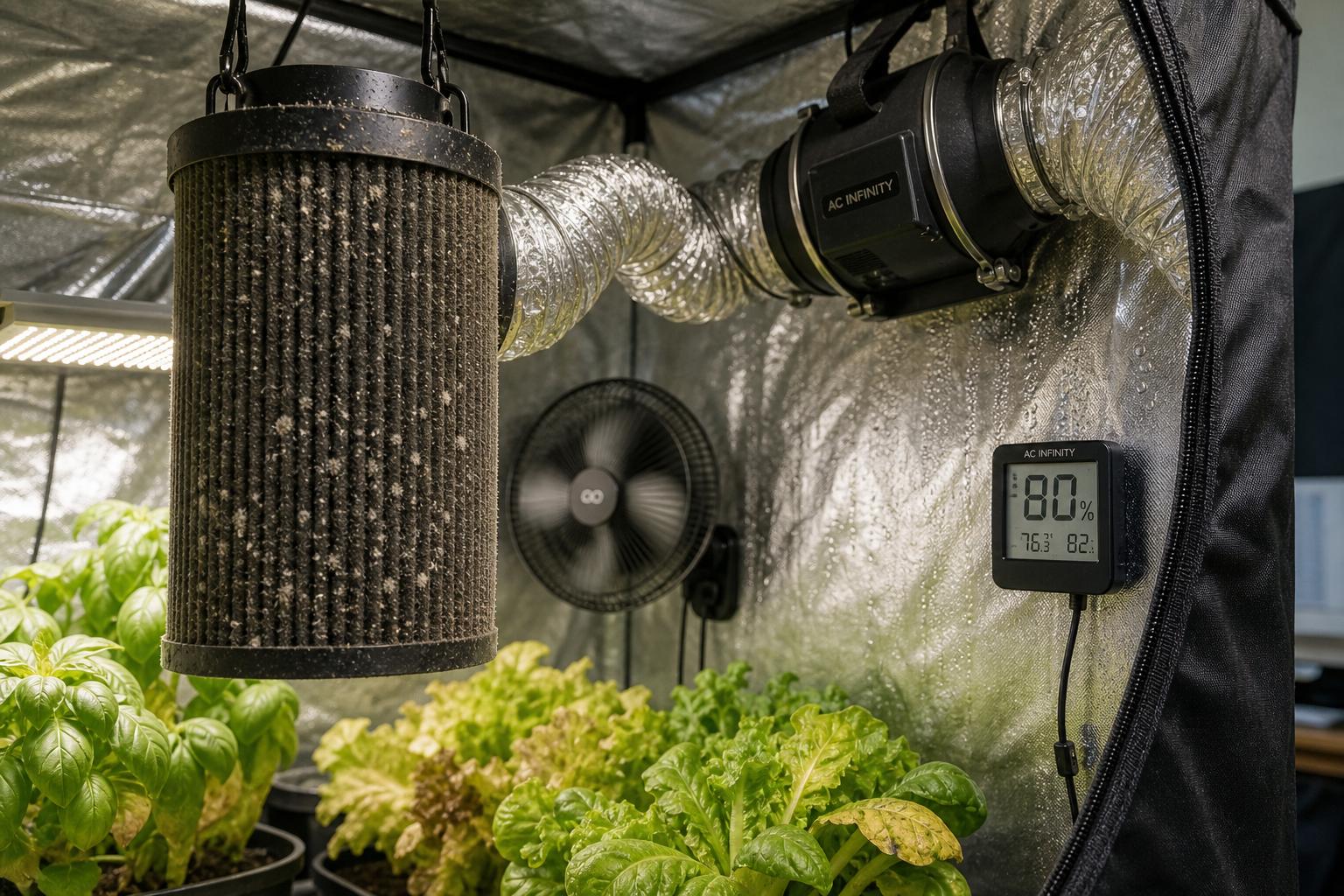
Carbon filters inside a grow tent are supposed to last a year or more. Yet I constantly hear growers complain that odor control starts fading after only one run. In a sealed grow tent environment, where smell control depends entirely on air being properly scrubbed before it exits, a failing carbon filter becomes obvious fast.
After years of running grow tents in different sizes and layouts, I have noticed something important. Carbon rarely fails for no reason. Most early failures are caused by airflow imbalance, oversized fans, excess humidity load, or simple maintenance habits that slowly ruin the carbon bed long before it should be exhausted.
The Real Lifespan of a Carbon Filter Inside a Grow Tent
Inside a properly configured grow tent, a quality carbon filter should realistically last 12 to 18 months of continuous use. That assumes moderate humidity, balanced airflow, and correct fan sizing.
What surprised me most when I started analyzing my own setups was how rarely those conditions were actually met. When I upgraded to a stronger inline fan in a four by four grow tent, I assumed more airflow meant better odor control. Instead, my carbon filter lasted barely eight months. I eventually realized I was forcing air through the carbon too quickly for proper contact time.
Carbon does not simply trap odor. Air needs enough dwell time inside the carbon bed for adsorption to occur. Inside grow tents, where we often chase high air exchange rates to manage heat, this detail gets overlooked.
Four Hidden Reasons Your Carbon Filter Is Failing Early
1. Airflow Moving Too Fast Through the Filter
This is the most common issue I see in grow tents. Growers buy a powerful inline fan to ensure strong negative pressure, then run it at high speed constantly. If the fan CFM significantly exceeds the carbon filter rating, odor molecules pass through without fully binding to the carbon.
One mistake I made years ago was running a six inch high output fan at full speed in a small grow tent without a controller. The tent walls were sucked inward aggressively, but odor still leaked late in flower. The filter was not full. It was overwhelmed.
Inside a grow tent, you want steady negative pressure, not a vacuum effect. If your tent looks like it is being crushed, airflow is probably too high.
2. High Humidity Reducing Carbon Efficiency
In my experience, humidity inside grow tents is an underappreciated cause of carbon failure. When relative humidity stays above 65 percent for extended periods, moisture occupies pores inside the activated carbon. When those pores are filled with water vapor, odor molecules have fewer binding sites available.
This does not destroy the carbon permanently at first. But it dramatically reduces performance. Over time, repeated moisture saturation degrades the adsorption surface.
Grow tents that rely solely on exhaust fans for humidity control without a dedicated dehumidifier often push wet air straight into the filter. If you are finishing flowering at high humidity, you are quietly shortening your filter lifespan.
3. Poor Pre Filter Maintenance
The white fabric sleeve around your carbon filter inside the grow tent is not cosmetic. It protects the carbon bed from dust and fine plant debris.
What surprised me most when I opened an old filter was how uneven airflow distribution becomes when the pre filter is clogged. Air takes the path of least resistance. Instead of evenly flowing through the carbon bed, it channels through specific areas, wearing those zones out prematurely.
I now wash or replace pre filters every cycle inside my grow tents. It makes a measurable difference in airflow consistency.
4. Inconsistent Negative Pressure
Your carbon filter only works when all outgoing air passes through it. Inside grow tents, this requires stable negative pressure. If intake fans are too strong or if passive vents are over opened, unfiltered air can leak out through seams or zipper gaps.
Many growers misdiagnose this as carbon failure. In reality, the filter is fine. The grow tent is simply losing pressure control.
How Fan Speed and Humidity Quietly Destroy Carbon Efficiency
Inside a grow tent system, everything connects. Fan speed affects humidity removal. Humidity affects carbon adsorption. Airflow rate affects contact time. Yet most growers adjust these elements independently.
I learned this after chasing odor issues in a hot summer grow tent. I increased fan speed to lower temperatures. That reduced internal humidity slightly but also pushed air too fast through the filter. At the same time, incoming humid air kept RH elevated. The filter was fighting too much moisture at too much speed.
Here is the tradeoff. Running high airflow keeps temperatures manageable, but excessive speed reduces carbon dwell time. Running very low airflow preserves carbon contact time but can allow humidity to rise. In my opinion, the better option is to stabilize humidity separately and run the exhaust fan at a matched speed rather than max output.
I strongly prefer using a fan controller inside grow tents instead of letting fans run full power. Matched airflow protects carbon. Oversized fans without speed control are one of the most expensive mistakes I see.
A Simple System Reset That Protects Your Filter and Your Negative Pressure
If your carbon filter in a grow tent is losing effectiveness early, I recommend a full system reset rather than immediately buying a new filter.
Step 1: Match Fan Speed to Filter Rating
Check your carbon filter maximum CFM rating. Then adjust your inline fan speed so it runs at or just below that rating. Inside small grow tents, this usually means running at 60 to 75 percent power, not 100 percent.
Step 2: Confirm Proper Negative Pressure
Close all passive vents except one or two. Ensure tent walls gently pull inward but are not collapsing. No air should escape through unfiltered openings.
Step 3: Control Humidity Before Air Hits the Filter
If humidity regularly exceeds 60 percent during late flower inside your grow tent, add a dehumidifier to the lung room or inside the tent if space allows. Reducing moisture load protects carbon pores and extends usable life.
Step 4: Clean or Replace the Pre Filter
Wash fabric sleeves every grow cycle. If they are permanently discolored or torn, replace them. Even airflow across the carbon bed prevents premature channeling.
Step 5: Inspect Ducting for Restrictions
Bent or crushed ducting inside grow tents increases static pressure, forcing fans to work harder and alter airflow patterns. Keep duct runs short and naturally curved.
Quick Troubleshooting Inside a Grow Tent
If odor appears only when lights are on
Your fan speed may be too low during peak transpiration. Increase slightly while staying within filter rating.
If odor leaks even with strong wall suction
Your airflow may be too fast for proper carbon contact time. Reduce fan speed and monitor results.
If odor gradually increases after humid weeks
Your carbon may be moisture saturated. Lower humidity immediately and evaluate whether performance rebounds before replacing the filter.
If sections of the tent smell stronger near seams
You likely have pressure imbalance. Reevaluate intake openings and ensure all exhaust air routes through the carbon filter.
Most carbon filters in grow tents do not fail prematurely because of bad manufacturing. They fail because the tent system around them is unbalanced. Once airflow, humidity, and pressure are dialed in together, filters last close to their advertised lifespan. When those factors are ignored, even premium carbon gets used up far sooner than expected.


