
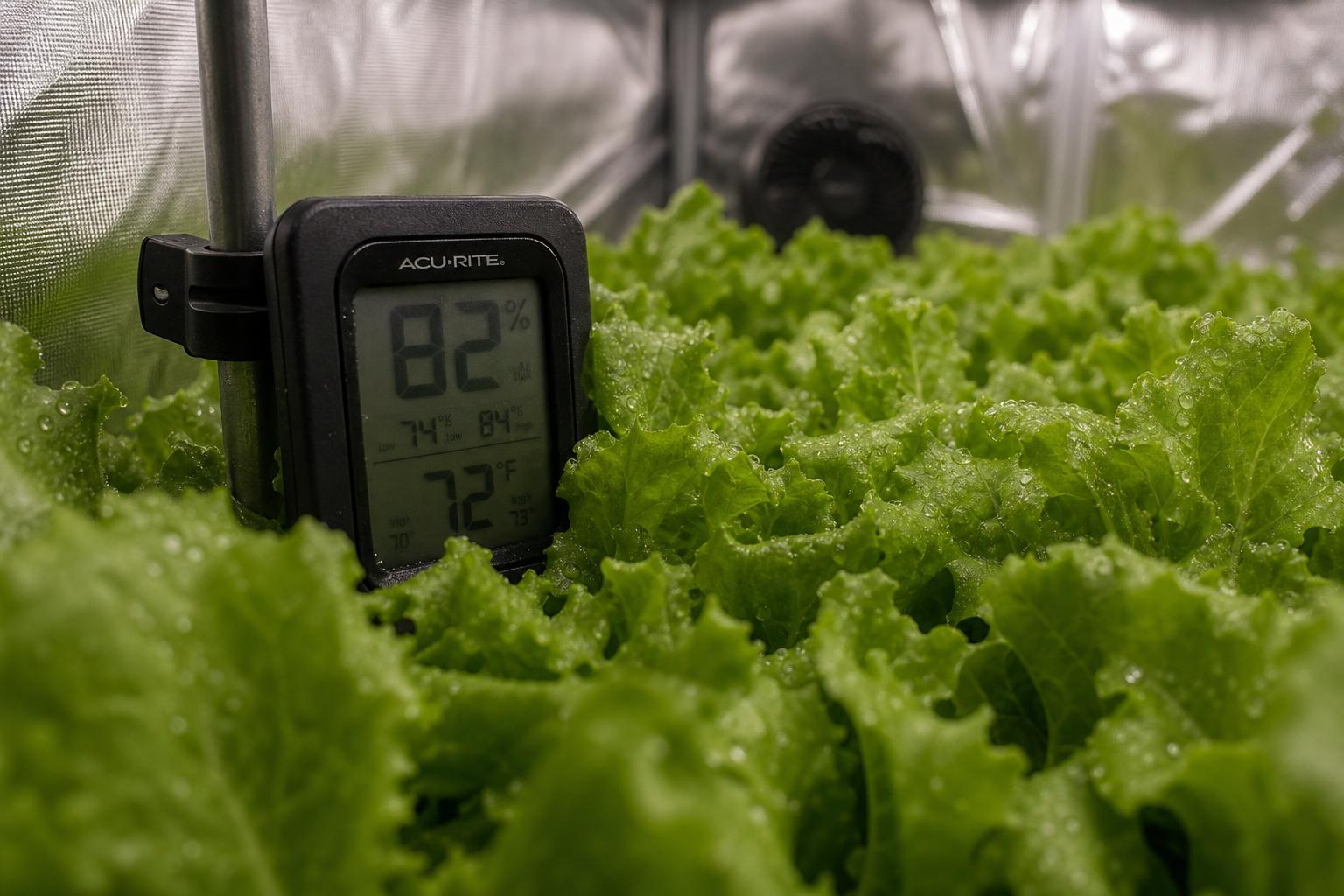
If your humidity numbers inside your grow tent seem unstable no matter what you adjust, the problem might not be your equipment. In my experience, most humidity swings in a grow tent are caused by bad sensor placement, poor calibration, or hidden microclimates rather than a faulty humidifier or exhaust fan.
I have noticed that growers often start changing fan speeds, adding dehumidifiers, or upgrading controllers when the real issue is that their grow tent is giving them false data. Before you buy new gear or overhaul your ventilation setup, it is worth diagnosing whether your humidity readings are even accurate.
The Symptoms of False Humidity Readings in a Grow Tent
Unreliable humidity inside a grow tent usually shows up in predictable ways.
You might see:
- Humidity swinging ten to fifteen percent within minutes without any visible environmental change
- The controller reading forty five percent while condensation appears on leaves
- Different hygrometers inside the same grow tent showing wildly different numbers
- A dehumidifier running nonstop even though plants look dry
One mistake I see often is growers trusting the single sensor built into their controller without verifying it. I made this mistake myself years ago. I kept raising exhaust speed because my grow tent sensor showed high humidity during lights out. What surprised me most was that a second calibrated hygrometer showed the tent was actually five percent lower than I thought. I was chasing a problem that did not exist and creating negative pressure that stressed the plants.
If your adjustments never seem to produce predictable results inside your grow tent, suspect the readings first.
Three Causes of Inaccurate Humidity Data Most Growers Overlook
1. Poor Sensor Placement Inside the Grow Tent
Placement is the biggest issue I encounter in grow tents. Many growers hang their humidity probe too high, too low, or directly in the airflow path of a fan.
Inside a grow tent, air is constantly being pulled upward toward the exhaust. The top third of the tent is often warmer and less humid than the canopy level. If your sensor is hanging near the roof bars, your grow tent controller may think humidity is lower than what your plants actually experience.
I eventually realized that my clip fan was blowing directly across my humidity probe. Every time it oscillated toward the sensor, the reading would drop several percent. The tent was stable. The airflow was fooling the probe.
In a grow tent, always think in terms of canopy zone conditions, not tent ceiling conditions.
2. Microclimates Within the Grow Tent
Grow tents are small, enclosed systems. That makes microclimates stronger than most people expect. Dense foliage traps moisture. Corners near passive intake flaps run drier. Areas directly under LED fixtures run warmer.
If your sensor is positioned near an intake vent, it may read lower humidity because it is sampling fresh, drier air entering the grow tent. Move that same sensor into a dense canopy pocket and the reading may jump by eight percent.
In my experience, heavy feeding periods make this more obvious. Plants transpire more, and pockets of high humidity form under thick growth. If your grow tent only measures from one corner, you are guessing.
3. Lack of Calibration
Cheap hygrometers drift. Even good ones drift slightly over time. That small error matters in a tightly controlled grow tent.
I learned this after replacing a controller that I thought had failed. When I tested the old probe using a simple salt calibration method, it was off by six percent. That six percent difference was enough to trigger my dehumidifier constantly during lights off.
Six percent might not sound like much, but inside a sealed grow tent that is the difference between safe conditions and persistent leaf moisture.
How to Test and Calibrate Your Grow Tent Sensors Properly
Before adjusting any grow tent equipment, do this checklist.
Step 1: Compare Multiple Hygrometers
Place at least two independent hygrometers at canopy height inside your grow tent. Let them sit for one hour with lights and ventilation in their normal operating state.
If they differ by more than three percent, calibration is likely needed. I prefer having one simple battery powered hygrometer that I only use for verification. I do not leave it mounted permanently. It is my reference tool.
Step 2: Perform a Salt Calibration Test
Place your humidity sensor in a sealed container with a small cup of damp salt slurry. After six to eight hours, the environment inside the container should stabilize around seventy five percent humidity.
If your grow tent sensor reads seventy or eighty instead, note the offset. Some controllers allow manual calibration. If yours does not, you at least know how far it is drifting.
I prefer calibrating over replacing sensors immediately. Many probes are slightly off but still consistent. Consistency matters more than perfection in a grow tent as long as you understand the offset.
Step 3: Test During Lights On and Lights Off
Humidity behaves differently inside a grow tent during lights out because temperature drops and plant transpiration changes. Verify that your sensors respond logically to those transitions.
If the reading jumps or falls abruptly the moment lights switch but your secondary hygrometer does not, airflow or radiant heat from fixtures may be affecting the probe.
Where to Place Humidity Sensors for Reliable Control Inside a Grow Tent
If I had to choose one optimal placement inside a grow tent, it would be slightly above canopy height, centered horizontally, and shielded from direct fan airflow.
Here is what I recommend:
- Mount the probe at canopy level or two to three inches above
- Keep it away from intake flaps and exhaust ports
- Avoid direct line of airflow from oscillating fans
- Do not attach it to tent poles that heat up from LED drivers
I also prefer suspending the sensor using string rather than clipping it to a tent wall. Tent walls can develop condensation layers that affect localized readings. I learned this after seeing slightly elevated humidity readings near the sidewalls during heavy flowering. The sensor was sampling the most humid surface in the whole grow tent.
Some growers place sensors low near the pots to detect root zone humidity. I understand the logic, but I find that approach less useful for overall environmental control. Root zone moisture is better monitored through media management. Your primary humidity controller in the grow tent should reflect what the leaves are experiencing, not the soil surface.
Troubleshooting Quick Checks Before Adjusting Equipment
If your grow tent humidity feels out of control, run through this sequence before touching your fan settings.
- Are multiple hygrometers agreeing within three percent
- Is the probe exposed to direct airflow
- Is it positioned at canopy level rather than near the roof
- Has it been calibrated within the last few months
- Does the reading logically respond to watering events
In my experience, more than half of humidity control problems in grow tents disappear once sensor placement is corrected. Growers often chase phantom moisture issues, buy larger dehumidifiers, or oversize their exhaust systems when the real solution is relocating a probe by six inches.
Inside a grow tent, data drives every environmental decision. If the data is flawed, every adjustment becomes guesswork. Fix the measurement first. Then tune the environment. That order saves money, equipment wear, and a lot of unnecessary stress on your plants.


