
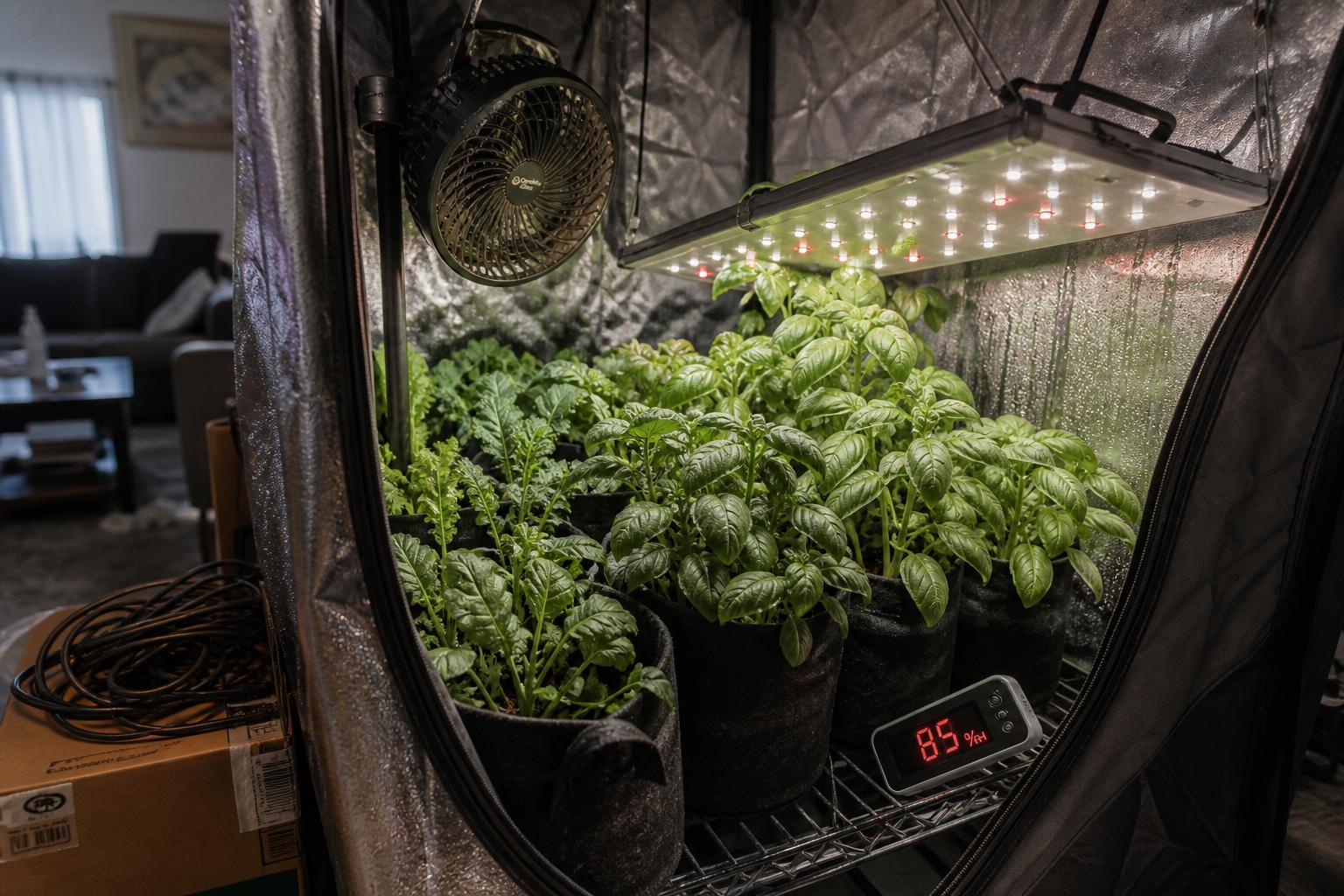
If you grow vegetables and herbs inside a grow tent long enough, you eventually learn this the hard way. The problems that ruin a harvest rarely explode overnight. They creep in quietly.
A slightly loose duct connection. A light that hangs an inch lower than it did last week. A fan that is spinning but not really moving air through the canopy anymore. Inside grow tents, small shifts in airflow, lighting, and humidity add up faster than most people expect.
I used to only react when something looked wrong. Now I spend five minutes once a week doing the same quick walkthrough inside my grow tent. That small routine prevents most of the bigger headaches I used to deal with.
Why Small Weekly Checks Matter More Than Emergency Fixes
Grow tents create a controlled environment. That is the whole point. But the flip side of control is that there is no buffer. If airflow drops in an outdoor garden, the wind still moves. Inside a grow tent, if your inline fan or circulation fan slows down, the air just sits there.
I noticed this one summer when my lettuce kept getting soft outer leaves. Not wilted. Just slightly limp and prone to disease. The exhaust fan was still on. The temperature reading looked fine. But when I reached into the canopy, the air felt dead.
A single clip fan had shifted upward and was blowing across the top of the tent instead of through the plants. That tiny change increased humidity around the leaves and invited problems.
Five minutes a week would have caught it.
The Five Minute Grow Tent Walkthrough I Rely On
This is not complicated. I do this once a week while the lights are on and the plants are actively photosynthesizing.
1. Stand Still and Listen
Before I touch anything, I unzip the grow tent and just listen.
Does the inline fan sound the same as usual? Any new rattles from ducting? Is a clip fan ticking or vibrating?
One mistake I made early on was ignoring a slight rubbing noise from my exhaust fan. A week later, airflow had dropped dramatically because the ducting had partially collapsed where it bent too sharply. Now if something sounds different, I investigate immediately.
You would be surprised how often sound changes before temperature or humidity readings do.
2. Feel the Airflow at Canopy Level
I slide my hand into the middle of the plants, not just above them.
I want to feel gentle but constant movement across the leaves of my basil, spinach, or pepper plants. If the top leaves are moving but the inner canopy feels still, I adjust fan angles.
In smaller grow tents, it is easy for airflow to circulate around the edges but not push through dense foliage. I prefer using two small clip fans at different heights instead of one powerful fan. It spreads airflow more evenly and usually makes less noise in an apartment.
3. Check Light Height Without Guessing
I keep a simple habit. Once a week, I measure the distance from the light to the top of the tallest plant.
Not by eye. With a tape measure.
Leafy greens can gain more height in seven days than you expect. I have scorched lettuce before because I assumed growth was slow. In a grow tent, light intensity changes quickly as distance changes.
If you grow compact crops like arugula and herbs, you might not adjust often. But peppers and tomatoes can close that gap fast. I would rather raise the light slightly preemptively than risk light stress in a tight vertical space.
4. Look at the Leaves, Not Just the Plants
I scan for three things inside the grow tent.
Are any leaves touching the tent wall?
Are lower leaves yellowing more than expected?
Is there condensation on inner leaves during lights off periods?
Leaves pressed against tent walls are a humidity trap. I trim or reposition plants so air can move around them. In tight spaces, overcrowding is one of the most common mistakes I see. We try to maximize every square inch of the grow tent. The tradeoff is reduced airflow and higher disease risk.
I would rather grow slightly fewer plants and keep them healthy than pack the grow tent so tightly that airflow becomes a constant battle.
5. Check the Floor and Corners
This step takes less than a minute.
I look at the grow tent floor for standing water, fallen leaves, or damp corners. In small indoor spaces, excess moisture has nowhere to escape. A small spill or slow drip can quietly increase humidity.
I also make sure no irrigation lines shifted during the week. Drip emitters can move when you brush against them. I have found one pointed directly at a tent wall before. Not ideal.
Common Problems This Routine Quietly Prevents
When I stay consistent with this five minute check, I prevent most of the following issues.
Humidity Creep
In apartments, especially in winter, we rely heavily on the grow tent exhaust to manage moisture. If airflow drops even slightly, humidity rises inside the tent first before the room shows signs.
By physically feeling airflow and checking corners, I catch humidity imbalances before I see mold or leaf spot on my greens.
Light Burn From Vertical Drift
Grow tents have fixed ceilings. Plants do not. Fast growing tomatoes or peppers can move several inches closer to the light in a short time.
A weekly measurement avoids leaf curl and pale tops. It also prevents me from overcorrecting after damage appears.
Airflow Dead Zones
Dense basil and lettuce canopies create microclimates. The outside looks fine. The inside becomes stagnant.
By reaching into the canopy each week, I catch those dead zones before pests or mildew find them.
Equipment Drift
Inline fans shift. Duct tape loosens. Clip fans sag. None of this is dramatic. But inside grow tents, small equipment drift changes the entire environment.
Catching it early almost always means a simple adjustment instead of replacing stressed plants.
How to Turn This Into a Habit That Protects Every Harvest
The key is not motivation. It is pairing the routine with something you already do.
I do my five minute walkthrough right before my weekly feeding. The nutrients are already mixed. I am already unzipping the grow tent. It becomes automatic.
If you wait until something looks wrong, you are already behind. In a small indoor grow tent, conditions change faster than in larger grow rooms. Less air volume means faster swings.
If you want one simple starting point, do this. This week, unzip your grow tent while the lights are on and place your hand in the middle of your plants. If the air does not feel gently active around the leaves, adjust your fans. That single step prevents more problems than most new growers realize.
Everything else builds from there.
Five minutes. Once a week. Inside the grow tent. It is one of the simplest ways I know to protect a harvest of fresh greens, herbs, and vegetables without adding more equipment or complexity.
Start this week and see what you notice.
}


