
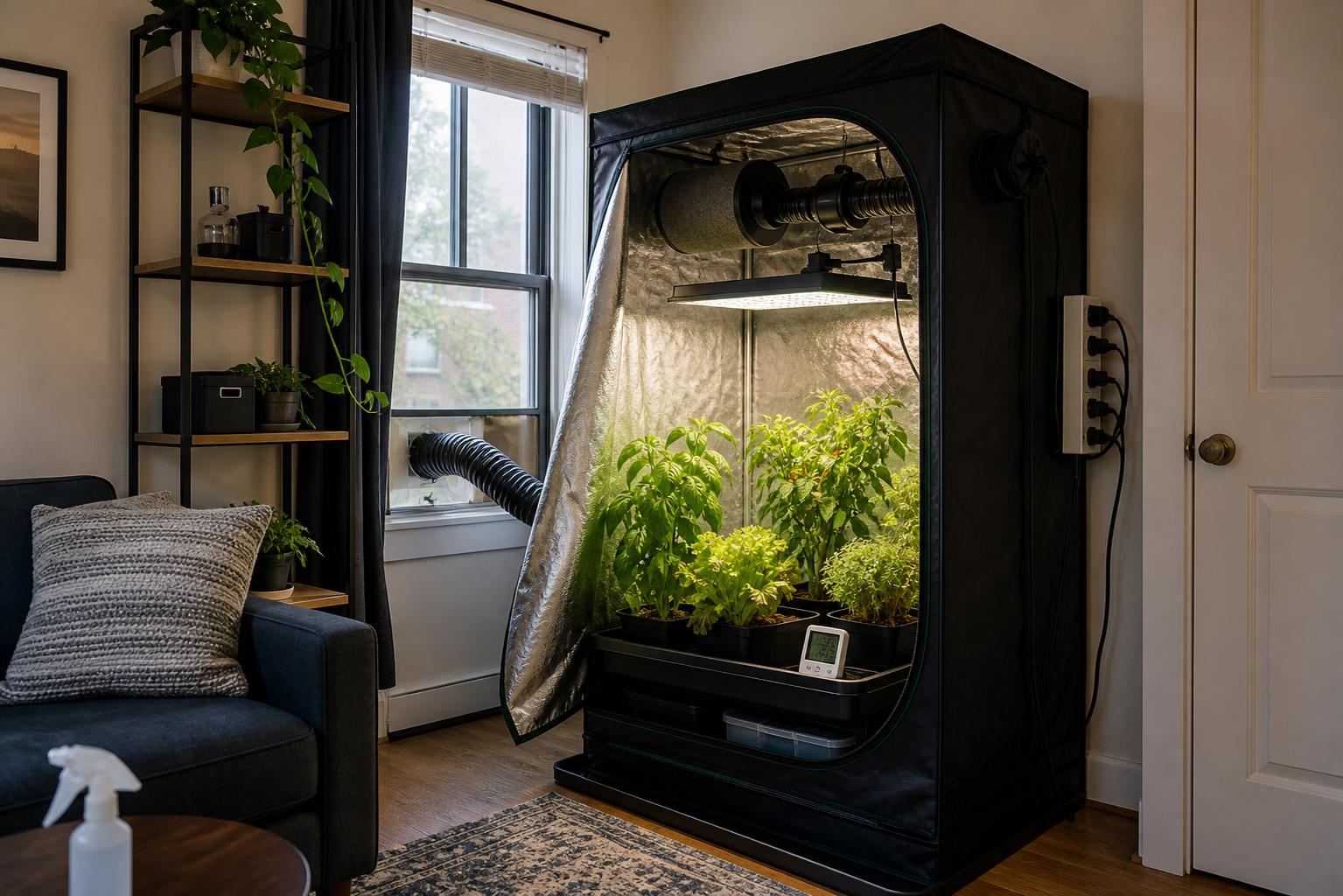
Choosing where to put a grow tent may seem like a simple matter of finding enough empty floor space. In a small apartment, however, the location affects almost everything that happens inside the tent. Room temperature, fresh air, humidity, fan noise, electrical safety, and even how often you check your plants can all change with placement.
I have moved grow tents after setting up lights, fans, ducting, and containers, and it is never a pleasant job. Taking twenty minutes to compare possible locations before assembling the grow tent can prevent months of fighting excess heat, awkward watering, or a fan that sounds much louder at night than expected.
Why Grow Tent Location Changes the Entire Indoor Environment
A grow tent does not create a completely separate climate. It borrows air from the surrounding room and eventually releases heat and moisture back into that room. If the room is already warm and humid, the equipment inside the grow tent has to work harder.
This matters because grow lights produce heat, plants release moisture, and exhaust fans move both into the apartment. Lettuce and herbs may struggle in a warm bedroom where the temperature climbs overnight. Fruiting peppers and compact tomatoes can tolerate more warmth, but even they become harder to manage if the room starts hot before the light switches on.
I have noticed that a grow tent placed in a room with stable temperatures is much easier to control than one placed near a window, heater, or exterior door. The tent may look enclosed, but it still responds quickly to changes around it.
Convenience matters just as much. A grow tent hidden behind furniture often receives less attention. Small problems such as a dry basil container, a blocked intake vent, or water collecting in a tray are easier to miss when opening the tent feels like a chore.
The Best Rooms and the Problems Each One Creates
Living Room
A living room is often the most practical grow tent location in a small apartment. It usually has better air circulation than a closet, a fairly stable temperature, and enough room to reach the tent doors. It may also be closer to a window if you decide to send warm exhaust air outside.
The main problems are appearance and noise. An inline fan that seems quiet during the afternoon can become surprisingly noticeable while watching television. Tent walls can also reflect light through small openings. Place the grow tent along an interior wall if possible, but avoid pressing it tightly into a corner where intake vents and access panels become blocked.
Bedroom
A bedroom can work well for a small grow tent, especially if it stays cool and the door is regularly open. The tradeoff is noise. Fans, moving air, and automatic equipment can be difficult to ignore when everything else is quiet.
Heat is another concern. Running the grow light at night may help with electricity pricing or daytime temperatures, but it can warm the bedroom while you are sleeping. If you are sensitive to sound or warmth, I would not choose the bedroom simply because it has unused floor space.
Kitchen or Dining Area
A kitchen offers easy access to water and washable flooring, which is convenient when growing leafy greens or herbs that need frequent attention. Unfortunately, cooking creates short bursts of heat, steam, and airborne grease. These changes are pulled toward the grow tent intake and can coat filters and fan parts over time.
A dining area several feet away from the cooking zone is usually better than placing a grow tent beside the stove or refrigerator. Refrigerators also release heat, so the gap beside one is rarely as cool as it appears.
Closet
A closet looks attractive because it hides the grow tent, but it is usually my last choice. The exhaust air has nowhere useful to go, and the same warm air can cycle back through the tent. Humidity also builds around the outside fabric, particularly when growing dense lettuce, chard, basil, or tomatoes in larger containers.
A closet can work if it is large, ventilated, and kept open, but that removes much of the advantage of using it. Never assume a closed closet will contain heat. It usually concentrates it.
Bathroom or Laundry Area
These spaces may have water resistant surfaces and exhaust vents, but they often experience large humidity changes. Showers can push damp air directly into the grow tent. Laundry appliances add heat, vibration, and electrical demand.
I would only use one of these areas if the grow tent can remain well away from splashing water and the room stays reasonably stable during normal household use.
What to Check Before You Commit to a Location
Before assembling the grow tent, mark its footprint on the floor with removable tape or place the empty tent there for a day. Then check the location as you actually use the apartment.
- Measure the surrounding temperature. Check it during the warmest part of the day and again when the grow light would normally run. A grow tent cannot pull in cool air if the entire room is already too warm.
- Find a source of renewed room air. This could be an open doorway, a nearby window, or the normal ventilation system. Exhausting outside can help with heat, but it is not always necessary for a modest grow tent if the room itself receives fresh air.
- Listen for vibration. Fans can make shared walls, wooden furniture, and hollow floors hum. Set the fan near the proposed location before installation. Soft mounting straps often reduce vibration better than simply buying a larger fan and running it hard.
- Check the electrical circuit. Use a grounded wall outlet in good condition. Find out whether that circuit also powers a microwave, portable heater, air conditioner, or other heavy appliance. Keep plugs and power strips outside the grow tent, elevated above the floor, with cords arranged so water cannot run toward an outlet.
- Leave working space. You need enough room to open the main door, remove a watering container, inspect lower leaves, and clean spills. A few extra inches in front of the grow tent are often more useful than squeezing in a slightly larger model.
- Protect the floor. Place a waterproof tray or durable floor barrier beneath the grow tent, especially over carpet or laminate. Even careful growers eventually spill water or discover a slow container leak.
- Consider where exhaust heat goes. Do not aim warm, damp air at a wall, curtain, bed, or closed corner. Give the exhaust room to mix with the apartment air or route it securely toward a window.
One mistake I made early on was putting a grow tent very close to a window because I wanted easy access to outside air. Afternoon sun heated the tent fabric, while cold air near the glass caused large temperature swings at other times. What worked better was moving the grow tent back from the window and using ducting only when outside exhaust was actually helpful.
My Preferred Placement for a Small Apartment Grow Tent
For most small apartments, I prefer a living room or open dining area along an interior wall, several feet from a window, with a grounded outlet nearby. This location usually offers the best balance of stable temperature, renewed air, maintenance access, and visible reminders to check the plants.
I would rather see a grow tent take up a little usable living space than hide it in a hot closet where lettuce wilts and fans run constantly. Easy access also makes it more likely that herbs get harvested, tomato branches get supported, and water is cleaned up before it reaches the floor.
Before installing any equipment, place a thermometer at the proposed location for a full light cycle, test the fan noise, and confirm that you can open every grow tent door without moving furniture. If those three checks pass, protect the floor and build there. If one fails, change the location now, while the grow tent is still easy to move.


